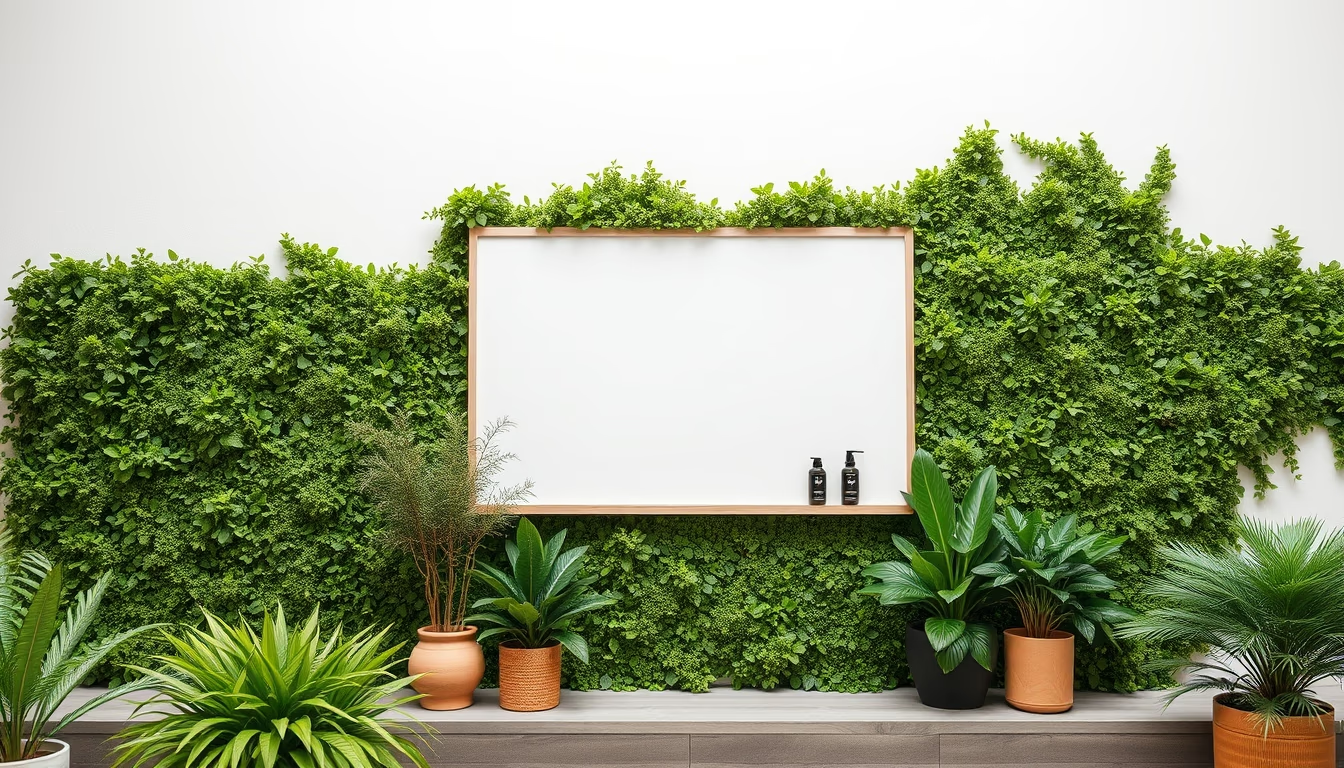
Green wall building
1344×768 · AVIF · CC BY 4.0
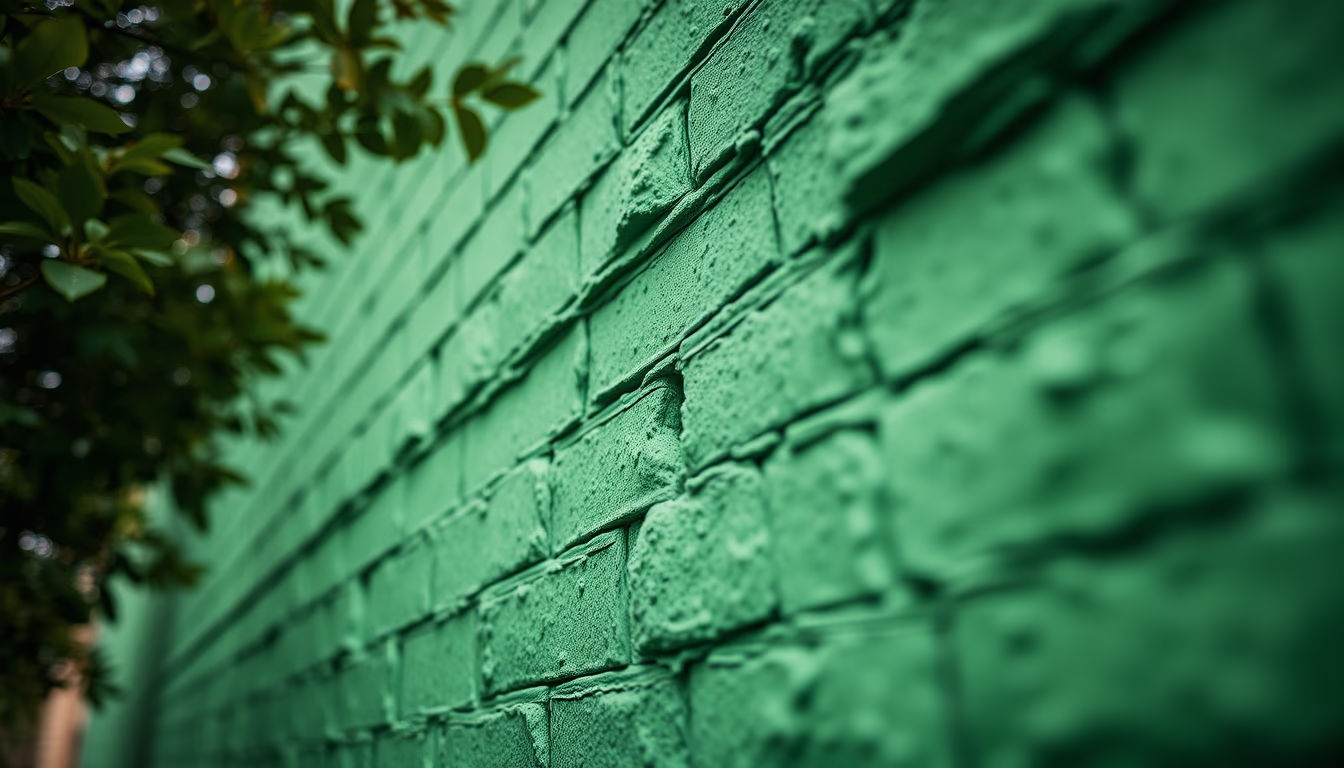
Green walls, also known as vertical gardens, are vegetated structures applied to building facades to enhance aesthetics and sustainability in urban areas.
About this subject
Green walls, also known as vertical gardens or living walls, are construction systems that integrate vegetation onto building facades. They can be modular, with prefabricated panels containing substrate and plants, or integrated irrigation systems. Globally, cities like Singapore, Paris, and São Paulo have adopted these solutions to mitigate heat islands, improve air quality, and boost urban biodiversity. Studies show that a 10-square-meter green wall can absorb up to 200 grams of particulate matter per year and reduce ambient temperature by up to 5°C.
Historically, the Hanging Gardens of Babylon are an early example, but the modern technique gained traction with French botanist Patrick Blanc, who patented hydroponic felt systems in the 1980s. In Brazil, projects like the E-Tower building in São Paulo and the Eldorado Shopping Mall feature large-scale green walls with over 500 native species. These installations require specialized maintenance, including periodic pruning, fertilization, and pest control, but offer benefits such as sound insulation and reduced energy consumption for air conditioning.
Beyond environmental impact, green walls provide aesthetic and psychological value, promoting well-being in densely built areas. Research from the University of São Paulo indicates that vertical vegetation can reduce stress and increase productivity in offices. Public policies in cities like Belo Horizonte incentivize installation with property tax discounts. In the 2026 global trend, drought-resistant plants and rainwater harvesting systems are expected to make vertical gardens more self-sustaining.
Frequently Asked Questions
What are the main benefits of a green wall in urban areas?
Green walls improve air quality by filtering pollutants, reduce ambient temperature, provide sound insulation, and boost biodiversity, while also offering aesthetic and well-being benefits for residents.
How is a vertical garden maintained?
Maintenance includes regular pruning, fertilization, controlled irrigation (often automated), and pest monitoring. The frequency depends on the plant species and system, but professional monthly reviews are recommended.
Are green walls effective in reducing energy consumption?
Yes. By thermally insulating the facade, they reduce the need for air conditioning in summer and heating in winter, potentially saving up to 20% of the building's electricity consumption.
Direct URL
https://pub-c7d6a6ea828543ac903a74a341ccb2e1.r2.dev/imagens/green-wall-building-macro-closeup-p1.avifHow to credit
Include a visible link back to UtilizAí. Copy one of the snippets below:
<a href="https://xn--utiliza-eza.com/en/midia/imagens/green-wall-building-macro-closeup-p1">Green wall building</a> by <a href="https://xn--utiliza-eza.com">UtilizAí</a>, licensed under <a href="https://creativecommons.org/licenses/by/4.0/">CC BY 4.0</a>.
[Green wall building](https://xn--utiliza-eza.com/en/midia/imagens/green-wall-building-macro-closeup-p1) by [UtilizAí](https://xn--utiliza-eza.com), CC BY 4.0
License: CC-BY-4.0