Grasshopper macro side
1344×768 · AVIF · CC BY 4.0
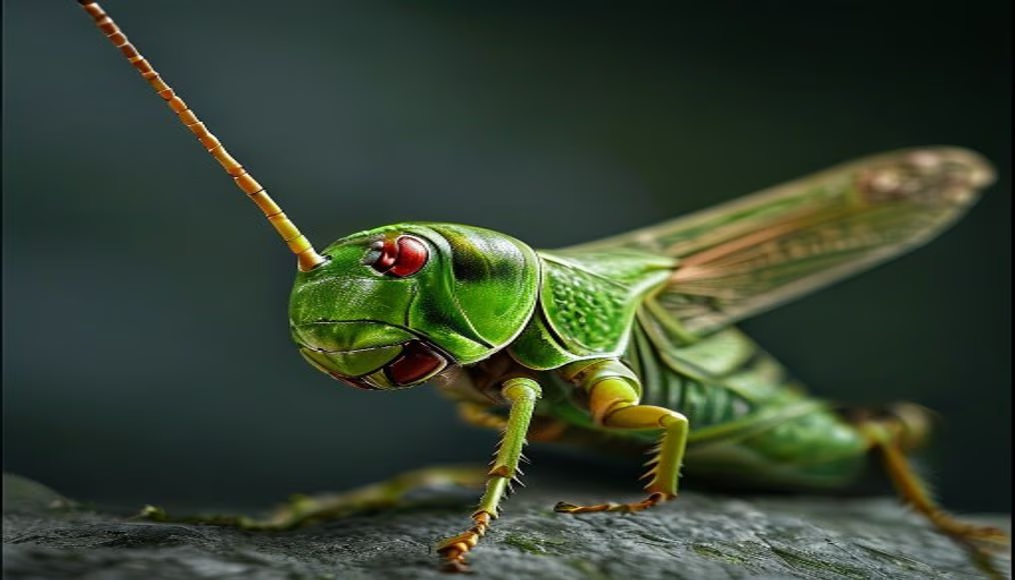
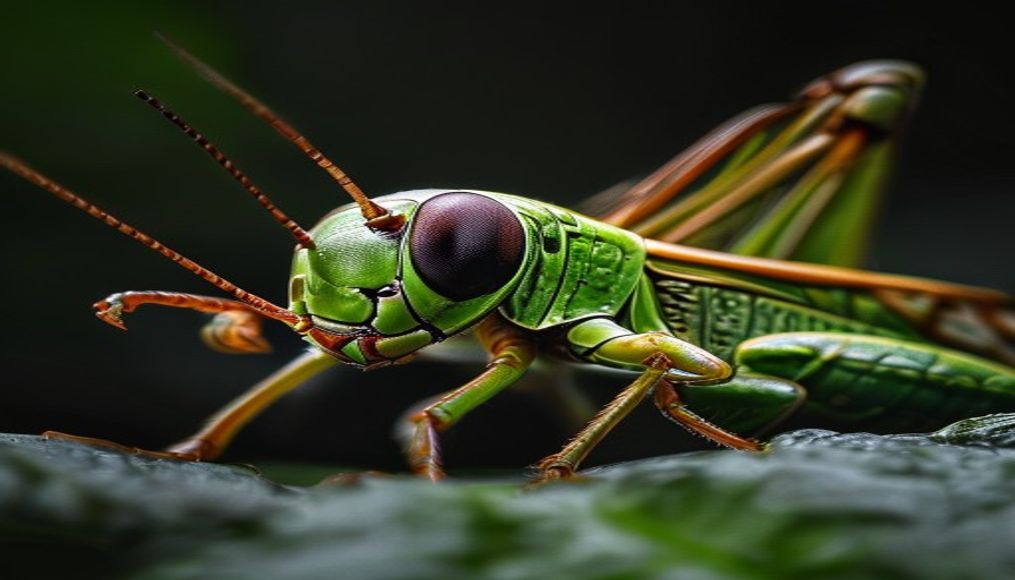
Grasshopper macro side: side portrait of a grasshopper in close-up, highlighting details of the head, antennae, and thorax.
About this subject
Grasshoppers belong to the order Orthoptera and suborder Caelifera, with over 11,000 described species worldwide. They are known for their long hind legs adapted for jumping, short antennae, and chewing mouthparts. Most are phytophagous, feeding on leaves, stems, and seeds. Some species form devastating swarms in arid and semi-arid regions, such as the desert locust (Schistocerca gregaria), which can travel hundreds of kilometers and consume the equivalent of food for 35,000 people per day.
In Brazil, grasshopper diversity is immense, with emphasis on species of the family Acrididae. They occur in all biomes, from the Amazon to the Pampas. During mating, males produce stridulatory sounds by rubbing their wings or legs against the body, attracting females. After copulation, the female lays eggs in the soil inside a protective capsule called an ootheca. Development is hemimetabolous: nymphs pass through several instars before reaching the winged adult stage.
Grasshoppers have ecological importance as primary consumers and prey for birds, lizards, spiders, and mammals. Their presence indicates the health of grassland ecosystems. In some cultures, they are consumed as a protein-rich food, but in many regions they are agricultural pests requiring biological or chemical control. Recent studies investigate the use of pheromones and specific pathogens for sustainable management.
Frequently Asked Questions
What is the difference between a grasshopper and a cricket?
Grasshoppers have short antennae and are diurnal, while crickets have long antennae and are nocturnal. Also, grasshoppers produce sound by rubbing wings; crickets by rubbing forewings.
Are grasshoppers dangerous to humans?
No, grasshoppers are not venomous and do not attack people. The danger lies in the economic damage swarms cause to agriculture.
How do grasshoppers jump so far?
Their hind legs have powerful muscles and a spring-like joint that stores elastic energy, allowing jumps up to 20 times their body length.
Direct URL
https://pub-c7d6a6ea828543ac903a74a341ccb2e1.r2.dev/imagens/grasshopper-macro-side-studio-editorial-portrait-p0.avifHow to credit
Include a visible link back to UtilizAí. Copy one of the snippets below:
<a href="https://xn--utiliza-eza.com/en/midia/imagens/grasshopper-macro-side-studio-editorial-portrait-p0">Grasshopper macro side</a> by <a href="https://xn--utiliza-eza.com">UtilizAí</a>, licensed under <a href="https://creativecommons.org/licenses/by/4.0/">CC BY 4.0</a>.
[Grasshopper macro side](https://xn--utiliza-eza.com/en/midia/imagens/grasshopper-macro-side-studio-editorial-portrait-p0) by [UtilizAí](https://xn--utiliza-eza.com), CC BY 4.0
License: CC-BY-4.0