Grand piano in concert hall
1344×768 · AVIF · CC BY 4.0
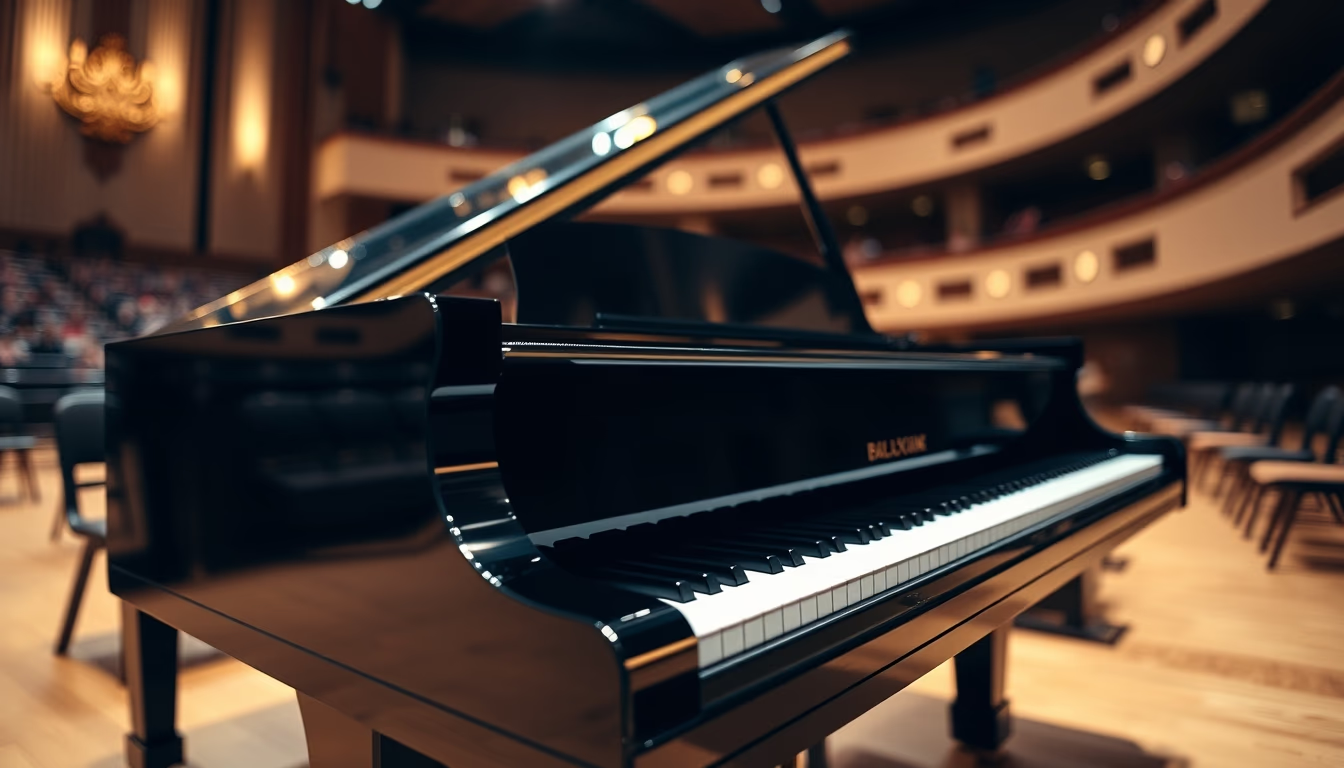
A macro closeup of a grand piano reveals the intricate mechanics and craftsmanship behind the instrument.
About this subject
The grand piano is one of the most complex and expressive musical instruments ever created. Its robust structure, made of fine woods such as spruce or mahogany, supports string tension that can exceed 20 tons. The action mechanism, hammers, dampers, and levers, is a marvel of mechanical engineering: each key triggers a sophisticated system that allows the pianist to control dynamics with pinpoint precision.
The first grand pianos were developed in Italy by Bartolomeo Cristofori around 1700, and the design evolved over centuries with contributions from makers like Steinway & Sons, Bösendorfer, and Fazioli. Every grand piano is unique, as the wood ages and responds to local climate, influencing the timbre. World-famous concert halls such as the Musikverein in Vienna and Carnegie Hall in New York house specially selected grand pianos optimized for their acoustics.
A macro closeup of the piano reveals details invisible to the naked eye: the texture of the hammer felt, the alignment of steel and copper-wound strings, and the precise curvature of the soundboard. These elements result from artisan techniques requiring years of training. For instance, the soundboard’s curvature is calculated to distribute vibration evenly, and hammers are pressed and shaped by hand for the desired attack.
Beyond engineering, the grand piano carries strong cultural symbolism. It is associated with classical concerts but also with jazz and pop genres. Composers like Chopin, Liszt, and Rachmaninoff exploited its dynamic and expressive range. Maintaining a grand piano requires a professional tuner, who adjusts string tension regularly, as wood and metal react to temperature and humidity changes.
Frequently Asked Questions
What is the difference between a grand piano and an upright piano?
A grand piano has horizontal strings and a faster, more precise action mechanism, offering greater dynamic control. An upright piano has vertical strings and a more compact mechanism, less responsive but more space- and budget-friendly.
How many strings does a grand piano have?
A standard grand piano has 88 keys and about 230 strings, arranged in three strings per note in the treble and two or one in the bass, with varying thicknesses and tensions.
Why are grand pianos so expensive?
The cost comes from fine materials (selected wood, steel, felt), hundreds of hours of craftmanship, mechanical precision, and brand reputation. Concert grand pianos can cost hundreds of thousands of dollars.
Direct URL
https://pub-c7d6a6ea828543ac903a74a341ccb2e1.r2.dev/imagens/grand-piano-in-concert-hall-macro-closeup-p1.avifHow to credit
Include a visible link back to UtilizAí. Copy one of the snippets below:
<a href="https://xn--utiliza-eza.com/en/midia/imagens/grand-piano-in-concert-hall-macro-closeup-p1">Grand piano in concert hall</a> by <a href="https://xn--utiliza-eza.com">UtilizAí</a>, licensed under <a href="https://creativecommons.org/licenses/by/4.0/">CC BY 4.0</a>.
[Grand piano in concert hall](https://xn--utiliza-eza.com/en/midia/imagens/grand-piano-in-concert-hall-macro-closeup-p1) by [UtilizAí](https://xn--utiliza-eza.com), CC BY 4.0
License: CC-BY-4.0