GPU cluster row in data center
1344×768 · AVIF · CC BY 4.0
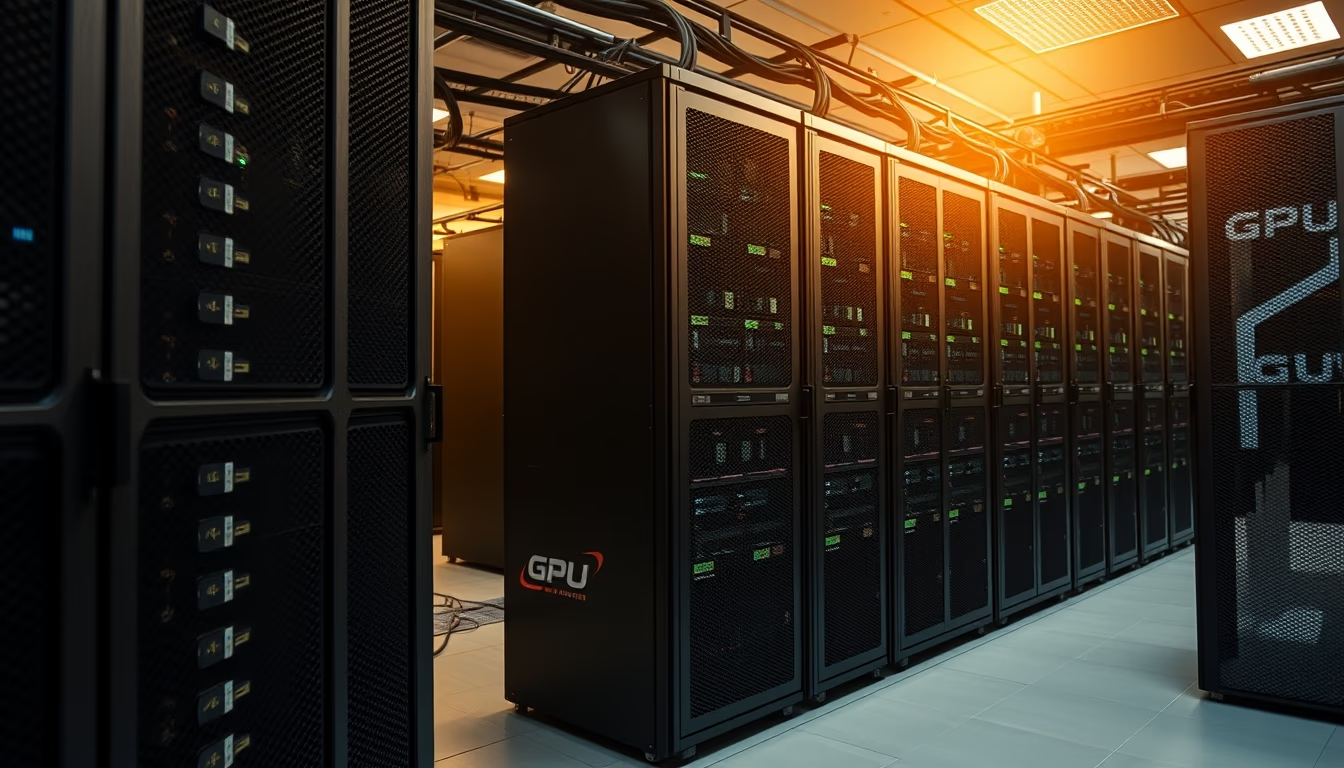
A row of GPU clusters in a modern data center, essential hardware for AI training and high-performance computing.
About this subject
GPU clusters are the backbone of modern computing, especially for tasks requiring massive parallel processing. Unlike traditional CPUs, which have few cores optimized for sequential tasks, GPUs integrate thousands of smaller cores capable of executing millions of mathematical operations simultaneously. This architecture has made them indispensable for training artificial intelligence models, such as deep neural networks, and for complex scientific simulations, including climate forecasting and drug discovery.
In a typical data center, GPUs are organized in racks or rows to facilitate cooling and power distribution. Each cluster node may contain 4 to 8 GPUs interconnected by high-speed buses like NVLink or PCIe. Companies like NVIDIA, AMD, and Intel dominate the market, with models such as A100, H100, and MI300X widely used. Power consumption is high: a single rack can demand 10 to 40 kW, requiring liquid cooling or precision air conditioning to prevent overheating.
The demand for GPUs has surged with the popularity of language models like GPT-4 and LLaMA, as well as applications in computer vision and cloud gaming. Major cloud providers like AWS, Google Cloud, and Azure offer GPU instances for hourly rental, democratizing access to high-performance computing. In Brazil, data centers such as Equinix and Ascenty already host GPU clusters for AI startups and research institutions like the National Scientific Computing Laboratory (LNCC).
GPU evolution also drives areas like real-time 3D rendering, cryptocurrency mining (though declining), and physics simulations. Competition among manufacturers accelerates innovation: NVIDIA recently announced the Blackwell architecture, promising 30 times better performance for AI inference. For companies needing to process large data volumes, investing in GPU clusters is a strategic decision, balancing cost, energy efficiency, and processing capacity.
Frequently Asked Questions
What is a GPU cluster?
It is a set of multiple interconnected GPUs, usually in racks, for large-scale parallel processing. It is mainly used in artificial intelligence, scientific simulations, and rendering.
What is the difference between GPU and CPU in data centers?
CPUs have few cores optimized for sequential tasks, while GPUs have thousands of smaller cores for parallel processing. GPUs are more efficient for training AI models and processing large volumes of data simultaneously.
How much does a GPU cluster cost?
Costs vary widely: a single high-end GPU like the NVIDIA H100 costs around US$30,000. A full rack with 8 GPUs can exceed US$300,000, not including cooling and power infrastructure. Many companies opt for cloud rental.
Direct URL
https://pub-c7d6a6ea828543ac903a74a341ccb2e1.r2.dev/imagens/gpu-cluster-row-in-data-center-travel-photography.avifHow to credit
Include a visible link back to UtilizAí. Copy one of the snippets below:
<a href="https://xn--utiliza-eza.com/en/midia/imagens/gpu-cluster-row-in-data-center-travel-photography">GPU cluster row in data center</a> by <a href="https://xn--utiliza-eza.com">UtilizAí</a>, licensed under <a href="https://creativecommons.org/licenses/by/4.0/">CC BY 4.0</a>.
[GPU cluster row in data center](https://xn--utiliza-eza.com/en/midia/imagens/gpu-cluster-row-in-data-center-travel-photography) by [UtilizAí](https://xn--utiliza-eza.com), CC BY 4.0
License: CC-BY-4.0