Gong large bronze
1344×768 · AVIF · CC BY 4.0
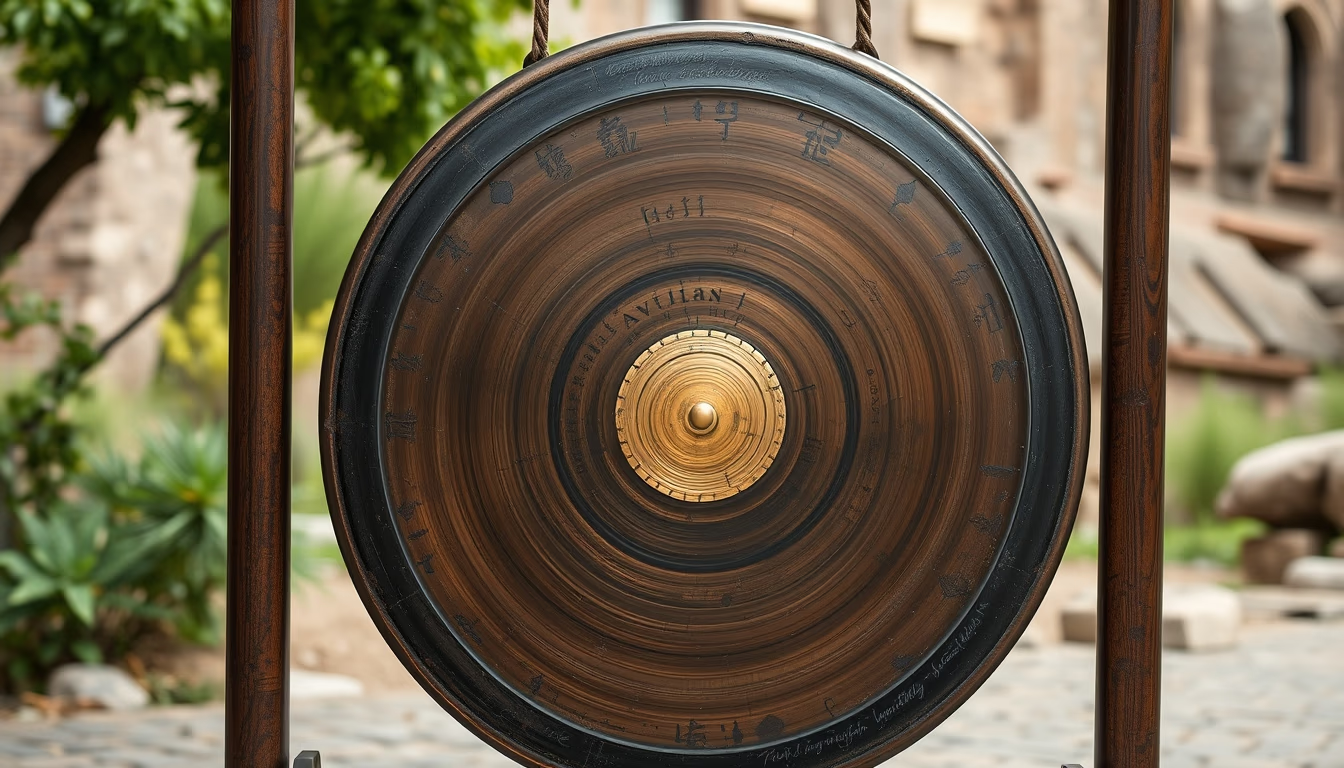
The large bronze gong is an ancient percussion instrument originating from Southeast Asia, known for its deep, resonant sound.
About this subject
The bronze gong is one of the world's oldest musical instruments, with archaeological evidence dating back to approximately 2000 BCE in Southeast Asia, particularly in present-day Vietnam and Indonesia. Traditionally cast from bronze alloy, large gongs can exceed one meter in diameter and weigh hundreds of kilograms. Their handcrafted production requires complex casting and hammering techniques, where the artisan controls thickness and curvature to define pitch and sustain.
In Asian culture, gongs serve purposes beyond music: they are used in religious ceremonies, healing rituals, and as symbols of royal status. In the Indonesian gamelan orchestra, the large gong (known as 'gong ageng') marks the beginning and end of musical phrases, functioning as a rhythmic anchor. In Western music, the gong was incorporated into symphonic orchestras starting in the 19th century, used by composers like Richard Wagner and Gustav Mahler for dramatic and atmospheric effects.
Interestingly, crafting a large gong involves not only manual skill but also acoustic knowledge: the slightly concave shape and upturned rim are designed to concentrate and prolong sound waves. The typical alloy contains copper and tin in a 4:1 ratio, though regional variations may include other metals. Ancient gongs, such as those from China's Han dynasty, were considered sacred objects and often buried with their owners. Today, handcrafted large gongs are still produced in regions like Thailand, Myanmar, and China, maintaining centuries-old traditions.
The sound of a gong can be heard clearly for kilometers due to its low fundamental frequency and rich harmonics. Thus, it was historically used as a communication device in villages, in addition to its ceremonial role. In contemporary music, the gong appears in film scores, ambient music, and experimental compositions, demonstrating its timeless versatility.
Frequently Asked Questions
How is a large bronze gong made?
Crafting involves casting a bronze alloy (copper and tin) in a mold, followed by hot hammering to shape the acoustic profile. The artisan controls thickness and curvature to define pitch and sustain. The process can take weeks.
What is the difference between a gong and a tam-tam?
A gong has a turned-up rim and a defined center, producing a specific pitch. A tam-tam is flat and unpitched, generating an explosive, indefinite sound, commonly used in Western orchestras.
In which cultures is the large gong most traditional?
The large gong is central in Southeast Asian cultures, especially Indonesia (gamelan), Thailand, Myanmar, and China. It is also used in shamanic rituals in Siberia and some African traditions.
Direct URL
https://pub-c7d6a6ea828543ac903a74a341ccb2e1.r2.dev/imagens/gong-large-bronze-national-geographic-style-p6.avifHow to credit
Include a visible link back to UtilizAí. Copy one of the snippets below:
<a href="https://xn--utiliza-eza.com/en/midia/imagens/gong-large-bronze-national-geographic-style-p6">Gong large bronze</a> by <a href="https://xn--utiliza-eza.com">UtilizAí</a>, licensed under <a href="https://creativecommons.org/licenses/by/4.0/">CC BY 4.0</a>.
[Gong large bronze](https://xn--utiliza-eza.com/en/midia/imagens/gong-large-bronze-national-geographic-style-p6) by [UtilizAí](https://xn--utiliza-eza.com), CC BY 4.0
License: CC-BY-4.0