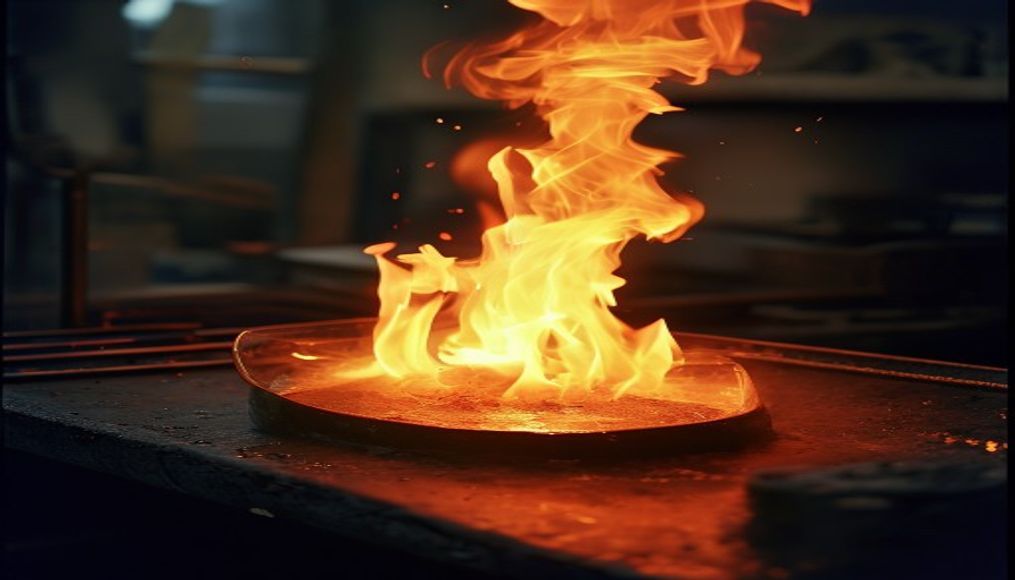
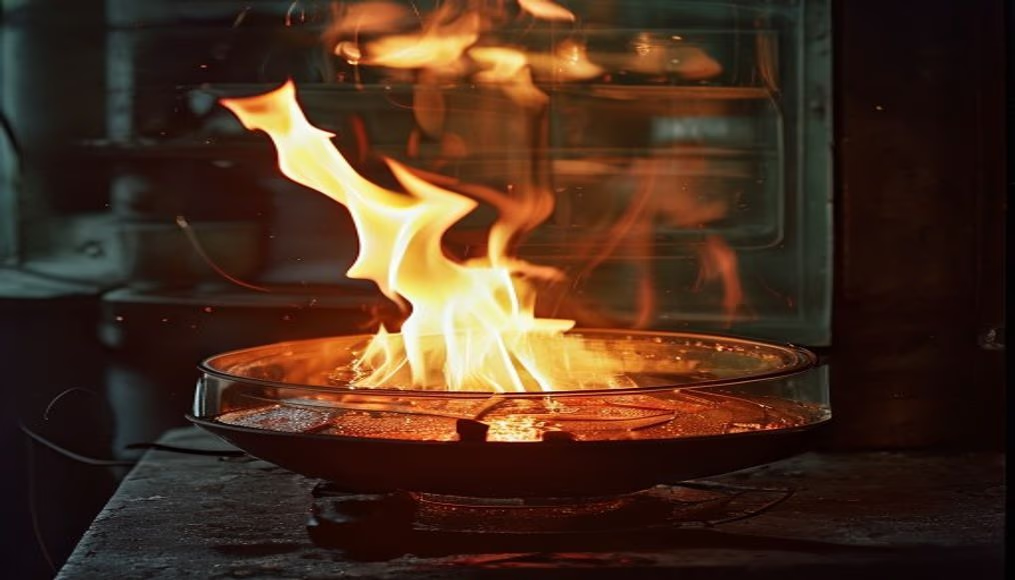
Glassblowing furnace flame
1344×768 · AVIF · CC BY 4.0
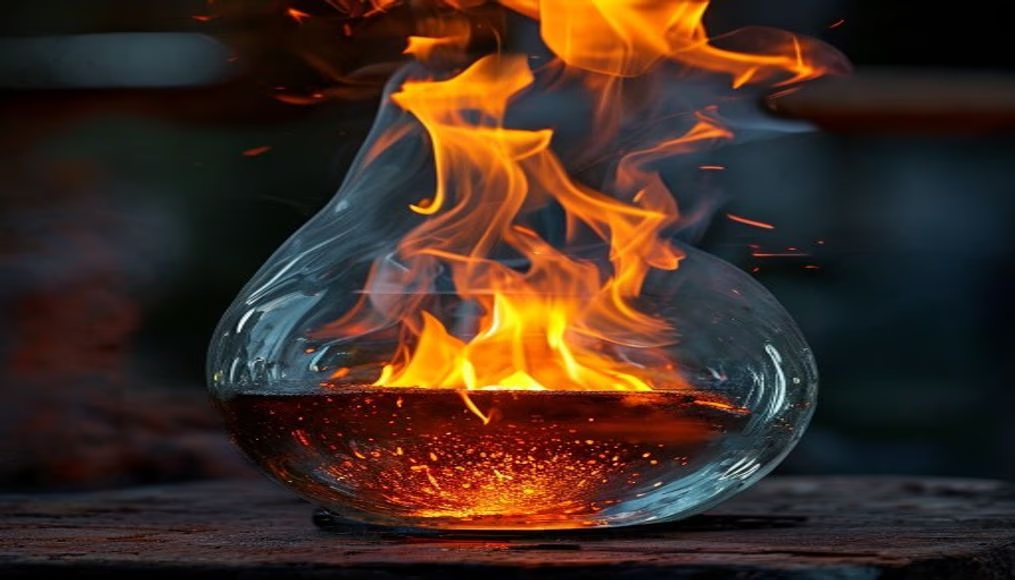
The scorching flame of a glassblowing furnace, where artisans shape molten glass at extreme temperatures.
About this subject
The glassblowing furnace is the heart of any artisan glass studio. Inside, a refractory ceramic crucible keeps the glass at temperatures exceeding 1100 °C, rendering the vitreous mass malleable. The flame, fed by a mixture of gas and compressed air, reaches even hotter zones, often above 1500 °C, and is adjusted according to the artisan's needs. Precise flame control is essential: an oxidizing flame (excess oxygen) produces a bluish glow and prevents contamination, while a reducing flame (excess fuel) yields an orange tone and can be used for specific effects.
Historically, glassblowing flourished in Syria around the 1st century BC and reached its technical and aesthetic peak on the island of Murano, near Venice, from the 13th century onward. Murano's master glassmakers developed techniques that relied entirely on mastery of the flame and furnace temperature. The secret was keeping the glass in an ideal state of fluidity, allowing blowing, twisting, and shaping complex forms. The furnace flame was (and still is) as important a tool as tongs and molds.
The color and intensity of the flame reveal much about firing conditions. In modern furnaces, sensors and thermocouples ensure precision, but many artisans still rely on visual observation of the flame to adjust the process. The dance of the fire tongues is not just a visual spectacle; it indicates thermal homogeneity inside the furnace. Small variations can cause internal stresses in the glass, leading to cracks. Therefore, an experienced glassblower learns to read the flame like a musician reads a score.
Besides temperature, the type of fuel influences the flame's properties. Natural gas and propane are common, but some artisan furnaces use wood or oil. Each fuel imparts a unique character to the flame and consequently to the glass produced. Glassblowing remains a living tradition, combining materials science with manual skill. The furnace flame remains the central element of this ancient alchemy, transforming sand into transparent and colorful works of art.
Frequently Asked Questions
What is the typical temperature of a glassblowing furnace?
Working temperature ranges from 1000 °C to 1200 °C to keep the glass molten. The flame itself can reach up to 1600 °C, depending on the gas-to-air mixture.
How does the glassblower control the furnace flame?
By adjusting valves that regulate gas and compressed air flow. Changing the ratio yields oxidizing (blue) or reducing (orange) flames, each with different effects on the glass.
Why does the furnace flame show different colors?
Colors come from temperature and chemical elements. Sodium gives a yellow flame, boron green, and copper blue or green. The color also indicates flame type: oxidizing (more blue) or reducing (more orange).
Direct URL
https://pub-c7d6a6ea828543ac903a74a341ccb2e1.r2.dev/imagens/glassblowing-furnace-flame-national-geographic-style-p0.avifHow to credit
Include a visible link back to UtilizAí. Copy one of the snippets below:
<a href="https://xn--utiliza-eza.com/en/midia/imagens/glassblowing-furnace-flame-national-geographic-style-p0">Glassblowing furnace flame</a> by <a href="https://xn--utiliza-eza.com">UtilizAí</a>, licensed under <a href="https://creativecommons.org/licenses/by/4.0/">CC BY 4.0</a>.
[Glassblowing furnace flame](https://xn--utiliza-eza.com/en/midia/imagens/glassblowing-furnace-flame-national-geographic-style-p0) by [UtilizAí](https://xn--utiliza-eza.com), CC BY 4.0
License: CC-BY-4.0