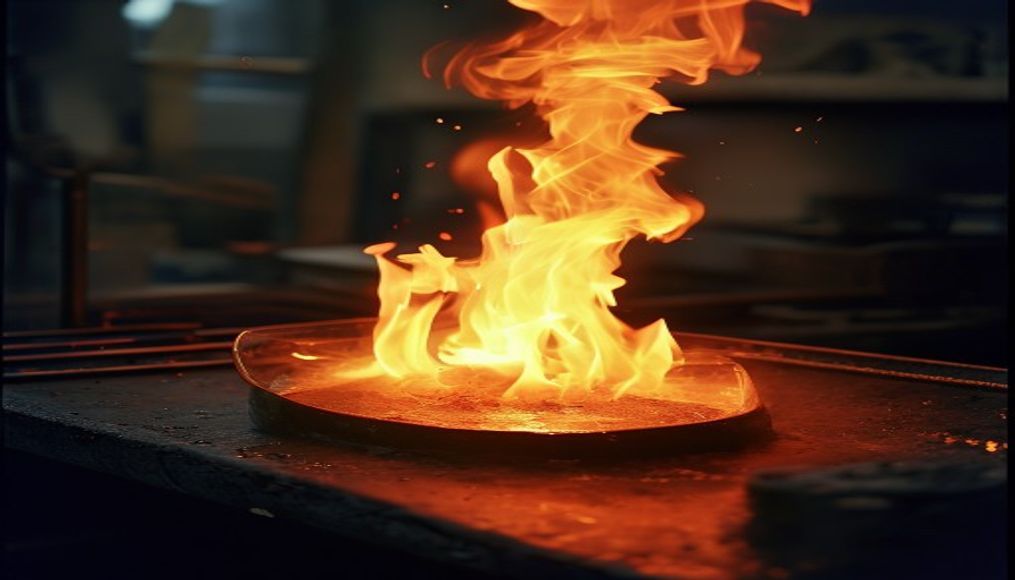
Glassblowing furnace flame
1344×768 · AVIF · CC BY 4.0
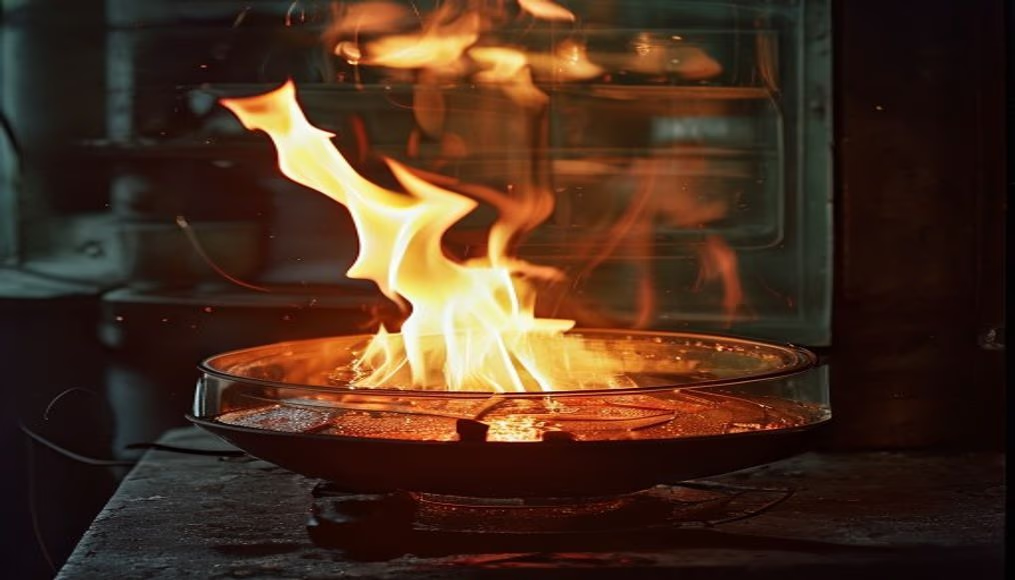
The furnace flame in glassblowing reaches extreme temperatures to melt and shape glass, essential to the art of glassblowing.
About this subject
Glassblowing is an ancient technique that uses furnaces capable of generating intense flames to melt silica and other components. The ideal temperature for working glass ranges between 1,000°C and 1,200°C, depending on the composition. The furnace flame, typically fueled by propane or natural gas, must be oxidizing to avoid impurities in the batch. The color of the flame, ranging from blue to yellow, indicates the ratio of oxygen to fuel, crucial information for the artisan to control the glass viscosity.
The history of glassblowing dates back to the Roman Empire around 50 BC, revolutionizing the production of vessels and decorative objects. The furnace maintains a constant hot zone where glass is gathered on the end of a steel pipe. The furnace flame not only melts the material but also allows reheats during blowing, maintaining plasticity. Each type of glass has a specific working range; for example, borosilicate glass resists thermal shock and requires higher temperatures.
Curiosity: the furnace flame can reach over 1,500°C in the primary zone, and artisans use special glasses to filter intense light and protect their eyes. Glassblowing is considered intangible cultural heritage in several regions, such as Murano, Italy, and in small Brazilian workshops. The precision of the flame is as important as manual skill to create symmetrical and thin pieces. Oxidation or reduction of the flame alters the final color of the glass, influenced by the addition of metal oxides.
The relevance of the glassblowing furnace goes beyond art: it is used in manufacturing scientific instruments, hourglasses, and even optical fibers. Controlled temperature and atmosphere inside the furnace prevent bubble formation and ensure homogeneity. In contemporary contexts, glassworks combine tradition and innovation, with modern electric furnaces offering more control, but the fuel flame is still preferred by many master glassblowers for its tactile response.
Frequently Asked Questions
What is the temperature of a glassblowing furnace flame?
The flame can reach between 1,000°C and 1,200°C for common glass, but the primary zone may exceed 1,500°C.
Why is the color of the flame important in glassblowing?
The color indicates whether the flame is oxidizing (blue) or reducing (yellow), affecting the purity and final color of the glass.
What gases are used in a glass furnace?
The most common are propane, natural gas, and in some cases pure oxygen to increase temperature.
Direct URL
https://pub-c7d6a6ea828543ac903a74a341ccb2e1.r2.dev/imagens/glassblowing-furnace-flame-film-grain-authentic-p3.avifHow to credit
Include a visible link back to UtilizAí. Copy one of the snippets below:
<a href="https://xn--utiliza-eza.com/en/midia/imagens/glassblowing-furnace-flame-film-grain-authentic-p3">Glassblowing furnace flame</a> by <a href="https://xn--utiliza-eza.com">UtilizAí</a>, licensed under <a href="https://creativecommons.org/licenses/by/4.0/">CC BY 4.0</a>.
[Glassblowing furnace flame](https://xn--utiliza-eza.com/en/midia/imagens/glassblowing-furnace-flame-film-grain-authentic-p3) by [UtilizAí](https://xn--utiliza-eza.com), CC BY 4.0
License: CC-BY-4.0