Gladius roman short
1344×768 · AVIF · CC BY 4.0

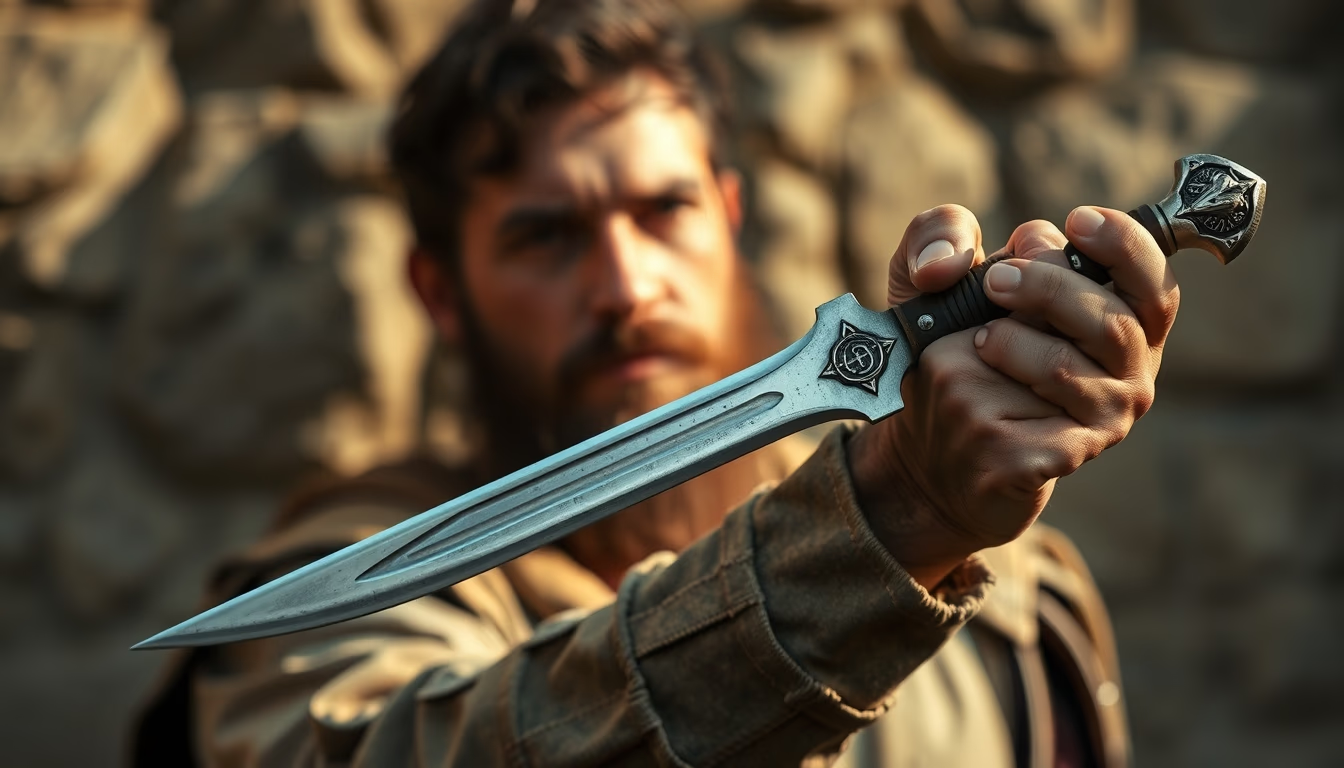
The Roman gladius, a short sword used by legionaries, was key to Rome's military expansion from the 3rd century BC to the 3rd century AD.
About this subject
The gladius (Latin for sword) is a short blade about 60 to 85 centimeters long, double‑edged with a sharp point, designed for thrusting and cutting. It was the standard weapon of Roman legionaries during the Republic and Empire, especially from the Punic Wars (3rd century BC) to the 3rd century AD. Its design borrowed heavily from Celtiberian swords of the Iberian Peninsula, adapted to Roman close‑quarter tactics.
Manufacturing involved combining iron and steel through quenching and welding, giving the blade both hardness and flexibility. The small guard was often made of wood or bone, and the hilt sometimes included metal rings for decoration. The scabbard, made of wood covered with leather or metal, featured a suspension system that allowed the sword to be carried on the right side, enabling a quick draw with the right hand. The gladius was used together with the rectangular scutum, forming the Roman battle line that marched in tight formation and delivered precise strikes.
Beyond military utility, the gladius became a symbol of Roman authority and legionary discipline. Ancient authors like Polybius and Vegetius described its use in battles such as Cannae (216 BC) and the conquest of Gaul. Archaeological finds, including those from Pompeii and Britain, have yielded well‑preserved examples, often in waterlogged conditions. Today, the gladius is prized by collectors and historical re‑enactors who study its forging and handling.
A notable fact: the term gladiator derives from gladius, highlighting the link between the sword and arena combat. Gladiators, however, often used a lighter, shorter version called the gladius pugio.
Frequently Asked Questions
What is the typical length of a Roman gladius?
The gladius measured between 60 and 85 centimeters overall, with the blade around 50 to 70 cm.
Was the gladius used for cutting or thrusting?
It was designed for both, but legionaries trained mainly for thrusting attacks, targeting the enemy’s abdomen or throat.
Why was the gladius replaced by longer swords?
From the 3rd century AD, the Roman army adopted the longer spatha due to increased cavalry and evolving battle tactics.
Direct URL
https://pub-c7d6a6ea828543ac903a74a341ccb2e1.r2.dev/imagens/gladius-roman-short-aerial-drone-shot-fresh3.avifHow to credit
Include a visible link back to UtilizAí. Copy one of the snippets below:
<a href="https://xn--utiliza-eza.com/en/midia/imagens/gladius-roman-short-aerial-drone-shot-fresh3">Gladius roman short</a> by <a href="https://xn--utiliza-eza.com">UtilizAí</a>, licensed under <a href="https://creativecommons.org/licenses/by/4.0/">CC BY 4.0</a>.
[Gladius roman short](https://xn--utiliza-eza.com/en/midia/imagens/gladius-roman-short-aerial-drone-shot-fresh3) by [UtilizAí](https://xn--utiliza-eza.com), CC BY 4.0
License: CC-BY-4.0