Gelato display cone
1344×768 · AVIF · CC BY 4.0
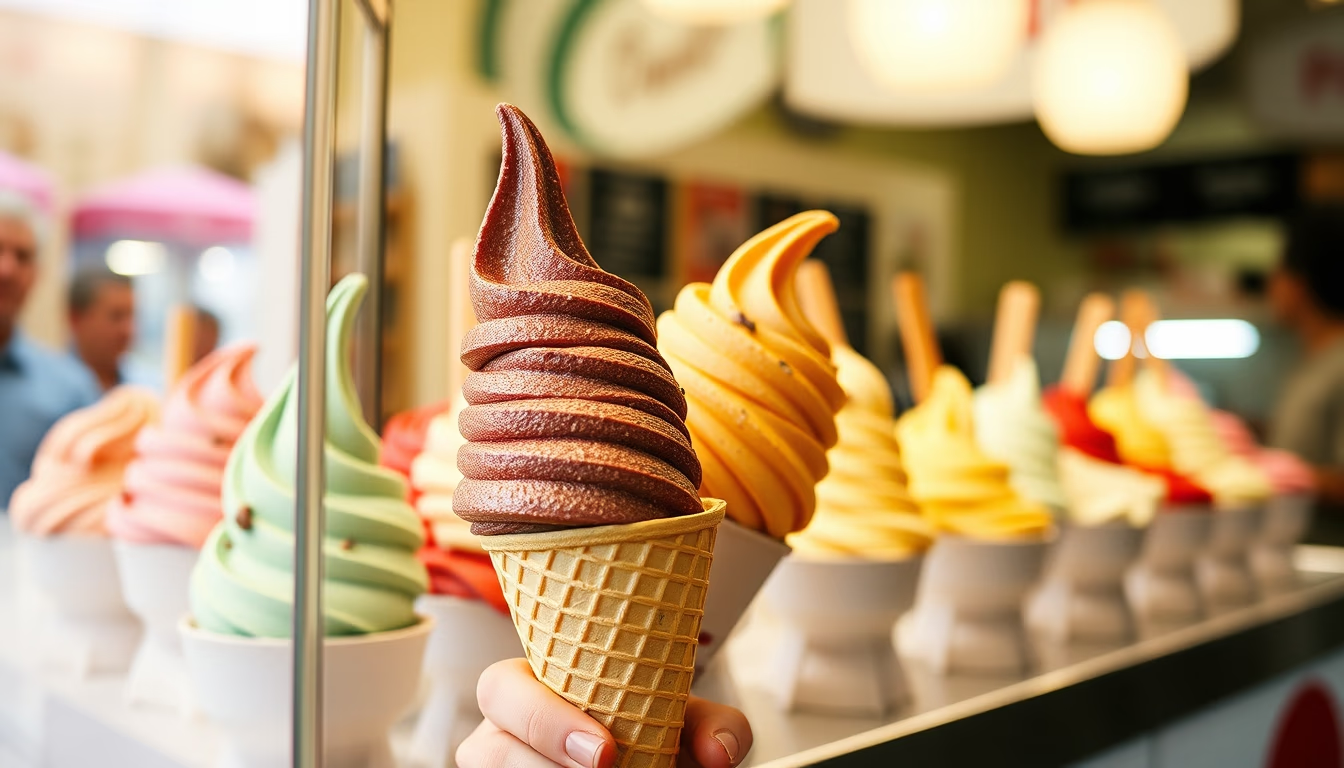
Artisanal Italian gelato served in a crispy cone, a classic from gelaterias that delights palates with authentic flavors and unparalleled creaminess.
About this subject
Gelato is an Italian frozen dessert known for its dense and creamy texture, achieved through a production process that uses less fat and air than commercial ice cream. Its history dates back to the 16th century when architect Bernardo Buontalenti served a frozen dessert at the Medici court in Florence. Since then, the tradition spread across Italy, with each region developing unique recipes.
Unlike regular ice cream, gelato is churned at slower speeds, incorporating less air (overrun), resulting in higher density and more intense flavor. Typical ingredients include milk, cream, sugar, and natural flavorings such as fresh fruit, nuts, chocolate, or pistachio. Serving temperature between -10°C and -12°C is higher than ice cream, enhancing flavor perception.
In Italy, artisanal gelaterias are a cultural symbol, with master gelatieri following techniques passed down through generations. Cities like Florence, Rome, Bologna, and Milan are famous for their award-winning gelaterias. Today, gelato has conquered the world, adapting to local tastes without losing its essence. The crispy cone, made from flour, sugar, and butter, is the classic serving vessel, contrasting with the creamy gelato.
Frequently Asked Questions
What is the difference between gelato and ice cream?
Gelato has less fat (about 4-8%) and less air incorporated (20-30%) than ice cream, resulting in a denser texture and more intense flavor. It is also served at a higher temperature, between 10°F and 21°F (-12°C to -10°C).
Is gelato made by hand?
Yes, artisanal gelato is produced in small batches with fresh ingredients, no preservatives or emulsifiers. The process includes pasteurization of the base, aging, and slow churning in a gelato machine.
What is the historical origin of gelato?
Modern gelato originated in 16th-century Italy, with contributions from architect Bernardo Buontalenti and alchemist Cosimo Ruggieri. It became popular in Renaissance courts and spread across the country by the 20th century.
Direct URL
https://pub-c7d6a6ea828543ac903a74a341ccb2e1.r2.dev/imagens/gelato-display-cone-film-grain-authentic-p2.avifHow to credit
Include a visible link back to UtilizAí. Copy one of the snippets below:
<a href="https://xn--utiliza-eza.com/en/midia/imagens/gelato-display-cone-film-grain-authentic-p2">Gelato display cone</a> by <a href="https://xn--utiliza-eza.com">UtilizAí</a>, licensed under <a href="https://creativecommons.org/licenses/by/4.0/">CC BY 4.0</a>.
[Gelato display cone](https://xn--utiliza-eza.com/en/midia/imagens/gelato-display-cone-film-grain-authentic-p2) by [UtilizAí](https://xn--utiliza-eza.com), CC BY 4.0
License: CC-BY-4.0