Gas station attendant filling up car next to fuel price sign
1344×768 · AVIF · CC BY 4.0
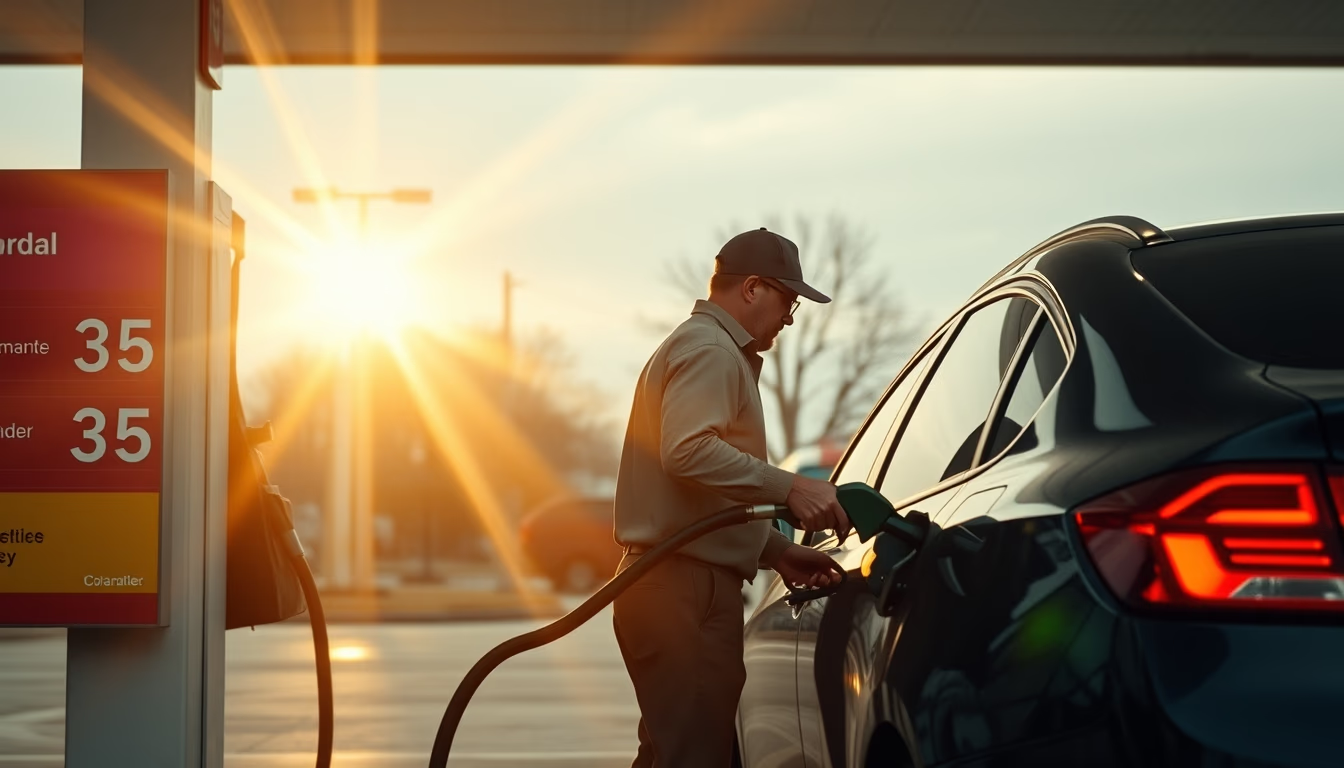
Gas station attendant fills a car next to a fuel price sign on an overcast day, depicting the routine at Brazilian gas stations.
About this subject
In Brazil, gas stations are mandatory stops for millions of drivers. The scene shows an attendant filling a vehicle next to a sign displaying fuel prices, something that has become even more relevant due to frequent price fluctuations. The attendant, an essential professional in this ecosystem, not only refuels the car but also checks oil, inflates tires, and offers services like windshield cleaning.
The price sign, usually in large letters and bright colors, serves as an economic thermometer for consumers. On overcast days, such as the one depicted, diffused light can make reading the values more difficult, but stations often maintain adequate lighting. Regular gasoline, ethanol, and diesel are the most common fuels, with ethanol being a widely used renewable alternative in the country.
Interestingly, Brazil has one of the largest flex-fuel vehicle fleets in the world, capable of using any proportion of gasoline and ethanol. The choice between the two depends on price: ethanol is advantageous when it costs up to 70% of the price of gasoline. Additionally, the country has a vast network of over 40,000 stations, many operating 24 hours a day.
The presence of the attendant is a Brazilian tradition, unlike countries where self-service is common. These professionals often rely on tips, and their work involves risks such as exposure to fuel vapors and repetitive motion. Sector regulations, including mandatory use of safety equipment, aim to minimize these risks.
Frequently Asked Questions
Why does Brazil still have gas station attendants?
The presence of attendants is a tradition and a legal requirement in many states. They provide services such as refueling, oil checks, and tire inflation, while also generating jobs. Self-service is prohibited in some regions for safety reasons.
How to read the fuel price sign?
The sign shows the price per liter for each fuel. In Brazil, prices vary by state and station. Consumers should compare ethanol and gasoline prices: if ethanol costs up to 70% of the gasoline price, it is more advantageous to use ethanol in flex-fuel cars.
What are the most common fuels at Brazilian gas stations?
The most common are regular gasoline, hydrated ethanol, diesel (for heavy vehicles), and, at some stations, CNG (compressed natural gas). Additivated and premium gasoline are also available but less used.
Direct URL
https://pub-c7d6a6ea828543ac903a74a341ccb2e1.r2.dev/imagens/gas-station-attendant-filling-up-car-next-to-fuel-price-sign-editorial-overcast-daytime-5.avifHow to credit
Include a visible link back to UtilizAí. Copy one of the snippets below:
<a href="https://xn--utiliza-eza.com/en/midia/imagens/gas-station-attendant-filling-up-car-next-to-fuel-price-sign-editorial-overcast-daytime-5">Gas station attendant filling up car next to fuel price sign</a> by <a href="https://xn--utiliza-eza.com">UtilizAí</a>, licensed under <a href="https://creativecommons.org/licenses/by/4.0/">CC BY 4.0</a>.
[Gas station attendant filling up car next to fuel price sign](https://xn--utiliza-eza.com/en/midia/imagens/gas-station-attendant-filling-up-car-next-to-fuel-price-sign-editorial-overcast-daytime-5) by [UtilizAí](https://xn--utiliza-eza.com), CC BY 4.0
License: CC-BY-4.0