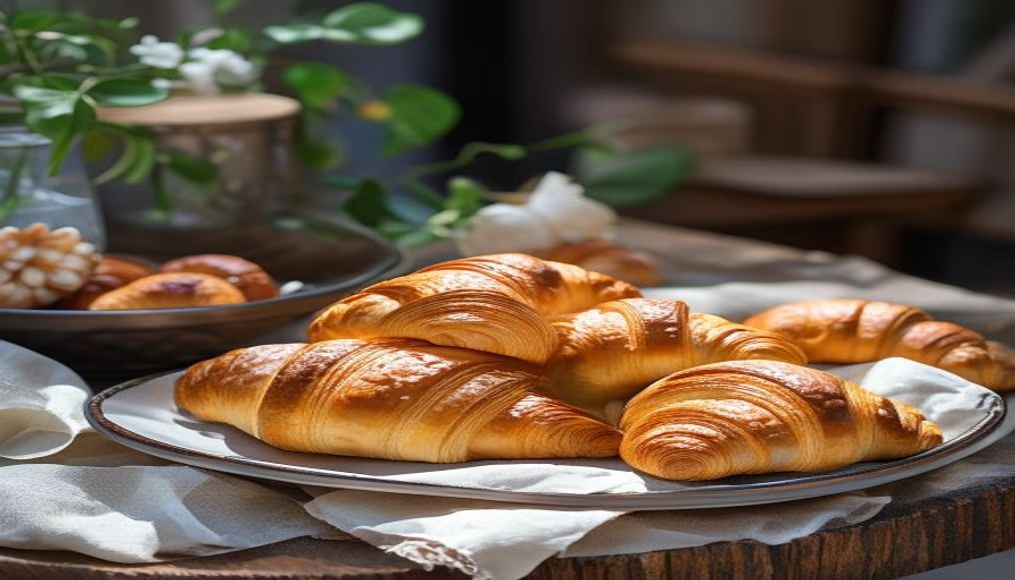
Fresh croissants on linen
1344×768 · AVIF · CC BY 4.0
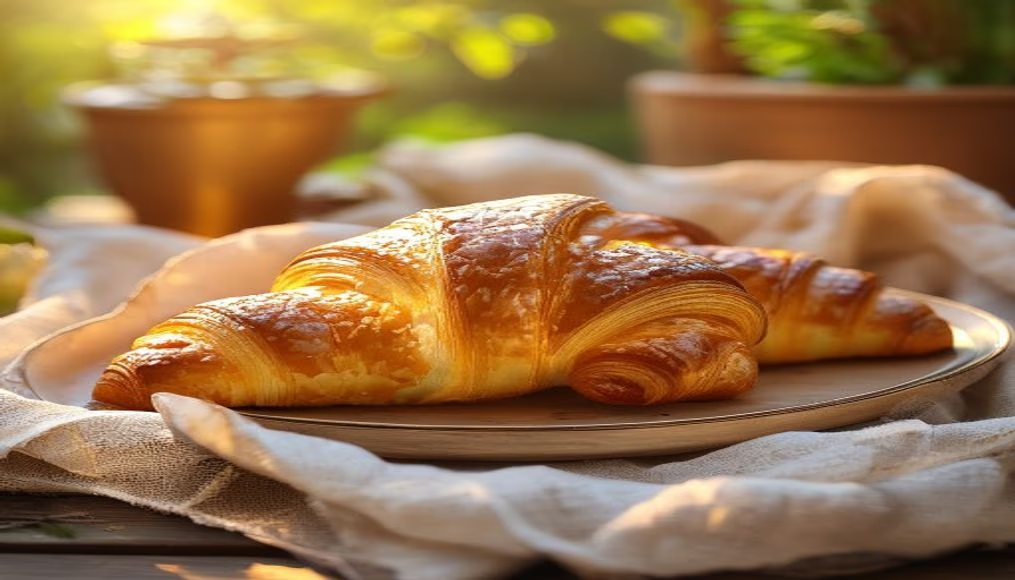
Fresh croissants served on linen: origin, technique, and tradition of French viennoiserie.
About this subject
The croissant, an icon of French baking, has a debated origin: its ancestor is the Austrian kipferl, a crescent-shaped bread. The modern flaky, buttery version was developed in Paris in the early 20th century, when French bakers perfected the lamination technique (repeated folding of dough and butter). The process requires precision: the dough must rest between folds to ensure thin, crispy layers.
Quality croissants rely on simple but noble ingredients: high-gluten wheat flour, high-quality butter (preferably 82% fat), yeast, milk, sugar, and salt. Slow fermentation, 24 to 48 hours, develops flavor and texture. After shaping, the croissant is brushed with egg wash and baked in a hot oven until golden.
In France, croissants are mainly eaten at breakfast, with café au lait or hot chocolate. They are so emblematic that Paris has a route of best croissants, elected annually by contests like the Grand Prix de la Boulangerie. A good croissant should have uniform golden color, visible layers when torn, a soft honeycomb interior, and buttery flavor without excess grease.
Outside France, regional adaptations include filled croissants with cheese, ham, or sweet versions with Nutella. The world record for the largest croissant was set in 2018 in Italy, measuring 40 meters long. But the essence remains the artisan technique that turns few ingredients into a unique sensory experience.
Frequently Asked Questions
What is the difference between a croissant and a pain au chocolat?
Pain au chocolat is made with the same laminated dough as a croissant but is shaped into a rectangle and filled with chocolate bars. A croissant is crescent-shaped and plain, without filling.
How to identify a high-quality croissant?
A good croissant has a uniform golden color, thin defined layers when torn, an irregular honeycomb interior (from slow fermentation), and a crispy exterior with a soft inside. It should be light and buttery, not greasy.
Is the croissant truly French?
Not entirely. The crescent shape comes from the Austrian kipferl, but the lamination technique and the flaky buttery version were perfected in France in the 20th century, making the croissant a symbol of French baking.
Direct URL
https://pub-c7d6a6ea828543ac903a74a341ccb2e1.r2.dev/imagens/fresh-croissants-on-linen-travel-photography-v10.avifHow to credit
Include a visible link back to UtilizAí. Copy one of the snippets below:
<a href="https://xn--utiliza-eza.com/en/midia/imagens/fresh-croissants-on-linen-travel-photography-v10">Fresh croissants on linen</a> by <a href="https://xn--utiliza-eza.com">UtilizAí</a>, licensed under <a href="https://creativecommons.org/licenses/by/4.0/">CC BY 4.0</a>.
[Fresh croissants on linen](https://xn--utiliza-eza.com/en/midia/imagens/fresh-croissants-on-linen-travel-photography-v10) by [UtilizAí](https://xn--utiliza-eza.com), CC BY 4.0
License: CC-BY-4.0