French horn polished brass
1344×768 · AVIF · CC BY 4.0
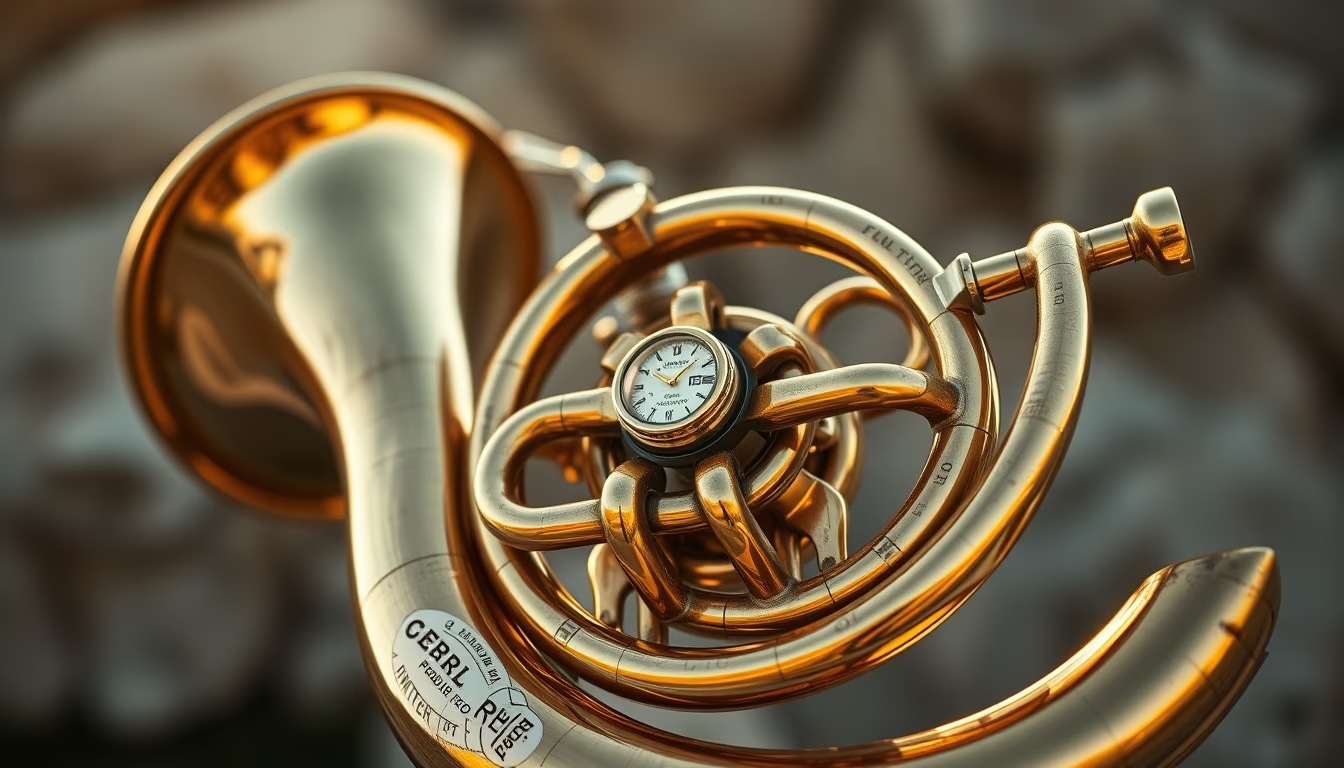
The French horn made of polished brass is a brass wind instrument with a mellow and versatile sound, used in orchestras and bands.
About this subject
The French horn, also simply called horn in orchestral contexts, is a brass instrument distinguished by its long coiled tubing and wide bell. Typically crafted from polished brass, the instrument receives a clear lacquer to preserve its shine. Brass is an alloy of copper and zinc, and its composition directly affects the horn's tonal qualities. The polished surface not only has an aesthetic appeal but also facilitates sound projection.
In musical history, the French horn gained prominence in symphonic orchestras during the 18th century. The modern valve horn was patented by German musician Heinrich Stölzel in 1818, introducing rotary valves that made the instrument fully chromatic. Before that, natural horns could only play notes from the harmonic series. Composers like Mozart, Brahms, and Richard Strauss wrote iconic horn solos that showcase its lyrical and heroic character.
Despite its name, the French horn is largely a German invention. The term "French" originated in England where the instrument became popular after being used by French orchestras in the 17th century. Polished brass is preferred by many professional players because the smooth surface minimizes acoustic interference. Maintenance requires careful cleaning to prevent tarnishing, often using a soft cloth and specialized metal polish. The instrument's weight (around 2, 3 kg) and the challenge of controlling its intonation make it one of the most demanding brass instruments to master.
Frequently Asked Questions
Why is the French horn made of polished brass?
Brass is chosen for durability and acoustic properties. The polish aids sound projection and gives a shiny finish, but the instrument is usually lacquered to prevent tarnishing.
Is there a difference between a French horn and a German horn?
Essentially the same instrument. 'French horn' is primarily an English term. Subtle technical differences exist (e.g., valve rotation), but 'horn' is the correct generic name.
Why is the French horn considered a difficult instrument?
It requires precise embouchure control because the harmonic series has close partials. Hand positioning inside the bell affects pitch, and coordinating valves with breathing takes years of practice.
Direct URL
https://pub-c7d6a6ea828543ac903a74a341ccb2e1.r2.dev/imagens/french-horn-polished-brass-travel-photography-p2.avifHow to credit
Include a visible link back to UtilizAí. Copy one of the snippets below:
<a href="https://xn--utiliza-eza.com/en/midia/imagens/french-horn-polished-brass-travel-photography-p2">French horn polished brass</a> by <a href="https://xn--utiliza-eza.com">UtilizAí</a>, licensed under <a href="https://creativecommons.org/licenses/by/4.0/">CC BY 4.0</a>.
[French horn polished brass](https://xn--utiliza-eza.com/en/midia/imagens/french-horn-polished-brass-travel-photography-p2) by [UtilizAí](https://xn--utiliza-eza.com), CC BY 4.0
License: CC-BY-4.0