Fossil specimen ancient
1344×768 · AVIF · CC BY 4.0
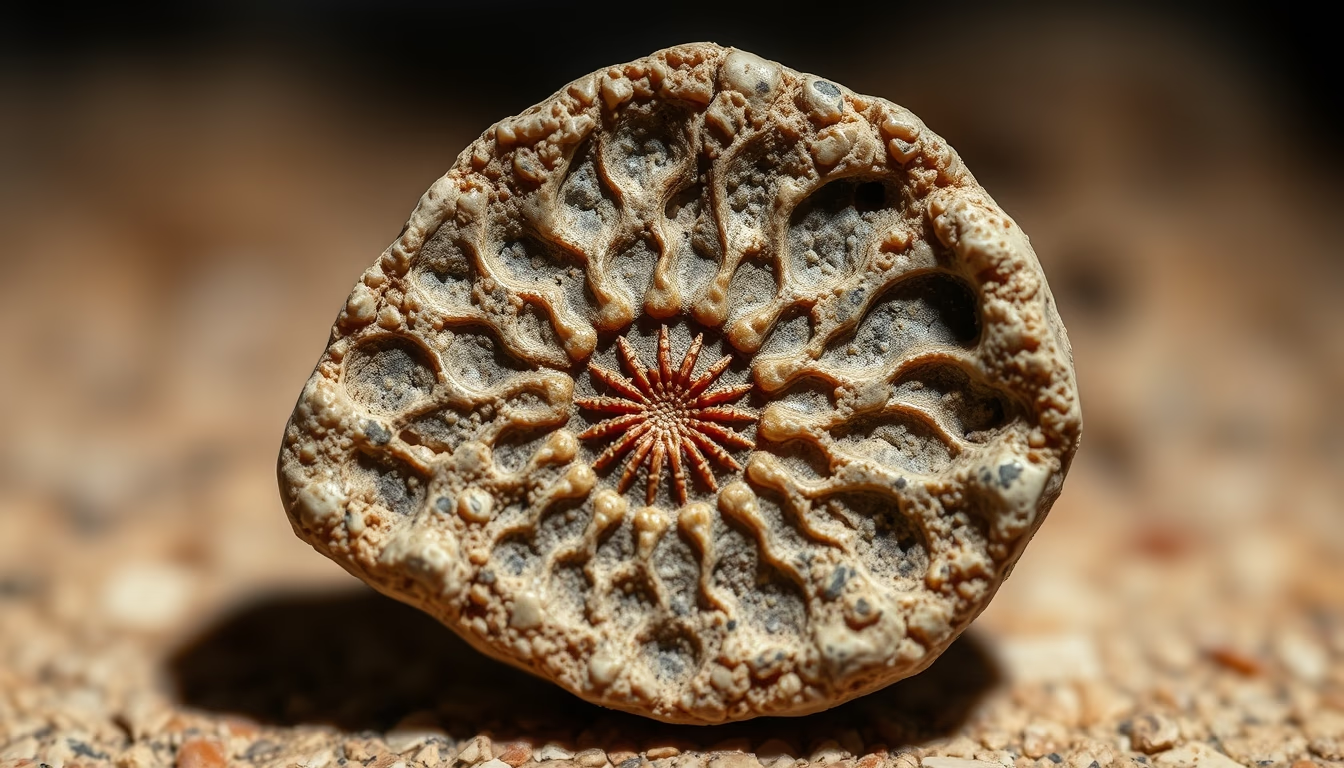
Ancient fossil specimen in fine art photography, revealing details of prehistoric life preserved in sedimentary rock.
About this subject
Fossils are remains or traces of organisms that lived in past geological eras, naturally preserved in sedimentary rocks. This ancient specimen, captured in fine art photography, exemplifies how fossilization occurs when minerals gradually replace organic matter, retaining the original shape. Common fossils include shells, bones, teeth, and leaf impressions, found worldwide from deserts to riverbeds. In Brazil, fossil sites like the Araripe Basin (Ceará) and the Paraná Basin are rich in Cretaceous and Devonian specimens, respectively. High-resolution fossil photography is used by paleontologists to document and study morphological details without damaging the original material. Beyond scientific value, well-preserved fossils are appreciated as art and decoration, connecting viewers to a past millions of years old. The lighting technique in fine art photography enhances textures and reliefs, revealing structures that might go unnoticed by the naked eye. This approach merges aesthetics and science, allowing the general public to appreciate the intrinsic beauty of fossils. Although the image does not show a specific fossil, it represents the diversity of forms ancient life took, from trilobites to dinosaurs. Fossil preservation is crucial for understanding evolution and climate change over geological time. Museums and private collectors often acquire aesthetically valuable pieces, but fossil trading is regulated in many countries to prevent illegal trafficking and loss of scientific heritage. Fine art photography of fossils thus democratizes access to these relics, enabling anyone to explore details that would typically require a museum visit.
Frequently Asked Questions
How are fossils formed?
Fossils form when an organism is rapidly buried by sediment, such as sand or mud. Over time, dissolved minerals in water replace organic matter, creating a stone replica of the original structure.
Where can I find fossils in Brazil?
Important fossil sites in Brazil include the Araripe Basin (Ceará), famous for Cretaceous fossils, and the Paraná Basin, with Devonian fossils. Other locations include the Santa Maria region (Rio Grande do Sul) and the Rio do Peixe Valley (São Paulo).
Why is fine art photography of fossils important?
Fine art photography of fossils combines aesthetics and science, revealing morphological details and textures that aid paleontological research. It also allows the public to appreciate fossils without damaging them, democratizing access to knowledge.
Direct URL
https://pub-c7d6a6ea828543ac903a74a341ccb2e1.r2.dev/imagens/fossil-specimen-ancient-fine-art-photography.avifHow to credit
Include a visible link back to UtilizAí. Copy one of the snippets below:
<a href="https://xn--utiliza-eza.com/en/midia/imagens/fossil-specimen-ancient-fine-art-photography">Fossil specimen ancient</a> by <a href="https://xn--utiliza-eza.com">UtilizAí</a>, licensed under <a href="https://creativecommons.org/licenses/by/4.0/">CC BY 4.0</a>.
[Fossil specimen ancient](https://xn--utiliza-eza.com/en/midia/imagens/fossil-specimen-ancient-fine-art-photography) by [UtilizAí](https://xn--utiliza-eza.com), CC BY 4.0
License: CC-BY-4.0