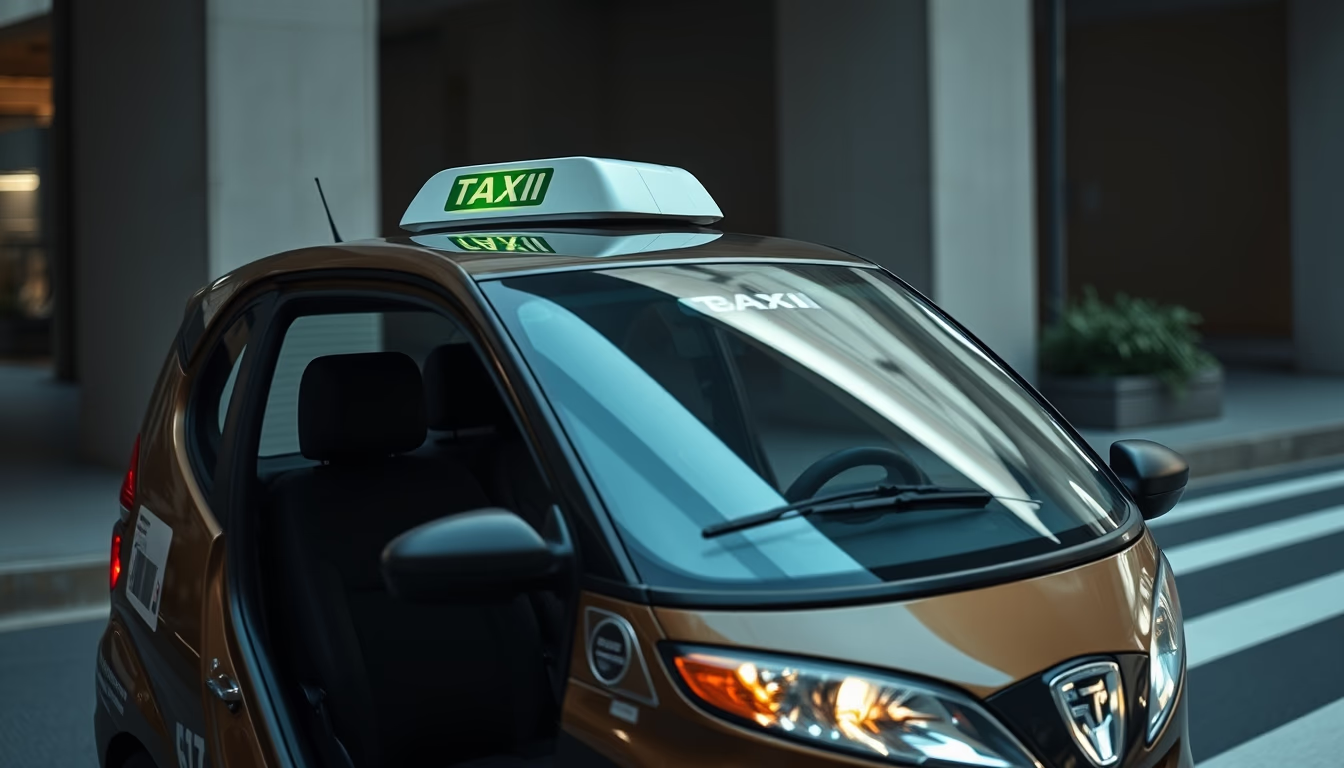
Flying taxi concept urban
1344×768 · AVIF · CC BY 4.0
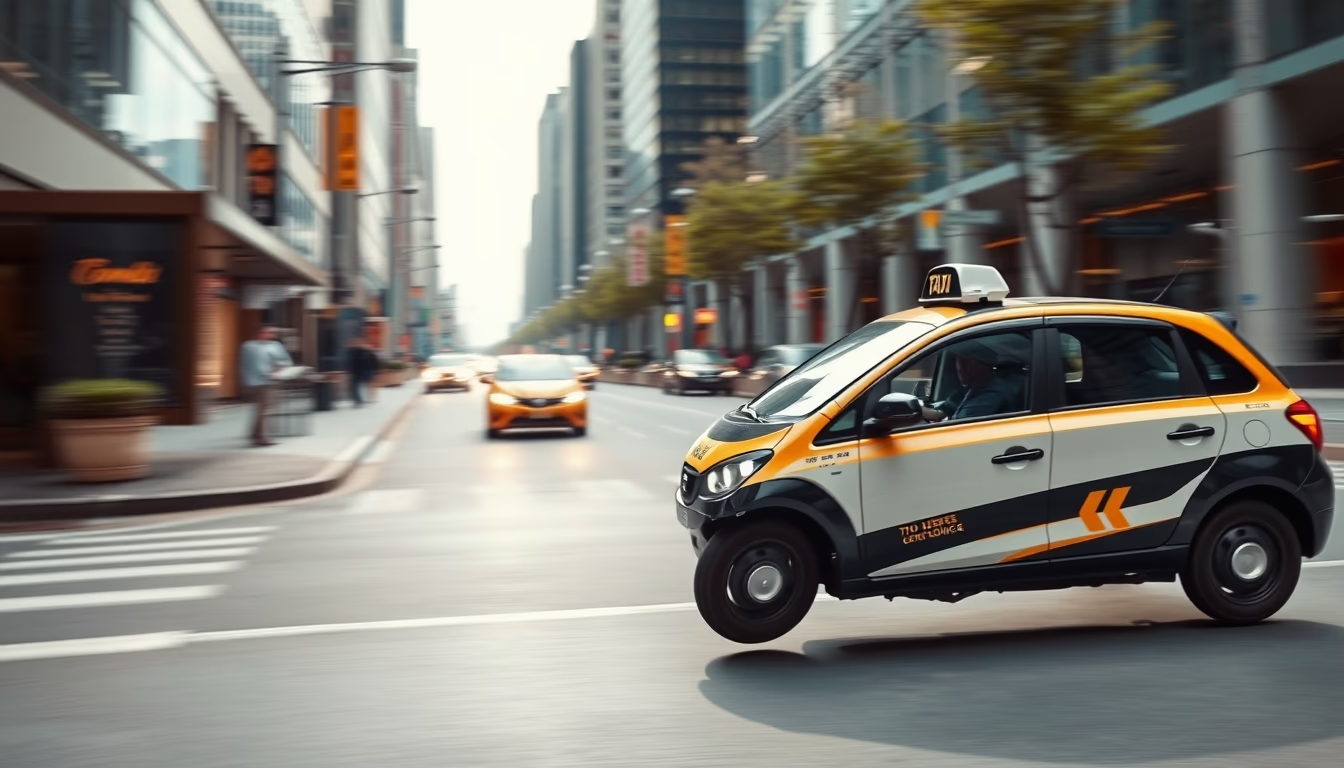
Urban flying taxi concepts evolve with eVTOLs, promising sustainable air mobility and congestion relief in megacities.
About this subject
Urban flying taxi concepts, based on electric vertical takeoff and landing (eVTOL) aircraft, represent one of the most ambitious bets on 21st-century mobility. Companies like Eve Air Mobility (a subsidiary of Embraer) and Joby Aviation lead the development of vehicles that combine autonomy, low noise, and zero emissions. These aircraft are designed for short flights of 50 to 150 km, ideal for connecting peripheral neighborhoods to financial centers or airports.
The concept operates on three pillars: vertiport infrastructure (landing pads on rooftops), automated air traffic management, and high-density rechargeable batteries. Cities like São Paulo, Rio de Janeiro, and Dubai have already announced pilot projects for 2026. In Brazil, the partnership between Embraer and urban passenger transporters (e.g., Uber) signals integration with mobility apps.
Economic viability depends on production cost reduction and regulatory certification. Brazil's ANAC and the US FAA are working on specific eVTOL rules. Morgan Stanley estimates that the global urban air mobility market could reach $1 trillion by 2040.
Fun facts: first prototypes have flown since 2021, but large-scale commercial operation still faces challenges such as battery range (currently limited to 30 minutes of flight) and public acceptance. Designs often draw inspiration from multirotor drones or fixed-wing aircraft with tilting propellers, optimizing efficiency across flight phases.
Frequently Asked Questions
When will flying taxis start commercial operations in Brazil?
First commercial flights are expected in 2026, with experimental routes in São Paulo and Rio de Janeiro, pending ANAC certification.
What is the current range of an eVTOL flying taxi?
Most prototypes have a flight time of 30 to 60 minutes, enough for urban trips up to 150 km, but battery technology still limits operation duration.
How much will a flying taxi ride cost?
Initial estimates suggest prices between $50 and $150 per trip, comparable to luxury taxis or helicopters, but expected to decrease with production scale.
Direct URL
https://pub-c7d6a6ea828543ac903a74a341ccb2e1.r2.dev/imagens/flying-taxi-concept-urban-commercial-product-photography-p3.avifHow to credit
Include a visible link back to UtilizAí. Copy one of the snippets below:
<a href="https://xn--utiliza-eza.com/en/midia/imagens/flying-taxi-concept-urban-commercial-product-photography-p3">Flying taxi concept urban</a> by <a href="https://xn--utiliza-eza.com">UtilizAí</a>, licensed under <a href="https://creativecommons.org/licenses/by/4.0/">CC BY 4.0</a>.
[Flying taxi concept urban](https://xn--utiliza-eza.com/en/midia/imagens/flying-taxi-concept-urban-commercial-product-photography-p3) by [UtilizAí](https://xn--utiliza-eza.com), CC BY 4.0
License: CC-BY-4.0