Flying boat catalina
1344×768 · AVIF · CC BY 4.0

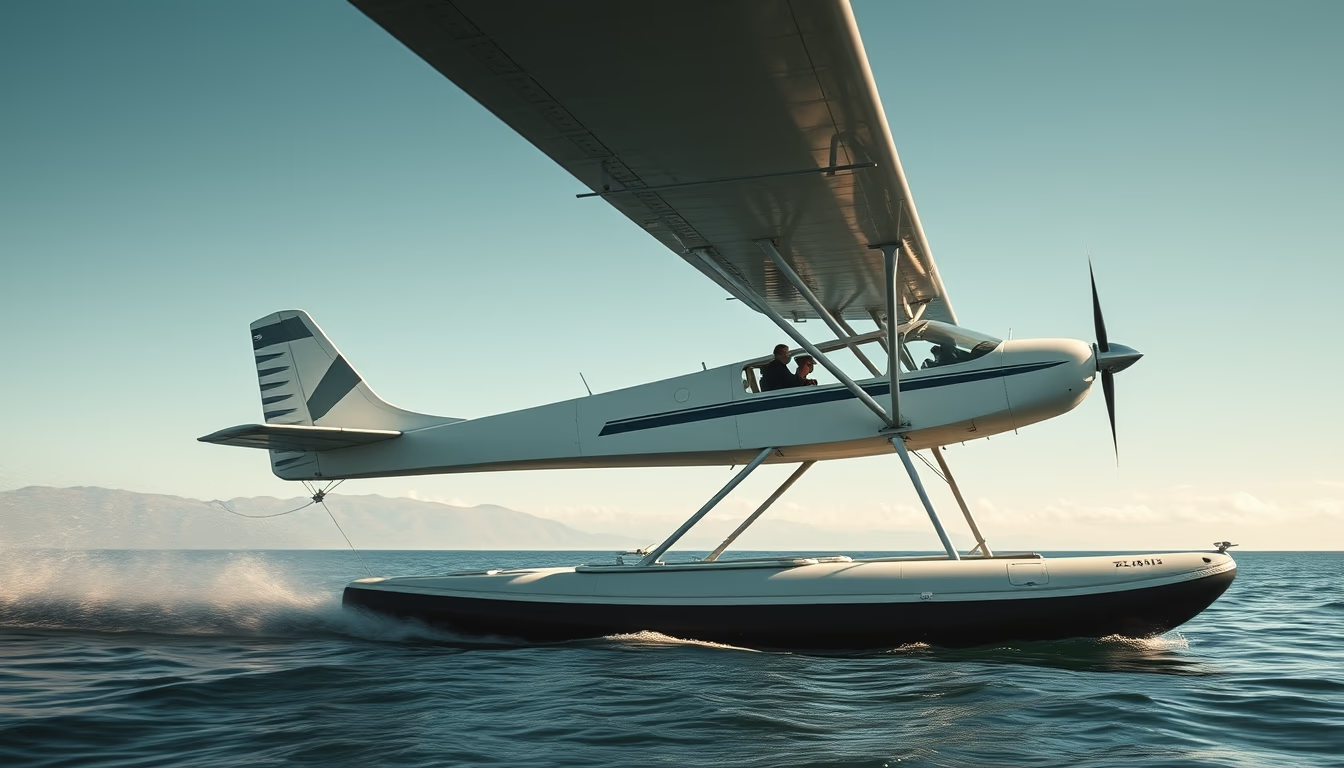
The Consolidated PBY Catalina was a legendary military flying boat, widely used in World War II for maritime patrol, rescue, and bombing missions.
About this subject
The Consolidated PBY Catalina is one of the most iconic flying boats in aviation history. Developed by the Consolidated Aircraft Corporation in the United States, it first flew in 1935 and entered service in 1936. Designed for long-range maritime patrol, the Catalina became the most produced amphibious aircraft of World War II, with over 4,000 units built.
Its ability to land on water and operate from coastal bases made it essential for anti-submarine warfare and search-and-rescue missions. The PBY gained fame for rescuing crews of torpedoed ships and for nighttime attacks on enemy submarines. Powered by Pratt & Whitney R-1830 radial engines, the Catalina had an endurance of up to 4,800 kilometers, allowing flights exceeding 20 hours.
In Brazil, the Brazilian Air Force operated Catalinas from 1942, using them for South Atlantic patrol during World War II. One remarkable episode was their involvement in actions against Axis submarines. After the war, many Catalinas were converted for civilian use, carrying passengers and cargo in remote areas, especially in the Amazon and Alaska.
Interestingly, the nickname "Catalina" was suggested by Consolidated Aircraft itself, after Santa Catalina Island in California. The model also served in several Allied air forces, including Canada, Australia, and the United Kingdom, which called it "Canso" in some versions. Although retired from military service, a few examples still fly at air shows and are maintained by enthusiasts.
Frequently Asked Questions
How many PBY Catalinas are still airworthy?
It is estimated that fewer than 20 PBY Catalinas are currently in flying condition. Many are maintained by aviation museums and private collectors, being displayed at air shows and events.
What was the role of the Catalina in World War II?
The Catalina was used mainly for maritime patrol, anti-submarine warfare, search and rescue, and night bombing. It was crucial in the Atlantic and Pacific, detecting and attacking enemy submarines, as well as rescuing downed pilots at sea.
Could the Catalina take off from land runways?
Yes, the PBY Catalina was an amphibious aircraft equipped with retractable wheels. This allowed it to operate both on water and conventional landing strips, increasing its versatility.
Direct URL
https://pub-c7d6a6ea828543ac903a74a341ccb2e1.r2.dev/imagens/flying-boat-catalina-minimalist-composition-fresh14.avifHow to credit
Include a visible link back to UtilizAí. Copy one of the snippets below:
<a href="https://xn--utiliza-eza.com/en/midia/imagens/flying-boat-catalina-minimalist-composition-fresh14">Flying boat catalina</a> by <a href="https://xn--utiliza-eza.com">UtilizAí</a>, licensed under <a href="https://creativecommons.org/licenses/by/4.0/">CC BY 4.0</a>.
[Flying boat catalina](https://xn--utiliza-eza.com/en/midia/imagens/flying-boat-catalina-minimalist-composition-fresh14) by [UtilizAí](https://xn--utiliza-eza.com), CC BY 4.0
License: CC-BY-4.0