Flying boat catalina
1344×768 · AVIF · CC BY 4.0
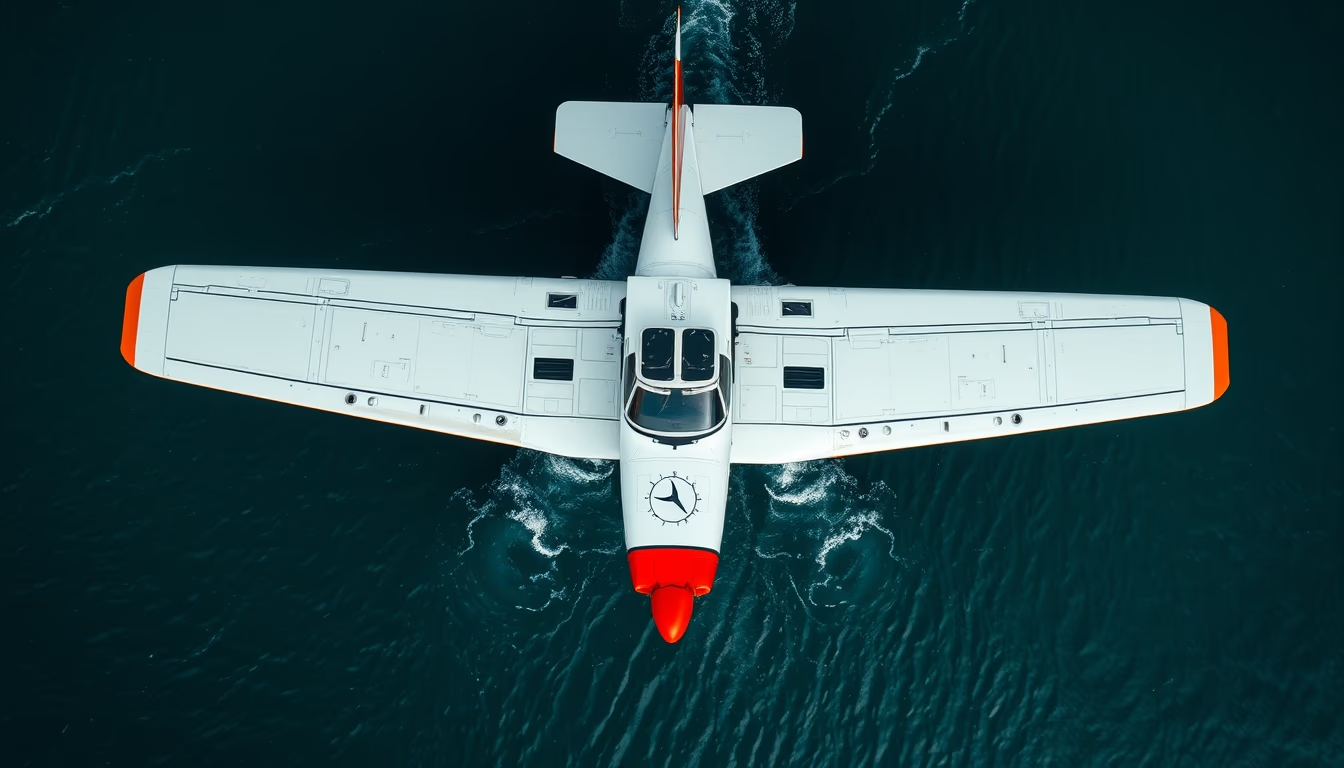
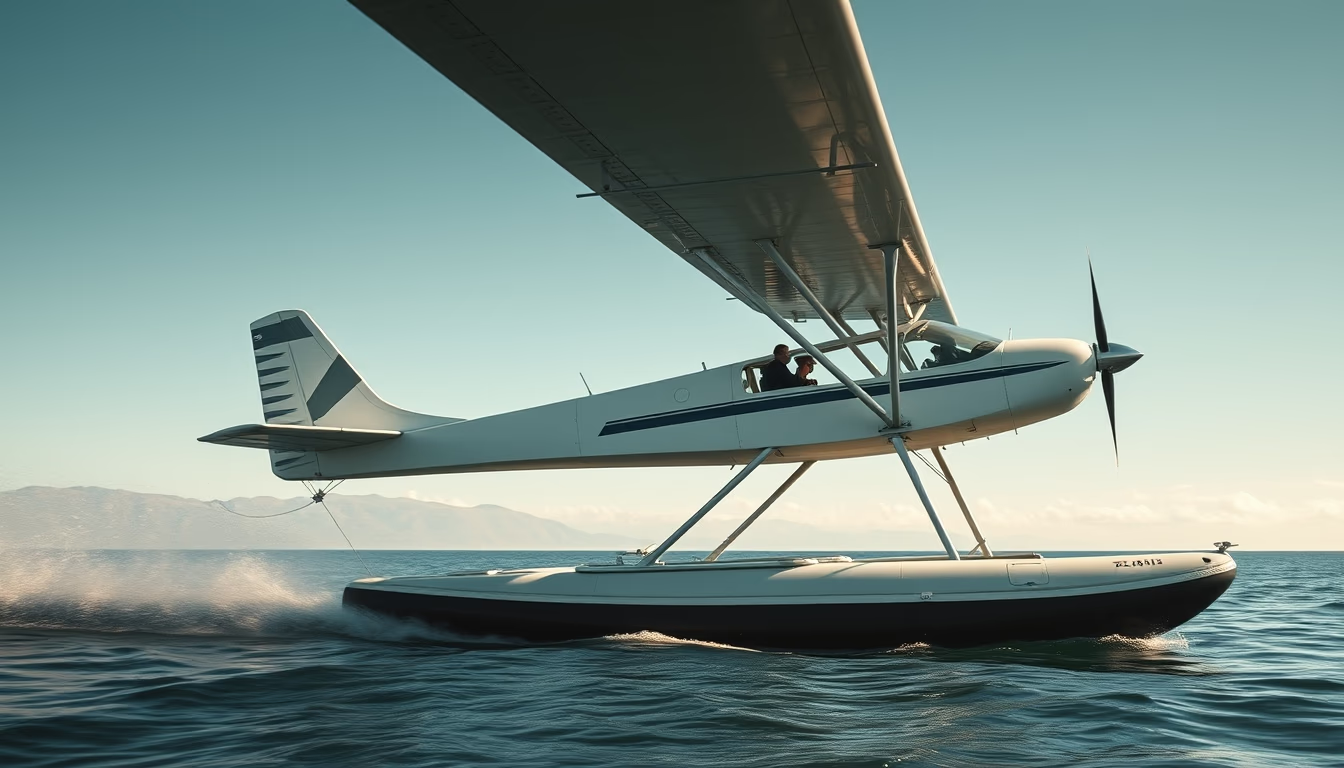
The Consolidated PBY Catalina is an iconic amphibious aircraft of World War II, used for patrol, search and rescue missions across the South Atlantic.
About this subject
The Consolidated PBY Catalina, manufactured by Consolidated Aircraft Corporation, was one of the most versatile and widely used flying boats during World War II. Designed in the 1930s, its first flight took place in 1935, and it quickly became essential for Allied naval aviation. With a range of up to 4,000 km (2,500 miles), the Catalina was powered by two Pratt & Whitney R-1830 Twin Wasp radial engines, giving it a top speed of about 314 km/h (195 mph).
In Brazil, the Catalina played a relevant role in the Brazilian Air Force (FAB), which operated several units from 1942 onward, especially for coastal patrol and anti-submarine warfare during the Battle of the Atlantic. Brazil received 15 Catalinas under the U.S. Lend-Lease program, which were used to cover the vast Brazilian coast and protect naval convoys. A historical curiosity: the flying boat was instrumental in rescuing survivors from shipwrecks, such as the Brazilian ship Baependi, torpedoed by the German submarine U-507 in 1942.
After the war, many Catalinas were converted for civilian use, serving in firefighting (water dropping), cargo transport, and tourism in remote regions like the Amazon. Its sturdy structure and ability to land on lakes and rivers made it perfect for areas lacking airport infrastructure. The civilian version, known as the Super Catalina, received turboprop engines that increased reliability. To this day, a few preserved examples perform demonstration flights worldwide.
The Catalina also gained fame for its endurance and ability to land on open sea even in harsh conditions. In the Pacific War, it was used for long-range reconnaissance and attack missions against ships, carrying bombs or depth charges. Its crew of 7 to 9 people included pilots, navigators, and gunners. The widely produced PBY-5A model has retractable landing gear, allowing operations both on land and water. The Catalina is an icon of amphibious aviation and a testament to aeronautical engineering from the 1930s and 1940s.
Frequently Asked Questions
How many Catalinas did the Brazilian Air Force operate?
The Brazilian Air Force operated 15 PBY Catalinas, received between 1942 and 1943 through the U.S. Lend-Lease program. They were used for maritime patrol and anti-submarine warfare.
Does the Catalina still fly today?
Yes, there are still airworthy Catalinas, maintained by museums and enthusiasts. For instance, the Super Catalina (upgraded version) is used in air shows and tourist flights, mainly in the United States and Canada.
What was the main engine of the Catalina?
The main engine of the PBY Catalina was the Pratt & Whitney R-1830 Twin Wasp, a 14-cylinder double-row radial engine, producing around 1,200 horsepower per unit. It powered most military versions.
Direct URL
https://pub-c7d6a6ea828543ac903a74a341ccb2e1.r2.dev/imagens/flying-boat-catalina-isometric-flat-lay-fresh5.avifHow to credit
Include a visible link back to UtilizAí. Copy one of the snippets below:
<a href="https://xn--utiliza-eza.com/en/midia/imagens/flying-boat-catalina-isometric-flat-lay-fresh5">Flying boat catalina</a> by <a href="https://xn--utiliza-eza.com">UtilizAí</a>, licensed under <a href="https://creativecommons.org/licenses/by/4.0/">CC BY 4.0</a>.
[Flying boat catalina](https://xn--utiliza-eza.com/en/midia/imagens/flying-boat-catalina-isometric-flat-lay-fresh5) by [UtilizAí](https://xn--utiliza-eza.com), CC BY 4.0
License: CC-BY-4.0