Flying boat catalina
1344×768 · AVIF · CC BY 4.0

The Consolidated PBY Catalina, a legendary flying boat of World War II, defined maritime patrol and rescue operations.
About this subject
The Consolidated PBY Catalina was a twin-engine flying boat manufactured by Consolidated Aircraft Corporation, widely used during World War II. Designed for maritime patrol, reconnaissance, and anti-submarine warfare, it became one of the most versatile aircraft of the conflict. Its first flight took place in 1935, and total production exceeded 3,300 units, including variants such as the OA-10 and Canso. The Catalina served on all Allied fronts, from the Pacific to the Atlantic, and was instrumental in the Battle of the Atlantic, hunting German U-boats.
Beyond its military role, the Catalina excelled in search and rescue missions. It rescued hundreds of downed pilots and crews, often in adverse weather conditions and on the open sea. One of its most remarkable features was its flight range of up to 4,600 km, allowing missions lasting over 20 hours. These aircraft were also used for cargo and troop transport, and even as improvised night bombers.
Interestingly, the Catalina was one of the first aircraft to be equipped with radar, enhancing its anti-submarine effectiveness. The PBY-5A variant, with retractable landing gear, allowed operations both on land and water. After the war, many Catalinas were converted for civilian use, including firefighting and transportation in remote regions. In Brazil, the Brazilian Air Force operated Catalinas until the 1980s, using them in the Amazon for patrol and assistance to isolated communities.
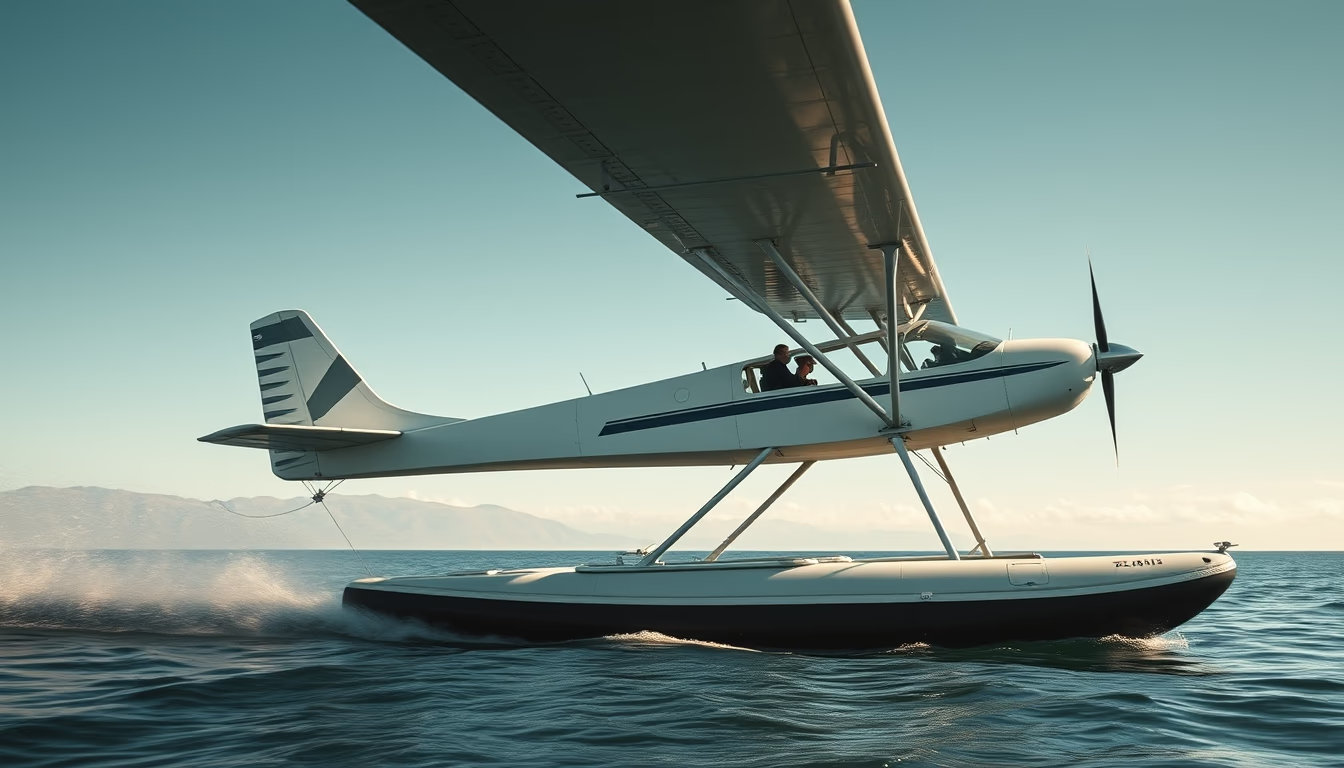
The robustness and reliability of the Catalina ensured its longevity: even today, preserved examples fly at air shows and are operated by museums. Its distinctive silhouette, with a high wing and large stabilizing fins on the sides of the fuselage, is instantly recognizable among aviation enthusiasts.
Frequently Asked Questions
How many PBY Catalinas were produced?
Over 3,300 Catalinas were produced, including all variants, between 1936 and 1945.
Does the Catalina still fly today?
Yes, some preserved examples still fly at air shows and are operated by museums and private collectors.
What was the range of the Catalina?
The maximum range was about 4,600 km, allowing patrol missions lasting up to 20 hours.
Direct URL
https://pub-c7d6a6ea828543ac903a74a341ccb2e1.r2.dev/imagens/flying-boat-catalina-fish-eye-wide-angle-fresh6.avifHow to credit
Include a visible link back to UtilizAí. Copy one of the snippets below:
<a href="https://xn--utiliza-eza.com/en/midia/imagens/flying-boat-catalina-fish-eye-wide-angle-fresh6">Flying boat catalina</a> by <a href="https://xn--utiliza-eza.com">UtilizAí</a>, licensed under <a href="https://creativecommons.org/licenses/by/4.0/">CC BY 4.0</a>.
[Flying boat catalina](https://xn--utiliza-eza.com/en/midia/imagens/flying-boat-catalina-fish-eye-wide-angle-fresh6) by [UtilizAí](https://xn--utiliza-eza.com), CC BY 4.0
License: CC-BY-4.0