Flying boat catalina
1344×768 · AVIF · CC BY 4.0
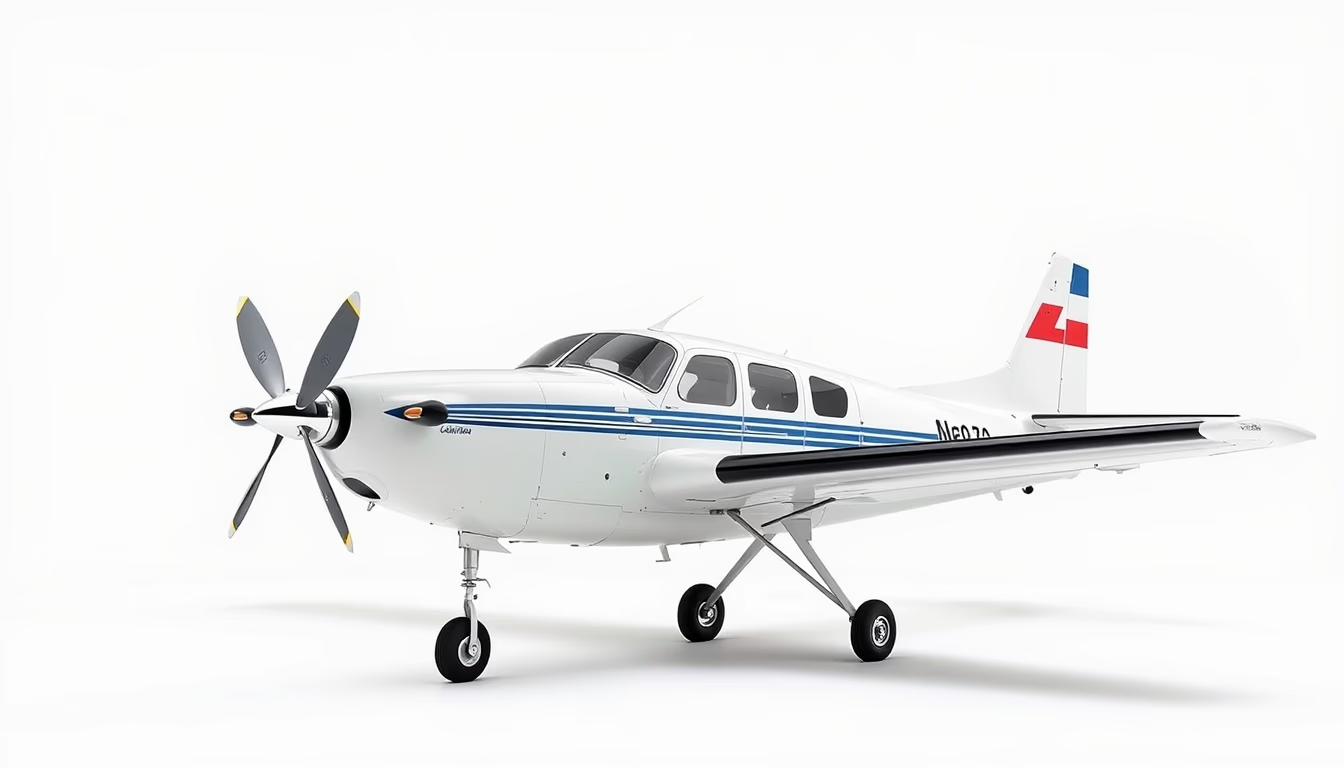
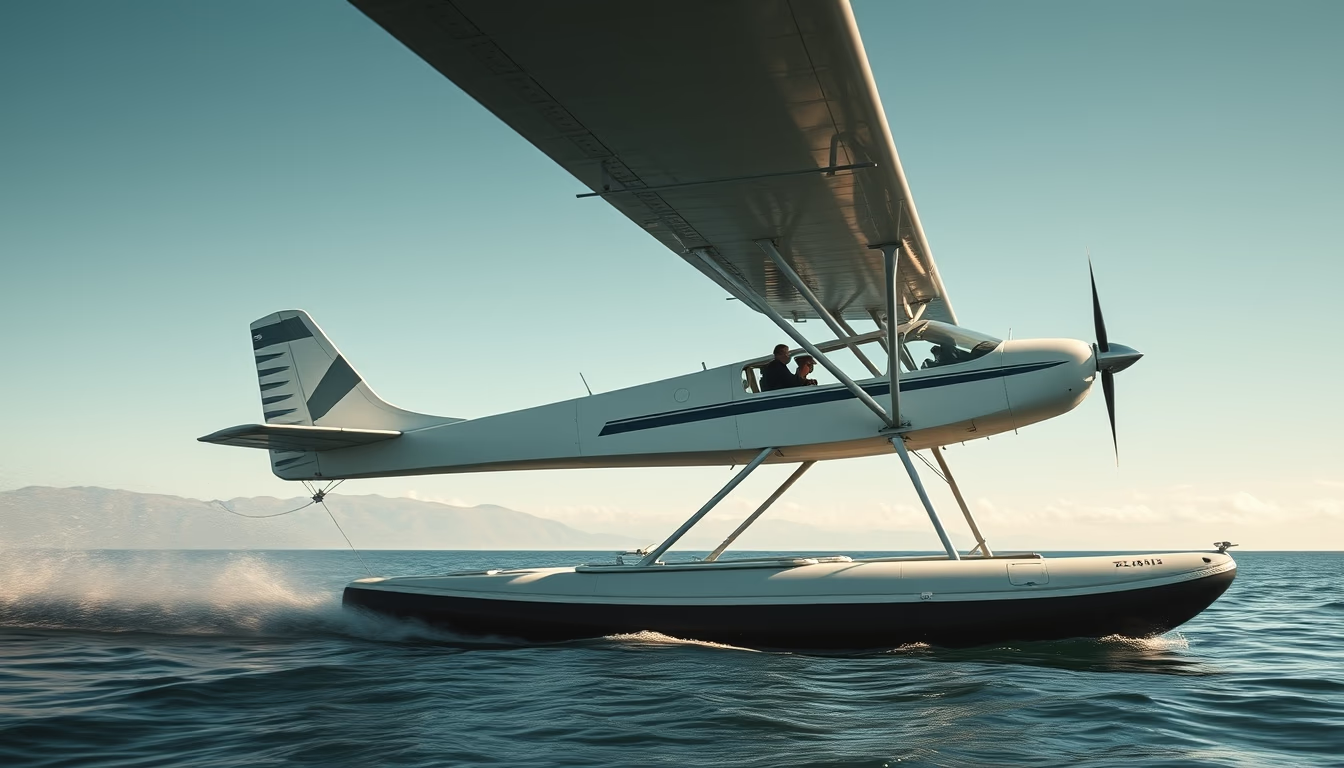
The PBY Catalina, an iconic military flying boat of World War II, excelled in maritime patrol, bombing, and air-sea rescue.
About this subject
The Consolidated PBY Catalina was one of the most versatile and widely used flying boats during World War II. Designed by the Consolidated Aircraft Corporation, it first flew in 1935. With the ability to operate from water or land (amphibious version), the Catalina became essential for long-range maritime patrol, reconnaissance, and anti-submarine warfare. More than 3,300 units were produced, serving in air forces of the United States, United Kingdom, Canada, Australia, Brazil, and others.
One of the Catalina's most striking features was its exceptional endurance. Powered by Pratt & Whitney R-1830 radial engines, it could fly for up to 24 hours, enabling transoceanic missions. Brazil used the Catalina during World War II, especially for patrolling the Atlantic coast against German submarines. Brazilian aircraft from the 1st Patrol Aviation Group operated from bases in Recife and Salvador, helping protect naval convoys.
The Catalina also became famous for its air-sea rescue role. Hundreds of downed pilots in the Pacific were saved by these aircraft, which would land on water to pick up survivors. A curiosity: the nickname “Catalina” was officially adopted only in 1940, when the British RAF began operating the model. Before that, it was known as the PBY (Patrol Bomber Consolidated).
After the war, many Catalinas were converted for civilian use, fighting forest fires (as “Super Scooper” models) and transporting cargo in remote areas. To this day, some preserved units continue to fly at air shows, demonstrating the robustness and longevity of the design. The Catalina is a symbol of aeronautical engineering that combined military capability with technical innovation.
Frequently Asked Questions
What is the origin of the name 'Catalina' for the PBY?
The name 'Catalina' was officially adopted in 1940 when the British Royal Air Force began operating the model. Before that, it was known as the PBY, an acronym for Patrol Bomber Consolidated.
How many PBY Catalinas were produced?
More than 3,300 units were built between 1936 and 1945, making it one of the most produced flying boats in history.
Does the Catalina still fly today?
Yes, several preserved units remain airworthy, participating in air shows and some are used in forest fire fighting, such as the adapted 'Super Scooper' models.
Direct URL
https://pub-c7d6a6ea828543ac903a74a341ccb2e1.r2.dev/imagens/flying-boat-catalina-commercial-product-photography-fresh17.avifHow to credit
Include a visible link back to UtilizAí. Copy one of the snippets below:
<a href="https://xn--utiliza-eza.com/en/midia/imagens/flying-boat-catalina-commercial-product-photography-fresh17">Flying boat catalina</a> by <a href="https://xn--utiliza-eza.com">UtilizAí</a>, licensed under <a href="https://creativecommons.org/licenses/by/4.0/">CC BY 4.0</a>.
[Flying boat catalina](https://xn--utiliza-eza.com/en/midia/imagens/flying-boat-catalina-commercial-product-photography-fresh17) by [UtilizAí](https://xn--utiliza-eza.com), CC BY 4.0
License: CC-BY-4.0