Flamingo flock pink
1344×768 · AVIF · CC BY 4.0
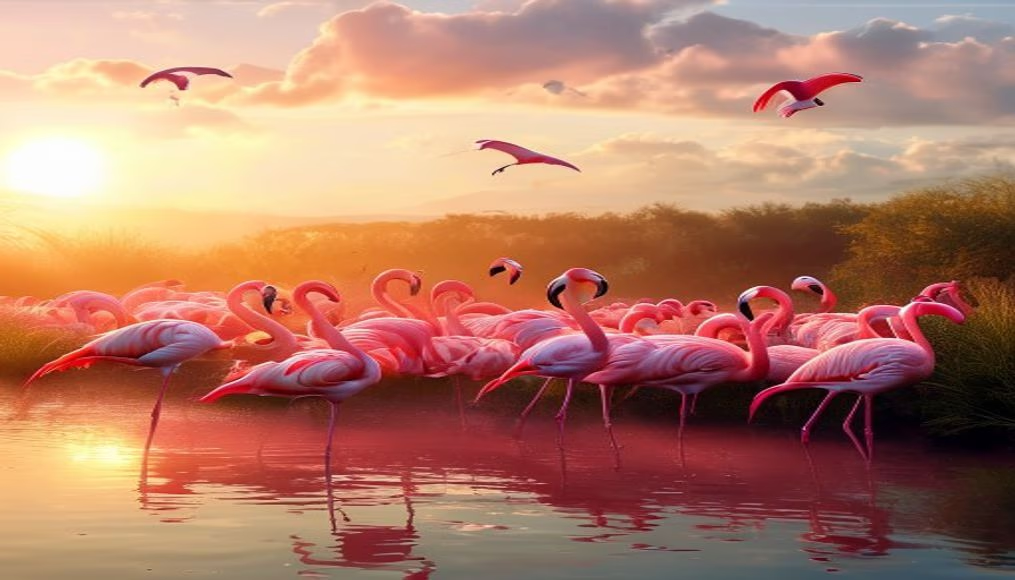
A flock of pink flamingos in their natural habitat, one of the most iconic wildlife spectacles.
About this subject
Flamingos are wading birds known for their vibrant plumage ranging from pale pink to deep red. This characteristic coloration results from ingesting carotenoids found in their diet, which primarily consists of small crustaceans and algae. There are six species of flamingos worldwide, distributed across tropical and subtropical regions of the Americas, Africa, Europe, and Asia. Among the most familiar are the Chilean flamingo (Phoenicopterus chilensis), greater flamingo (Phoenicopterus roseus), and lesser flamingo (Phoeniconaias minor).
These birds are highly social and form flocks that can number in the thousands. They inhabit wetlands such as saline lakes, coastal lagoons, and estuaries, where they feed by filtering water and mud through their specialized curved beaks. Group behavior offers protection from predators and aids in locating food. During the breeding season, they perform elaborate mating dances involving synchronized movements and feather displays.
Flamingos play an important ecological role as bioindicators of aquatic ecosystem health. Their presence indicates good water quality and prey availability. However, they face threats such as habitat loss, pollution, and climate change affecting their nesting sites. Famous flamingo-watching destinations include Lake Nakuru in Kenya, Etosha National Park in Namibia, and the Pantanal in Brazil.
Interestingly, flamingos are not born pink: chicks have gray feathers that gradually turn pink as they feed. The color association is so strong that the term "flamingo pink" has become a standard color name in design and fashion. Additionally, the ability of flamingos to stand on one leg for long periods intrigues scientists, thought to be an adaptation for conserving body heat.
Frequently Asked Questions
Why are flamingos pink?
The pink color comes from carotenoids in their diet, such as algae and crustaceans. These pigments are metabolized and deposited in the feathers, giving the characteristic hue.
Where can I see flamingos in the wild?
Flamingos are found in tropical and subtropical wetlands worldwide. Key spots include Lake Nakuru (Kenya), the Galapagos Islands, the Camargue (France), and the Pantanal (Brazil).
Do flamingos migrate?
Some species undertake seasonal movements for food or breeding, but they are not true migrants. They may travel tens to hundreds of kilometers.
Direct URL
https://pub-c7d6a6ea828543ac903a74a341ccb2e1.r2.dev/imagens/flamingo-flock-pink-travel-photography-v10.avifHow to credit
Include a visible link back to UtilizAí. Copy one of the snippets below:
<a href="https://xn--utiliza-eza.com/en/midia/imagens/flamingo-flock-pink-travel-photography-v10">Flamingo flock pink</a> by <a href="https://xn--utiliza-eza.com">UtilizAí</a>, licensed under <a href="https://creativecommons.org/licenses/by/4.0/">CC BY 4.0</a>.
[Flamingo flock pink](https://xn--utiliza-eza.com/en/midia/imagens/flamingo-flock-pink-travel-photography-v10) by [UtilizAí](https://xn--utiliza-eza.com), CC BY 4.0
License: CC-BY-4.0