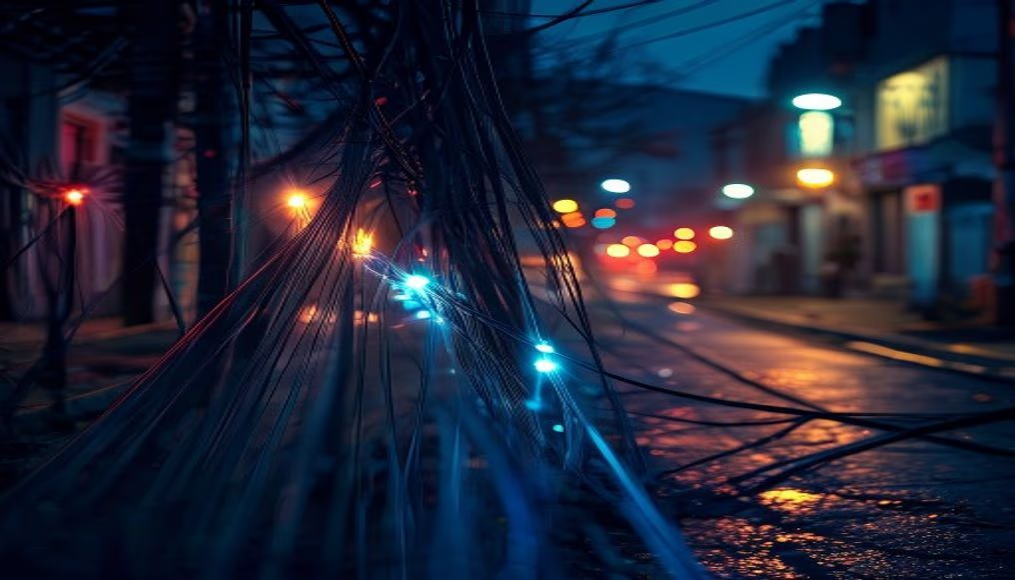
Fiber optic cables glowing in dark
1344×768 · AVIF · CC BY 4.0

Fiber optic cables glowing in the dark illustrate the technology that carries data at high speed around the world.
About this subject
Fiber optics are the backbone of the modern internet. Unlike traditional copper cables, which transmit data via electrical impulses, fiber optics use laser or LED light pulses to send information through ultra-pure glass or plastic filaments. This technology enables transmission speeds reaching terabits per second with minimal signal loss over tens of kilometers. The light visible on the cables is not the transmission light itself, but a visual effect caused by minor imperfections or connector coatings that scatter part of the signal.
The first practical demonstration of fiber optic communication took place in 1970, when Corning Glass Works produced a fiber with attenuation below 20 dB/km, a milestone that enabled commercial use. Since then, the technology has evolved rapidly: submarine cables, such as EllaLink connecting Brazil and Europe, span thousands of kilometers on the ocean floor, carrying data between continents. In Brazil, fiber optics have already surpassed copper in fixed broadband access, according to Anatel data, with over 40 million subscribers in 2023.
The visible glow on cables, often in blue or green tones, occurs when internal light encounters irregularities or splices. This phenomenon is common in labs and technical installations but does not represent significant data loss. Under normal conditions, the signal travels inside the fiber core through total internal reflection without escaping. The light color depends on the wavelength used: 850 nm (near-infrared) for short distances, 1310 nm and 1550 nm for long distances, which are invisible to the naked eye.
Fiber optics are also crucial for applications beyond telecommunications, such as temperature and pressure sensors in oil pipelines, medical endoscopy, and decorative lighting. However, the image of glowing cables in the dark has become a visual icon of global connectivity, symbolizing the speed and reliability of high-capacity internet.
Frequently Asked Questions
Why do fiber optic cables glow in the dark?
The glow occurs when light traveling inside the fiber encounters minor imperfections, splices, or connectors, scattering part of the signal outward. Under normal use, properly installed cables do not emit visible light.
What is the difference between fiber optic and copper cable?
Fiber optics transmit data via light pulses, while copper uses electrical impulses. Fiber offers higher speed, lower signal loss over long distances, and immunity to electromagnetic interference.
Is fiber optic used only for residential internet?
No. It is also essential in submarine networks, industrial sensors, medical equipment (such as endoscopes), and decorative lighting systems, forming the backbone of global telecommunications infrastructure.
Direct URL
https://pub-c7d6a6ea828543ac903a74a341ccb2e1.r2.dev/imagens/fiber-optic-cables-glowing-in-dark-studio-editorial-portrait-v3.avifHow to credit
Include a visible link back to UtilizAí. Copy one of the snippets below:
<a href="https://xn--utiliza-eza.com/en/midia/imagens/fiber-optic-cables-glowing-in-dark-studio-editorial-portrait-v3">Fiber optic cables glowing in dark</a> by <a href="https://xn--utiliza-eza.com">UtilizAí</a>, licensed under <a href="https://creativecommons.org/licenses/by/4.0/">CC BY 4.0</a>.
[Fiber optic cables glowing in dark](https://xn--utiliza-eza.com/en/midia/imagens/fiber-optic-cables-glowing-in-dark-studio-editorial-portrait-v3) by [UtilizAí](https://xn--utiliza-eza.com), CC BY 4.0
License: CC-BY-4.0