Fiber optic cables glowing in dark
1344×768 · AVIF · CC BY 4.0
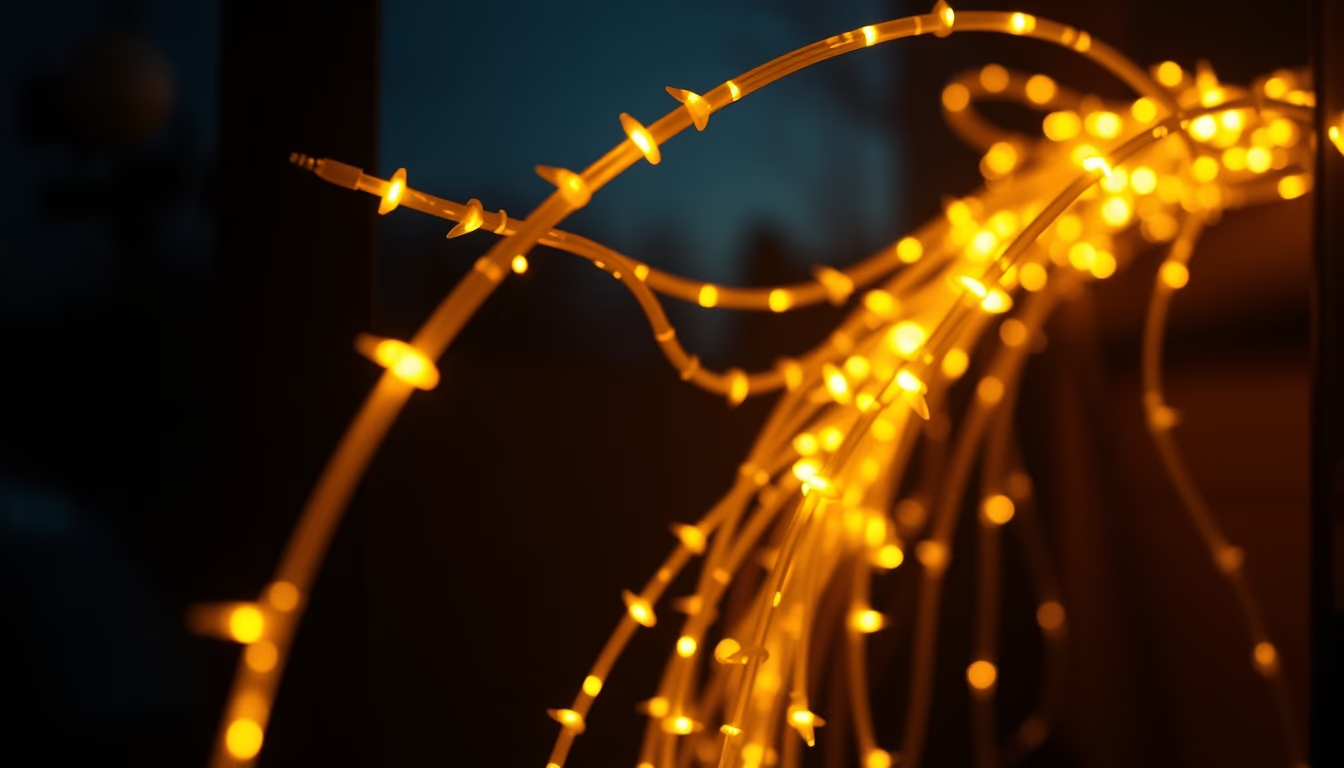
Fiber optic cables glowing in the dark represent the backbone of the global internet, transmitting data at the speed of light.
About this subject
Fiber optic cables are the fundamental technology enabling the high-speed internet we use today. Unlike traditional copper cables, which transmit data via electrical impulses, fiber optics use pulses of light generated by lasers or LEDs to carry information. This allows transmission speeds reaching terabits per second, with minimal signal loss over long distances. The visible light emanating from the cables in the image is an artistic representation; in practice, the light signals travel inside coated glass or plastic fibers, invisible to the naked eye.
The global fiber optic infrastructure comprises millions of kilometers of cables, both terrestrial and submarine. It is estimated that over 99% of international data traffic passes through submarine fiber optic cables, connecting continents across ocean floors. A notable example is the EllaLink system, inaugurated in 2021, which directly links South America (Brazil) to Europe (Portugal), with a capacity of up to 100 terabits per second. This technology has drastically reduced communication latency between these continents, benefiting everything from video calls to real-time financial transactions.
In Brazil, the expansion of fiber optics has been accelerating, especially in large urban centers and metropolitan regions. According to data from the National Telecommunications Agency (Anatel), the number of fixed broadband connections via fiber optics exceeded 38 million in 2023, representing over 70% of all fixed connections in the country. This capillarity allows services such as streaming, telemedicine, and distance education to function with increasing quality. The image of glowing cables in the dark symbolizes not only the beauty of technology but also the connectivity that transforms modern life.
Frequently Asked Questions
How does fiber optic transmit data?
Fiber optics transmit data as pulses of light, generated by lasers or LEDs, that travel through glass or plastic fibers. These pulses are converted into electrical signals at the endpoints for communication with electronic devices.
What is the difference between fiber optic and copper cable?
Fiber optics use light, offering much higher speeds, greater bandwidth, and lower signal loss over long distances. Copper cables use electricity, are more susceptible to interference, and have limited range.
Does Brazil have submarine fiber optic cables?
Yes, Brazil is connected by several submarine cables, such as EllaLink (Brazil-Portugal) and Monet (Brazil-USA). These cables are essential for international communication and the country's digital economy.
Direct URL
https://pub-c7d6a6ea828543ac903a74a341ccb2e1.r2.dev/imagens/fiber-optic-cables-glowing-in-dark-cinematic-wide-shot-v2.avifHow to credit
Include a visible link back to UtilizAí. Copy one of the snippets below:
<a href="https://xn--utiliza-eza.com/en/midia/imagens/fiber-optic-cables-glowing-in-dark-cinematic-wide-shot-v2">Fiber optic cables glowing in dark</a> by <a href="https://xn--utiliza-eza.com">UtilizAí</a>, licensed under <a href="https://creativecommons.org/licenses/by/4.0/">CC BY 4.0</a>.
[Fiber optic cables glowing in dark](https://xn--utiliza-eza.com/en/midia/imagens/fiber-optic-cables-glowing-in-dark-cinematic-wide-shot-v2) by [UtilizAí](https://xn--utiliza-eza.com), CC BY 4.0
License: CC-BY-4.0