Falchion medieval curved
1344×768 · AVIF · CC BY 4.0
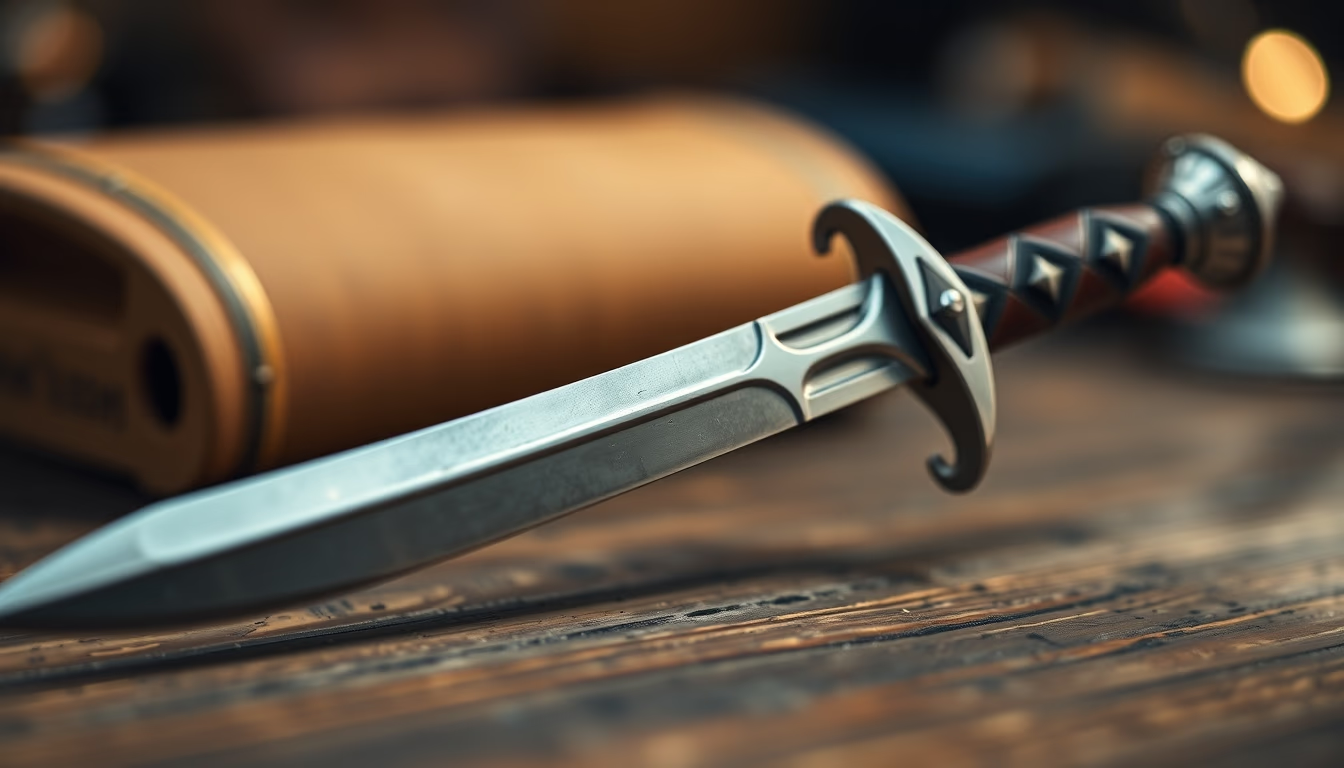
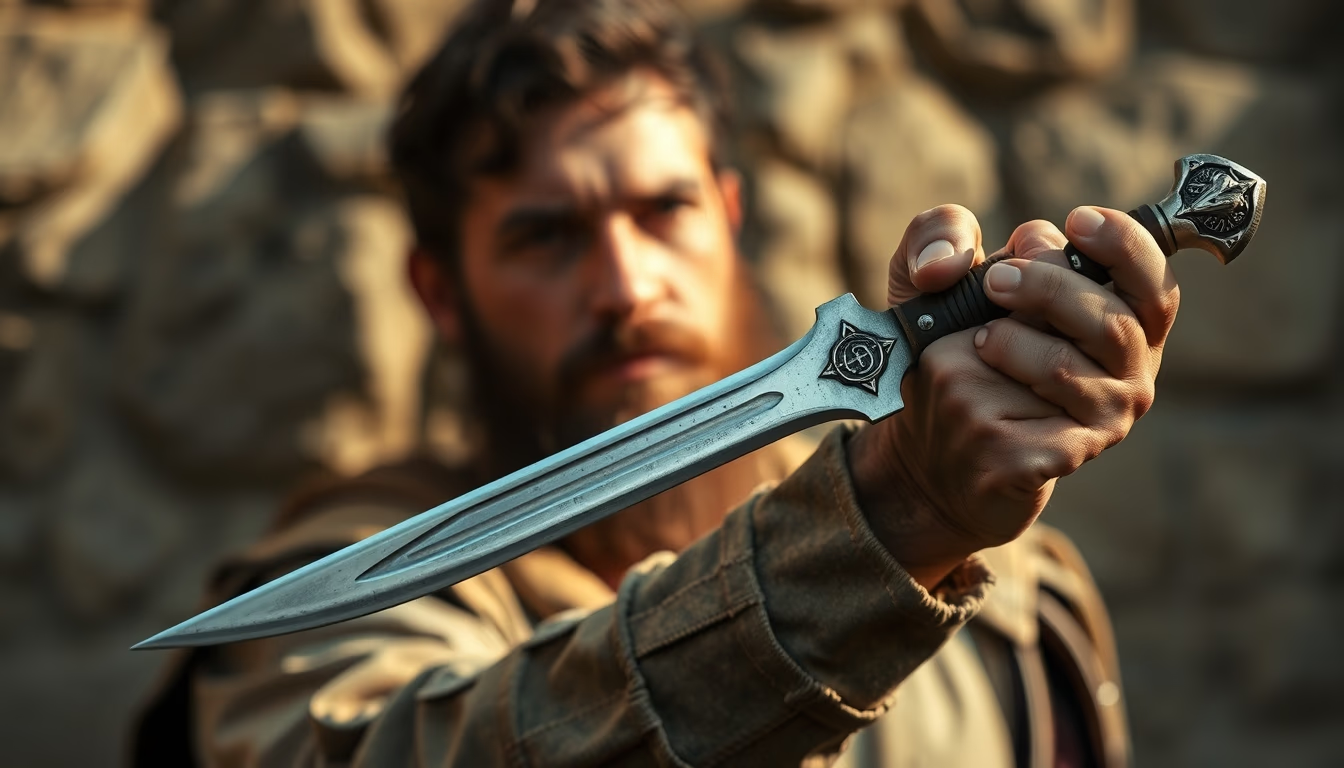
The medieval falchion is a curved, broad-bladed sword popular among warriors from the 13th to 16th centuries, combining features of a cleaver and a sword.
About this subject
The medieval falchion emerged in Europe between the 13th and 16th centuries, widely used by infantry soldiers who needed an efficient weapon for close combat. Unlike straight longswords, the falchion features a curved, broad blade resembling a large cleaver. This curvature allowed more powerful cutting strokes, concentrating force on a specific point and facilitating penetration of light armor such as mail or leather. The design was inspired by agricultural billhooks and hunting knives, adapted for the battlefield. Medieval fighting manuals, such as those by Hans Talhoffer, frequently illustrate the use of the falchion in combat techniques, showcasing its versatility in downward and transverse attacks.
Typical construction included a blade forged from carbon steel, with a single cutting edge and a thicker spine for strength. Length ranged from 70 to 90 centimeters, and the weight was balanced for quick maneuvers. The grip was usually wood wrapped in leather, with a simple pommel for counterweight. Although less precise than thrusting swords, the falchion was feared for its cutting power, capable of severing limbs in a single blow. It was popular in regions like England, Germany, and Scandinavia, where variants such as the “falx” or “falcão” were common among Vikings.
Culturally, the falchion appears in numerous medieval illuminations and tapestries, such as the Bayeux Tapestry, where it is wielded by Norman soldiers. It symbolized brutality and efficiency, contrasting with the nobility associated with longswords. In Brazil, interest in medieval weapons grows among practitioners of historical reenactment and stage combat groups, who seek faithful replicas of the falchion. Today, artisans produce modern versions for collectors and training, preserving the original forging techniques.
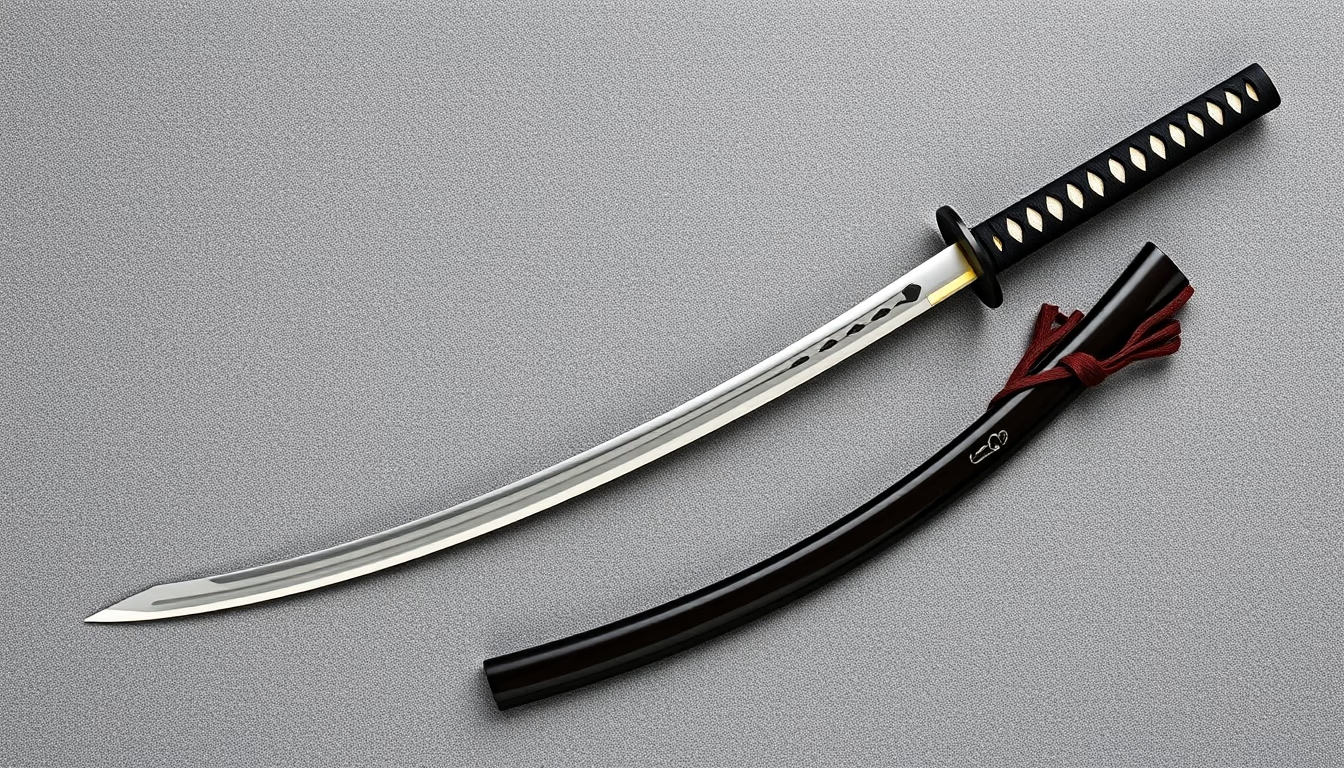
Interestingly, the falchion is often confused with the Eastern scimitar, but the differences are striking: while the scimitar has a longer, thinner blade, the falchion is shorter and heavier, focused on violent impacts. Moreover, its use was not restricted to European battlefields; records indicate that the falchion was also adopted by mercenaries in the Mediterranean, adapting to different fighting styles. This simple yet lethal weapon represents the ingenuity of medieval blacksmiths who optimized design for warfare.
Frequently Asked Questions
What differentiates the falchion from other medieval swords?
The falchion stands out for its curved, broad blade, similar to a cleaver, designed for powerful cutting strokes. Unlike straight thrusting swords, it prioritizes cutting impact, being more effective against light armor.
Which peoples most used the falchion?
The falchion was common among European soldiers, especially in England, Germany, and Scandinavia, between the 13th and 16th centuries. Vikings also used variations such as the falx.
Is the falchion still manufactured today?
Yes, replicas are produced by specialized craftsmen for collectors, historical reenactors, and practitioners of Historical European Martial Arts (HEMA), maintaining traditional forging techniques.
Direct URL
https://pub-c7d6a6ea828543ac903a74a341ccb2e1.r2.dev/imagens/falchion-medieval-curved-tilt-shift-miniature-fresh15.avifHow to credit
Include a visible link back to UtilizAí. Copy one of the snippets below:
<a href="https://xn--utiliza-eza.com/en/midia/imagens/falchion-medieval-curved-tilt-shift-miniature-fresh15">Falchion medieval curved</a> by <a href="https://xn--utiliza-eza.com">UtilizAí</a>, licensed under <a href="https://creativecommons.org/licenses/by/4.0/">CC BY 4.0</a>.
[Falchion medieval curved](https://xn--utiliza-eza.com/en/midia/imagens/falchion-medieval-curved-tilt-shift-miniature-fresh15) by [UtilizAí](https://xn--utiliza-eza.com), CC BY 4.0
License: CC-BY-4.0