Falchion medieval curved
1344×768 · AVIF · CC BY 4.0
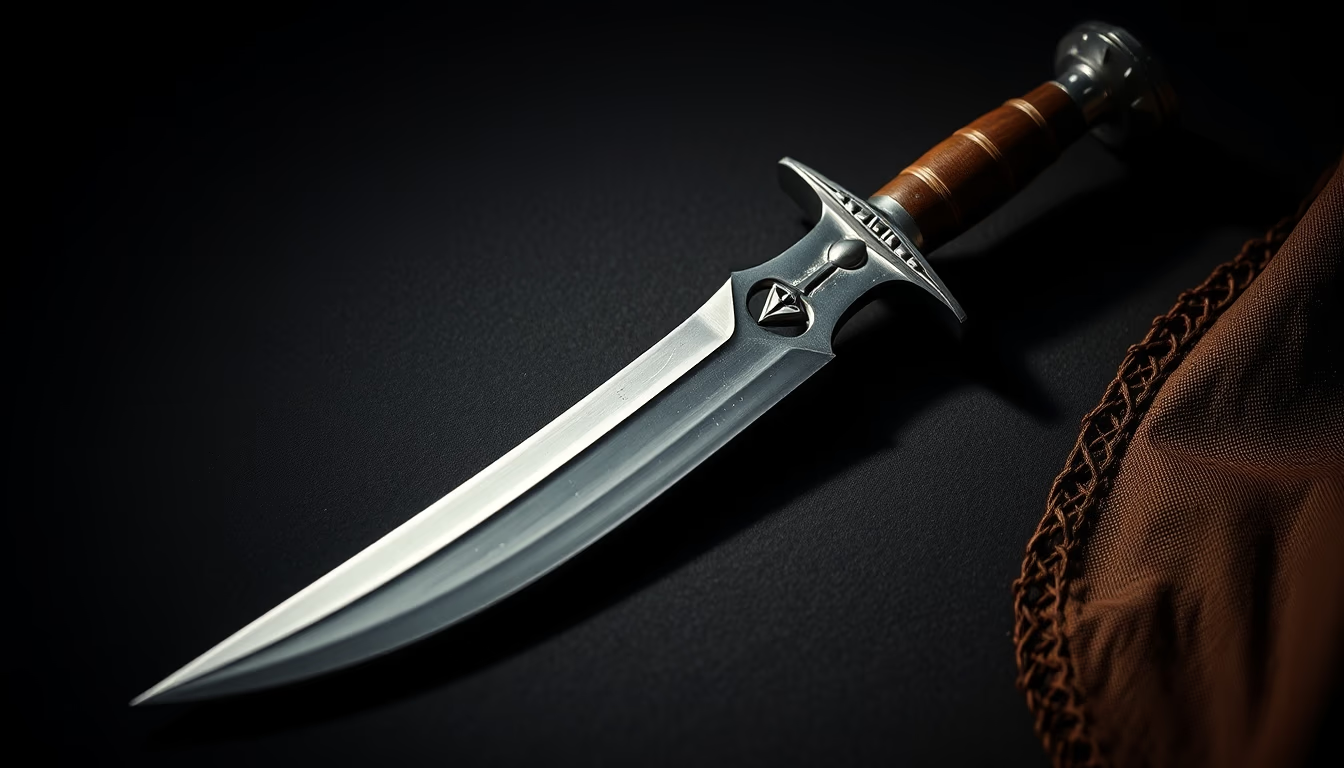
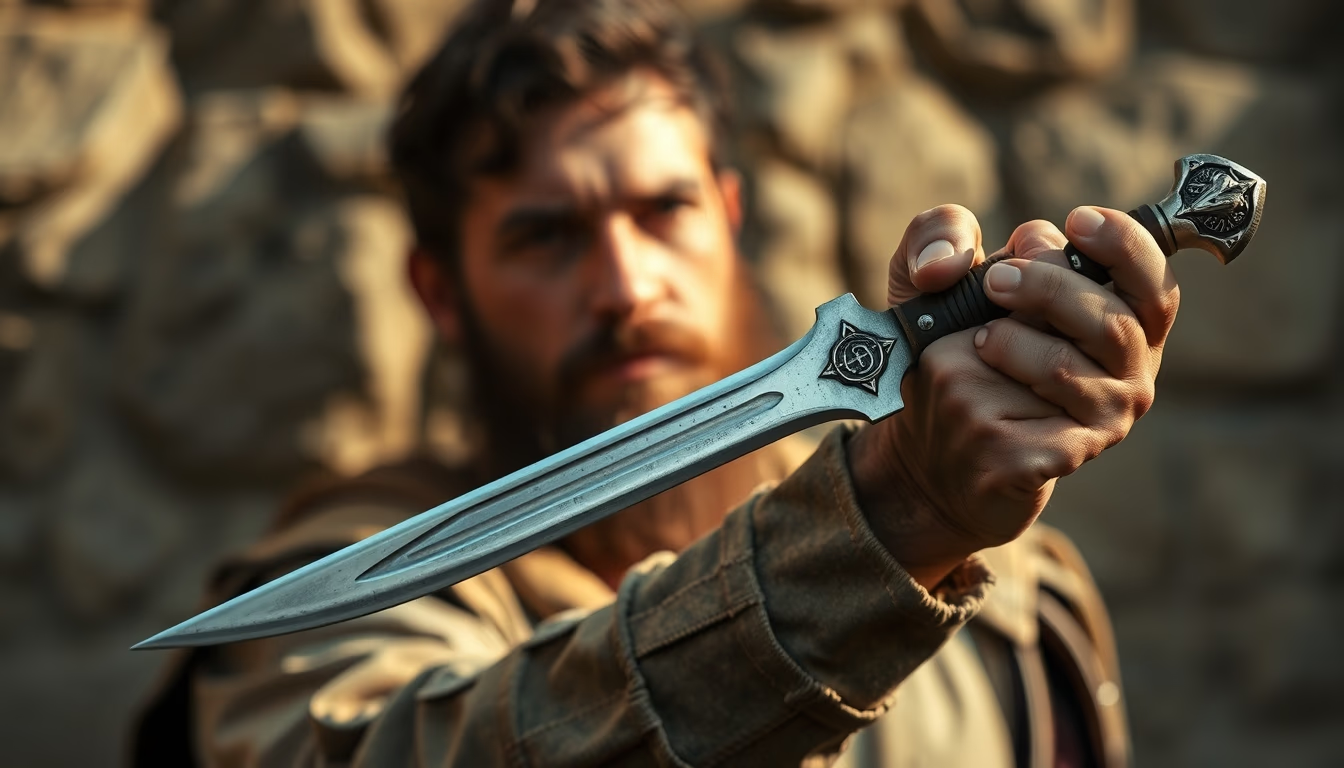
The falchion was a medieval European single-edged curved sword, renowned for its cutting efficiency and use by common soldiers.
About this subject
The falchion was a single-edged curved sword used predominantly in Europe from the 13th to the 16th centuries. Unlike the double-edged longsword, the falchion featured a single sharp edge that widened toward the tip, resembling a machete. This design concentrated weight forward, delivering powerful chopping blows effective against lightly armored opponents. Its simpler construction and lower cost made it accessible to infantry, militias, and even peasants, earning it the nickname "the people's sword."
Notable historical examples include the falchion from the Battle of Bannockburn (1314) and the one housed at Castel Sant'Angelo in Rome. Regional variations existed: some blades were nearly straight, while others had pronounced curves influenced by Eastern weapons like the scimitar. Despite similarities, the falchion is a distinctly European development, typically featuring a wooden or bone grip and a simple crossguard.
Knights rarely used the falchion as their primary weapon, preferring the longsword, but it served as an effective secondary arm for mounted soldiers. Its cutting power made it ideal for slashing attacks. With the rise of firearms and the decline of heavy armor, the falchion gradually gave way to the saber by the 17th century. Today, original falchions are rare and highly valued, displayed in museums as artifacts of medieval military technology.
The falchion has also left its mark on popular culture, appearing in fantasy works and games such as "Dungeons & Dragons" and "The Elder Scrolls," where it is depicted as a versatile and affordable weapon. Its legacy endures as a symbol of practicality and battlefield efficiency.
Frequently Asked Questions
What is the difference between a falchion and a scimitar?
The falchion is a European sword used mainly by infantry from the 13th to 16th centuries, while the scimitar is an Eastern weapon associated with Turkish and Persian peoples. The scimitar typically has a more pronounced curve and is lighter.
Why was the falchion cheaper than other swords?
The falchion required less material and forging time because it had only one edge and did not need complex tempering. Its broader blade simplified manufacturing, making it affordable for common soldiers.
Was the falchion effective against armor?
The falchion was effective against light armor like mail but struggled against plate armor. Its design favored slashing cuts; against heavy armor, thrusting attacks or impact weapons were more suitable.
Direct URL
https://pub-c7d6a6ea828543ac903a74a341ccb2e1.r2.dev/imagens/falchion-medieval-curved-magazine-editorial-fresh4.avifHow to credit
Include a visible link back to UtilizAí. Copy one of the snippets below:
<a href="https://xn--utiliza-eza.com/en/midia/imagens/falchion-medieval-curved-magazine-editorial-fresh4">Falchion medieval curved</a> by <a href="https://xn--utiliza-eza.com">UtilizAí</a>, licensed under <a href="https://creativecommons.org/licenses/by/4.0/">CC BY 4.0</a>.
[Falchion medieval curved](https://xn--utiliza-eza.com/en/midia/imagens/falchion-medieval-curved-magazine-editorial-fresh4) by [UtilizAí](https://xn--utiliza-eza.com), CC BY 4.0
License: CC-BY-4.0