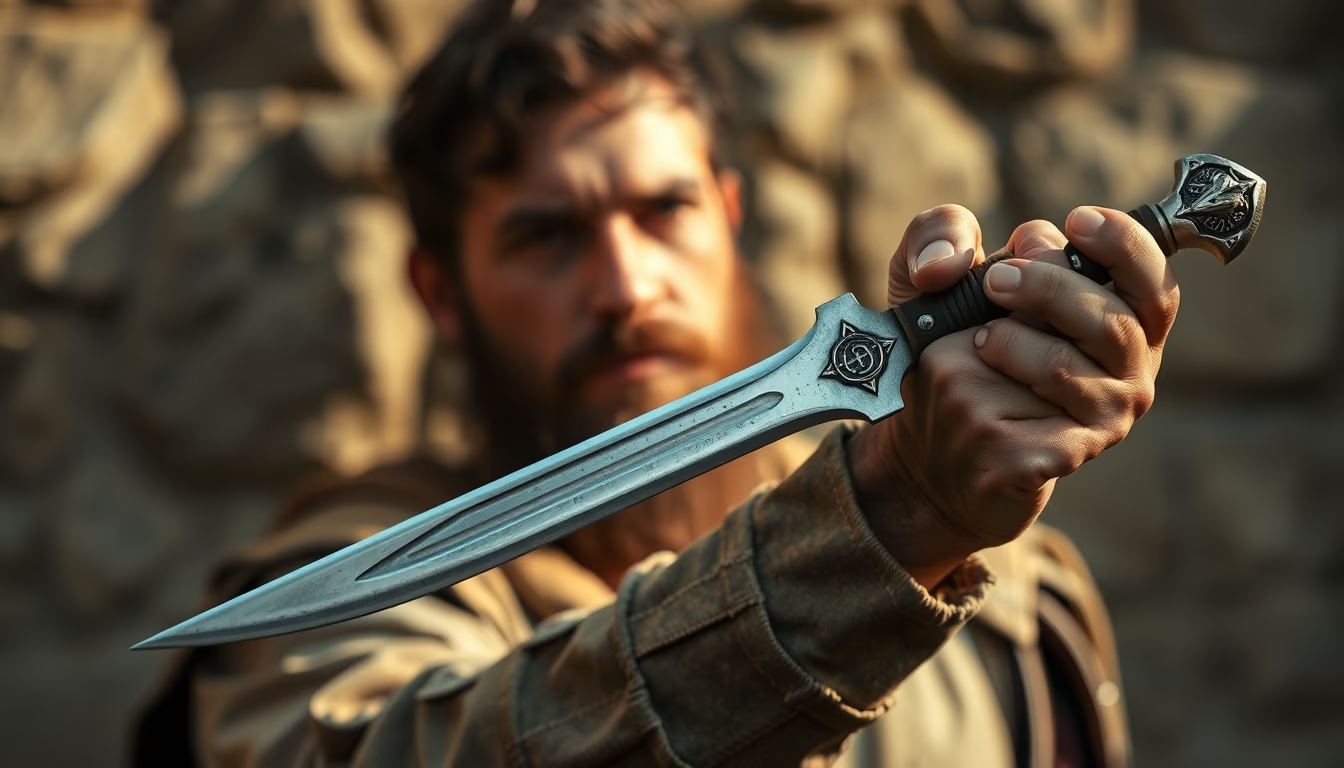
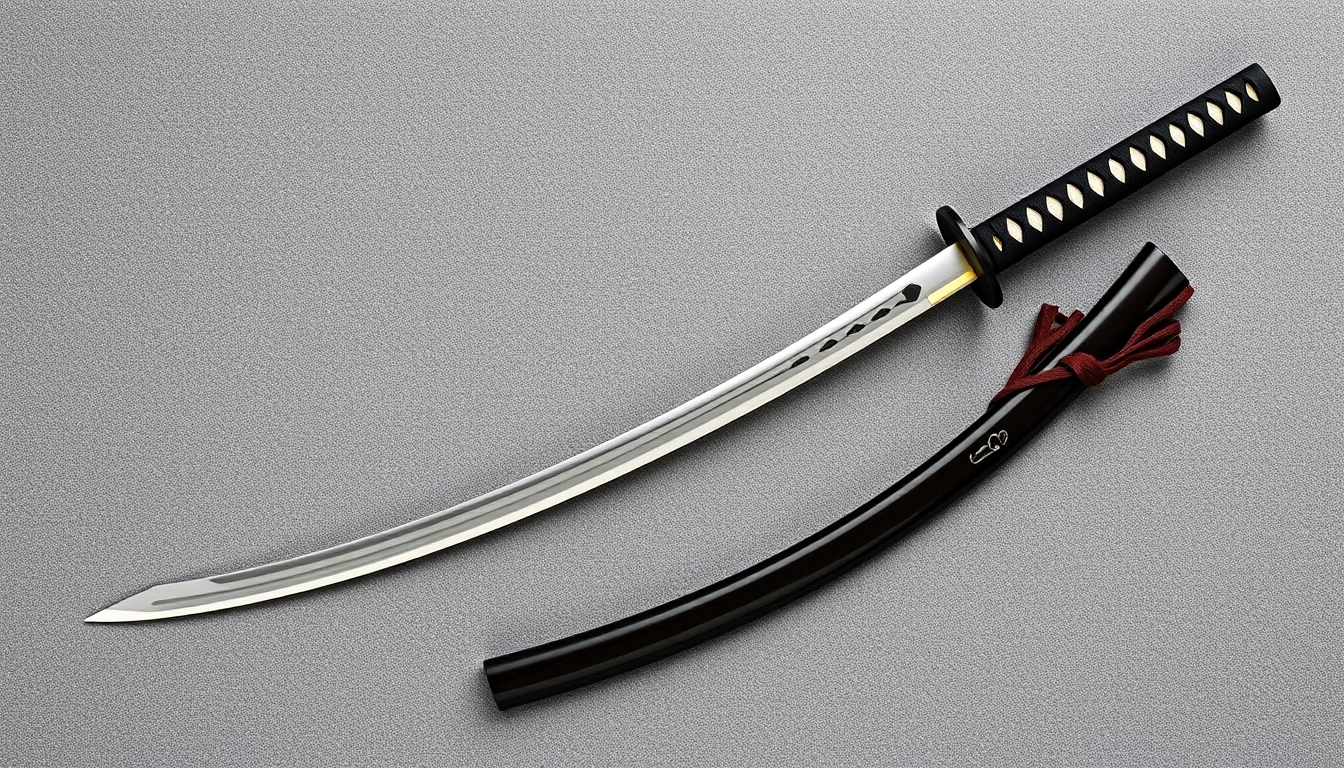
Falchion medieval curved
1344×768 · AVIF · CC BY 4.0
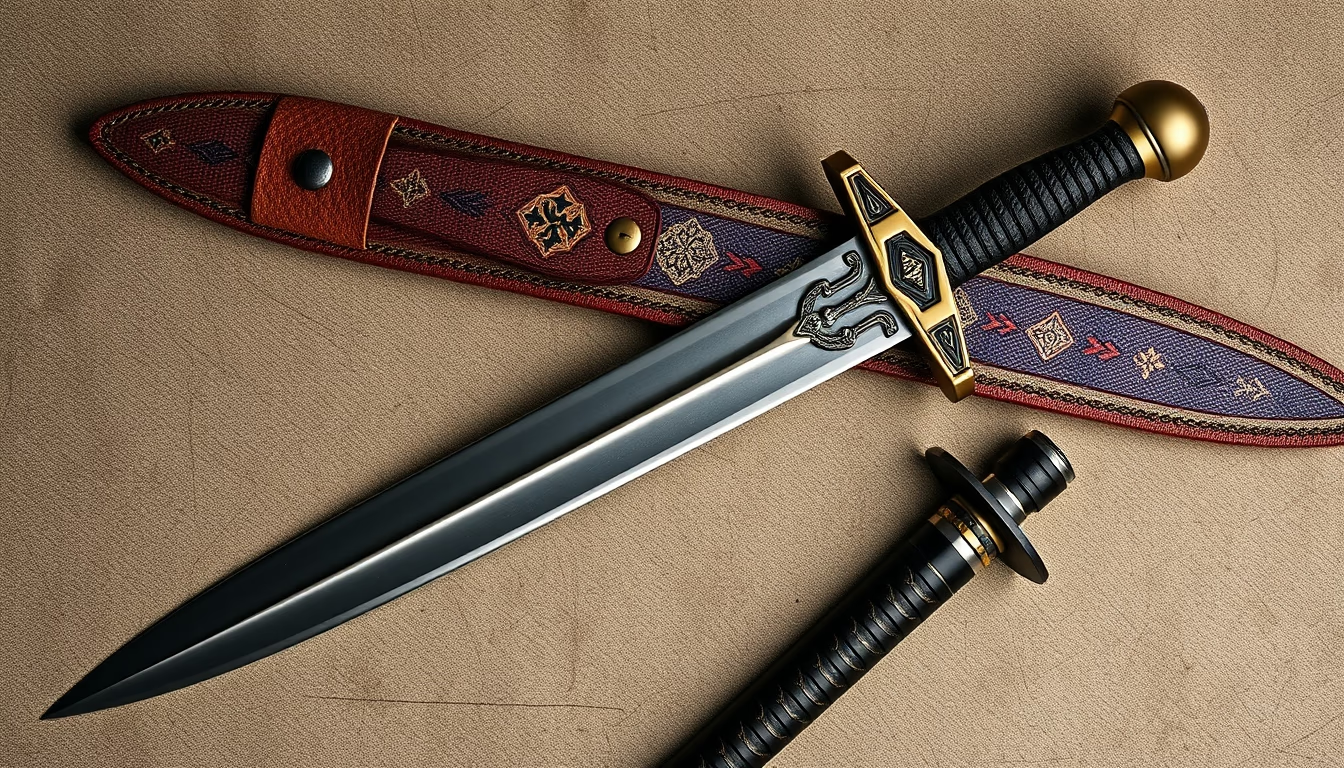
Medieval curved falchion: a single-edged sword with a curved blade, widely used in Europe between the 13th and 16th centuries.
About this subject
The falchion is a type of medieval sword characterized by a curved, single-edged blade designed primarily for powerful slashing. Unlike double-edged longswords, the falchion combined the efficiency of a cleaver with the reach of a sword. Its origins trace back to the 13th century, with examples found in regions such as France, England, and Germany. The blade, often wider near the tip, distributed weight to deliver heavy downward blows.
Historically, the falchion was the weapon of infantry soldiers and low-ranking knights, as its production required less steel and was faster than conventional swords. However, it was also used by nobles, as evidenced by the 'Conyers' falchion belonging to a 14th-century English family. The curved blade allowed deep cuts, and the absence of a second edge reduced the risk of breakage in rustic combat.
Culturally, the falchion appears in illuminated manuscripts and medieval tapestries, often associated with pitched battles. Its shape resembles the Middle Eastern scimitar, but the falchion developed independently in Europe. Some models featured a reinforced tip for thrusting, blending characteristics of swords and machetes. Today, the falchion is recreated by historical armourers and medieval reenactment enthusiasts.
Interestingly, the term 'falchion' derives from Latin 'falx' (scythe), reflecting its agricultural design adapted for war. Unlike other swords, the falchion was rarely a status symbol, being more practical and affordable. Its legacy influenced the development of naval cutlasses and later military machetes.
Frequently Asked Questions
What is the difference between a falchion and a scimitar?
The falchion is European, with a curved but generally wider and heavier blade, while the scimitar originates from the Middle East, with a more pronounced curve and lightness for mounted use. Both are single-edged, but have distinct historical contexts.
Was the falchion used by knights or common soldiers?
It was more common among infantry soldiers and low-ranking knights due to its low cost and robustness, but there are also records of nobles using falchions, such as the 14th-century Conyers falchion.
Are falchions still manufactured today?
Yes, artisans and companies specializing in historical weapons produce falchion replicas for collectors, HEMA (Historical European Martial Arts) practitioners, and medieval reenactment.
Direct URL
https://pub-c7d6a6ea828543ac903a74a341ccb2e1.r2.dev/imagens/falchion-medieval-curved-isometric-flat-lay-fresh13.avifHow to credit
Include a visible link back to UtilizAí. Copy one of the snippets below:
<a href="https://xn--utiliza-eza.com/en/midia/imagens/falchion-medieval-curved-isometric-flat-lay-fresh13">Falchion medieval curved</a> by <a href="https://xn--utiliza-eza.com">UtilizAí</a>, licensed under <a href="https://creativecommons.org/licenses/by/4.0/">CC BY 4.0</a>.
[Falchion medieval curved](https://xn--utiliza-eza.com/en/midia/imagens/falchion-medieval-curved-isometric-flat-lay-fresh13) by [UtilizAí](https://xn--utiliza-eza.com), CC BY 4.0
License: CC-BY-4.0