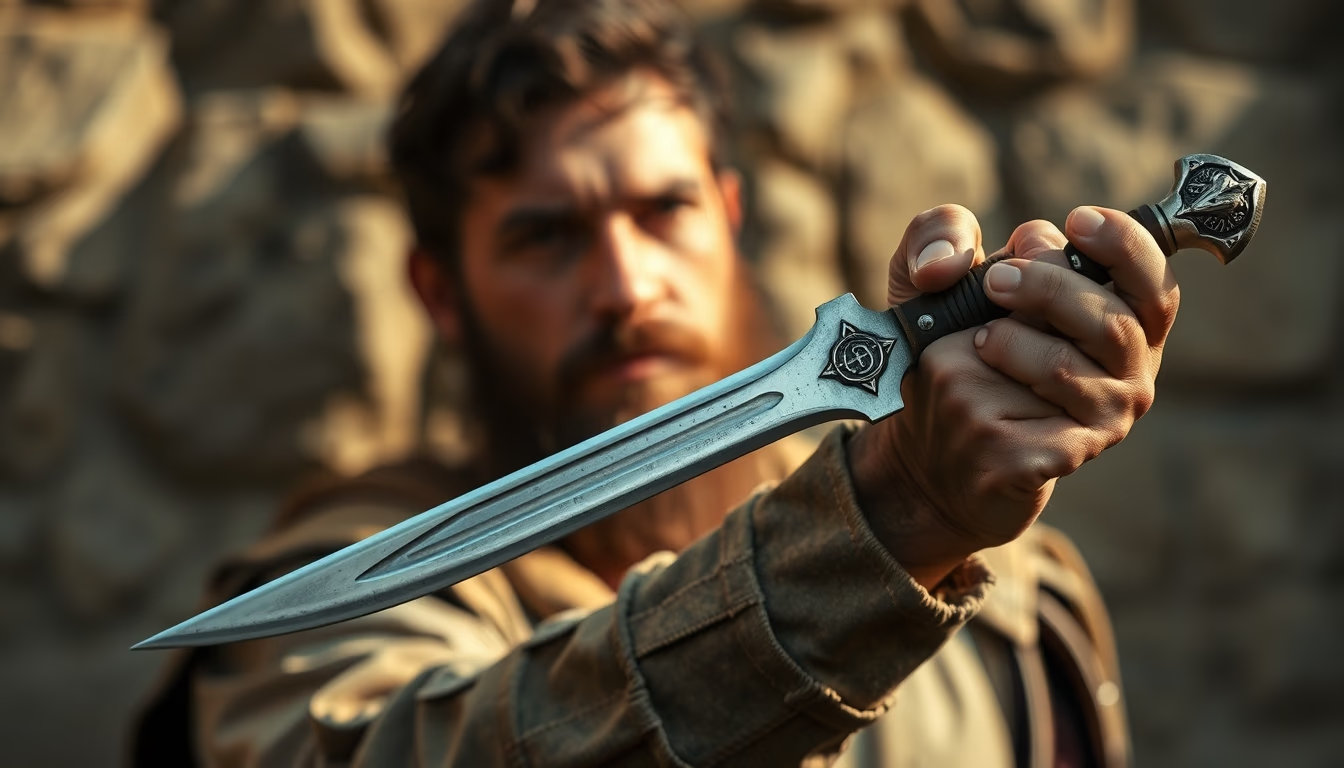
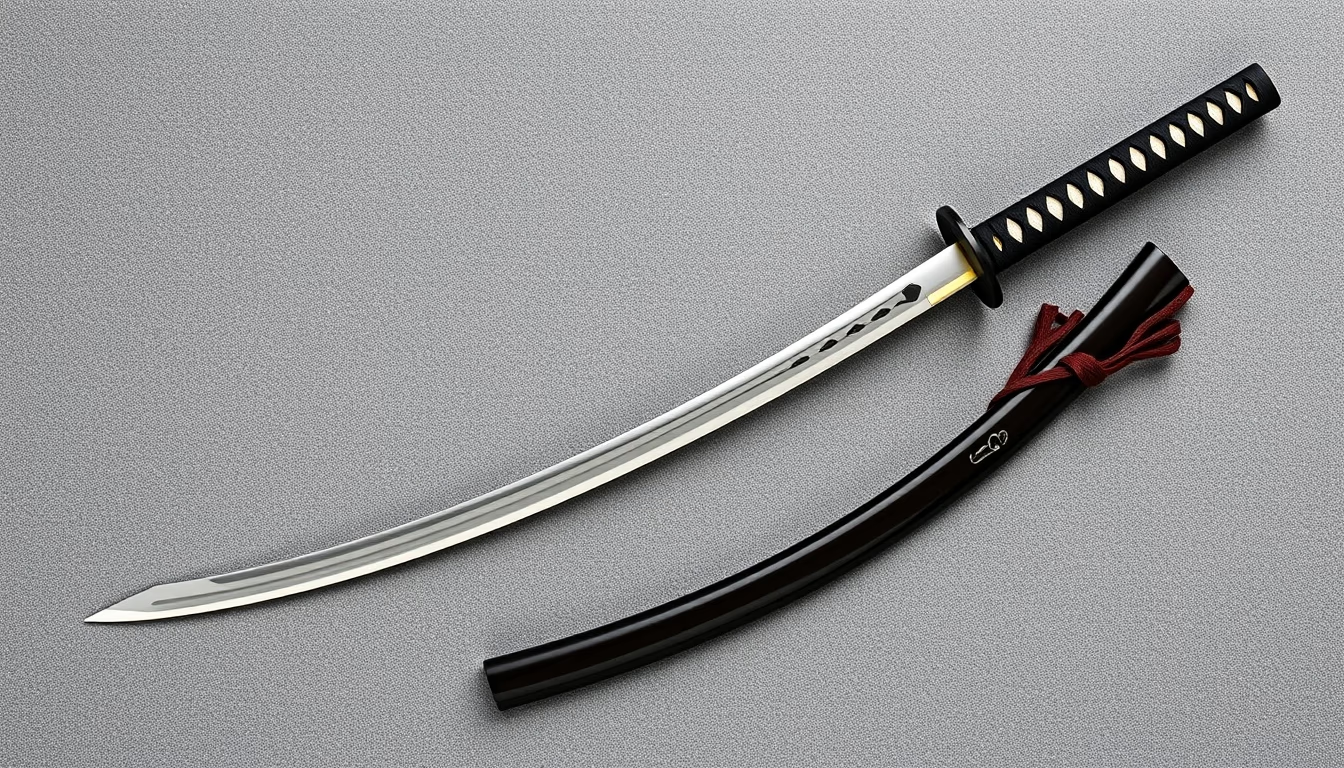
Falchion medieval curved
1344×768 · AVIF · CC BY 4.0
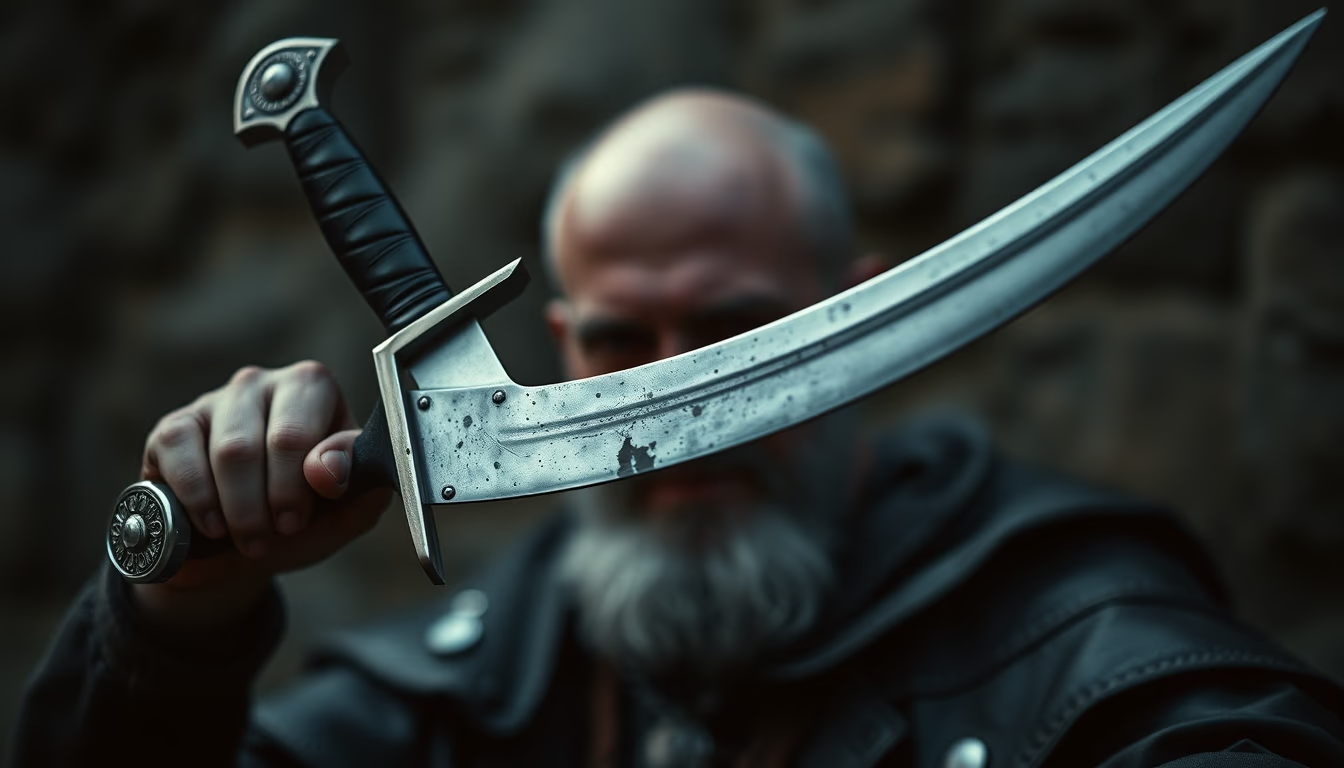
The medieval curved falchion was a single-edged, wide-bladed sword popular in Europe from the 13th to 16th centuries, used by peasants and knights alike.
About this subject
The medieval curved falchion is a single-edged, broad-bladed sword that blends the characteristics of a machete and a sword. Its origins trace back to the 13th century, likely influenced by weapons brought from the Middle East during the Crusades. Unlike double-edged longswords, the falchion delivered powerful cuts due to its curved profile and forward-weighted balance. It was a practical and affordable weapon, commonly used by infantry soldiers, peasants, and even knights in close combat.
The falchion's blade varied in length, typically between 70 and 90 centimeters, with a simple hilt featuring a straight or slightly curved guard. Its tip was less effective for thrusting, but the focus on cutting made it ideal against unarmored targets or light armor. Historical examples, such as the Conyers Falchion from the 13th century, have been found in England. The weapon also appears in medieval manuscripts and battle illustrations.
Interestingly, the falchion was not exclusive to a single social class. While knights favored more refined swords, the falchion was cheap to produce and effective, adopted by urban militias and mercenary armies. Its versatility allowed it to double as a tool for chopping wood or brush, reinforcing its utilitarian nature. In some regions, like Scandinavia, variants such as the 'Nordic falchion' had even more curved blades.
Despite its effectiveness, the falchion gradually fell out of use with the advent of firearms and the refinement of the Renaissance longsword. However, its legacy endures in museum collections and historical reenactments. Today, the falchion is appreciated by medieval weapon enthusiasts and is often recreated by modern blacksmiths, keeping the tradition of this unique weapon alive.
Frequently Asked Questions
What is the difference between a falchion and a scimitar?
The European falchion has a wider, less curved blade than the Oriental scimitar. While the scimitar is optimized for quick, light cuts, the falchion emphasizes weight and striking power, making it more robust.
Was the falchion used only by peasants?
No. Although it was affordable and popular among common infantry, knights and nobles also used it, especially in battles where powerful cuts were needed. Historical examples show decorated falchions in noble tombs.
How was the falchion manufactured in the Middle Ages?
It was forged from carbon steel, with differential hardening to harden the edge while keeping the spine flexible. Regional smiths produced variants, but the basic technique involved hammering the blade from a steel billet and then grinding the edge.
Direct URL
https://pub-c7d6a6ea828543ac903a74a341ccb2e1.r2.dev/imagens/falchion-medieval-curved-film-grain-authentic-fresh9.avifHow to credit
Include a visible link back to UtilizAí. Copy one of the snippets below:
<a href="https://xn--utiliza-eza.com/en/midia/imagens/falchion-medieval-curved-film-grain-authentic-fresh9">Falchion medieval curved</a> by <a href="https://xn--utiliza-eza.com">UtilizAí</a>, licensed under <a href="https://creativecommons.org/licenses/by/4.0/">CC BY 4.0</a>.
[Falchion medieval curved](https://xn--utiliza-eza.com/en/midia/imagens/falchion-medieval-curved-film-grain-authentic-fresh9) by [UtilizAí](https://xn--utiliza-eza.com), CC BY 4.0
License: CC-BY-4.0