Falchion medieval curved
1344×768 · AVIF · CC BY 4.0
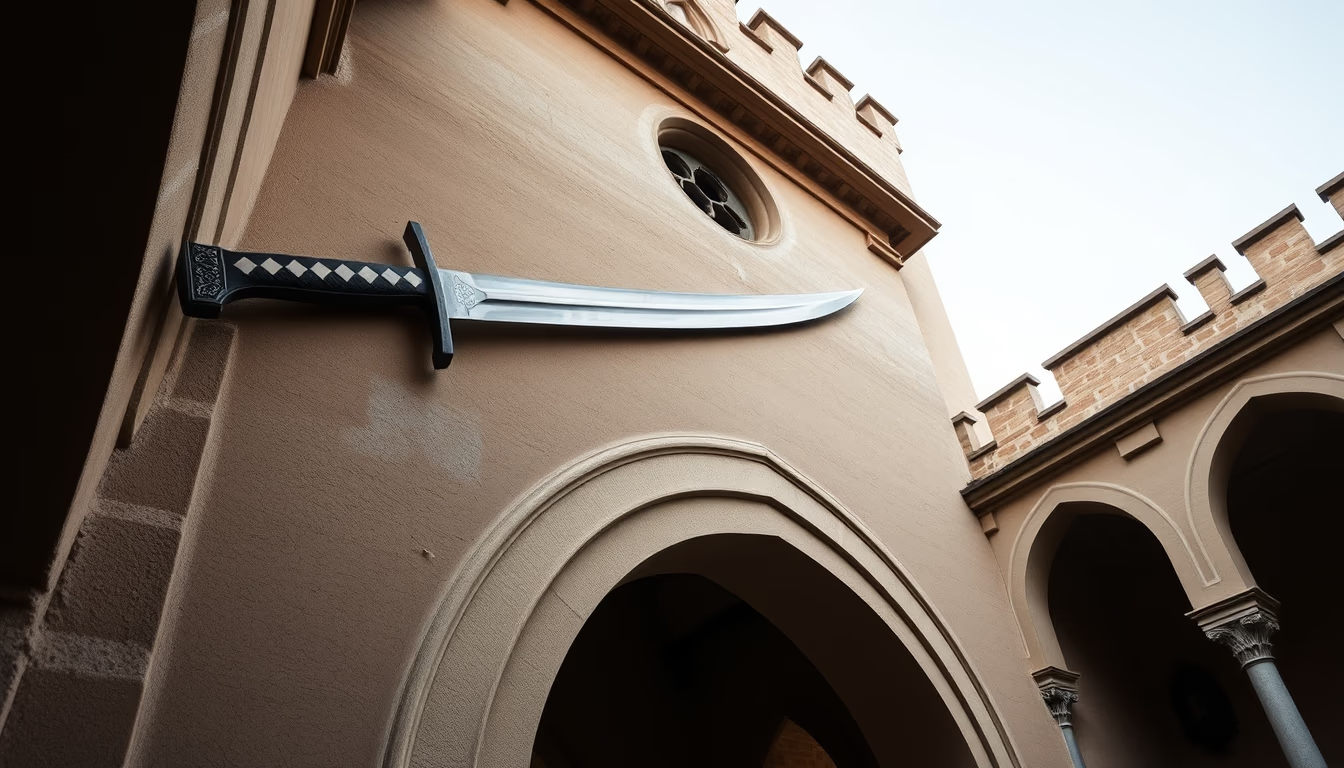
The medieval curved falchion is a sword with a broad, curved blade, popular in Europe from the 13th to 16th centuries, known for its hybrid knife-sword design.
About this subject
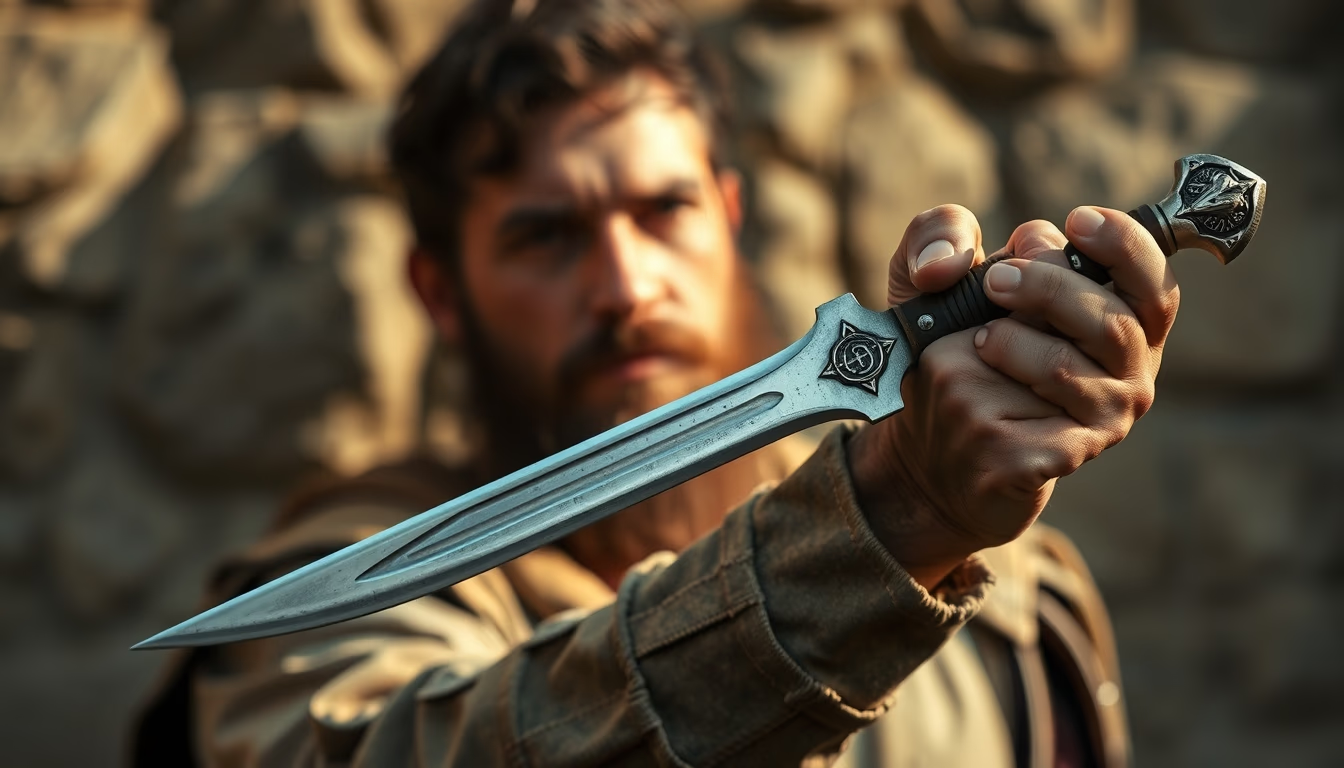
The curved medieval falchion is a single-edged, broad, and curved sword that flourished in Europe between the 13th and 16th centuries. Unlike straight, double-edged longswords, the falchion was essentially a heavy cutting tool derived from bush knives and agricultural implements. Its name comes from Latin 'falx', meaning sickle, reflecting its functional origins.
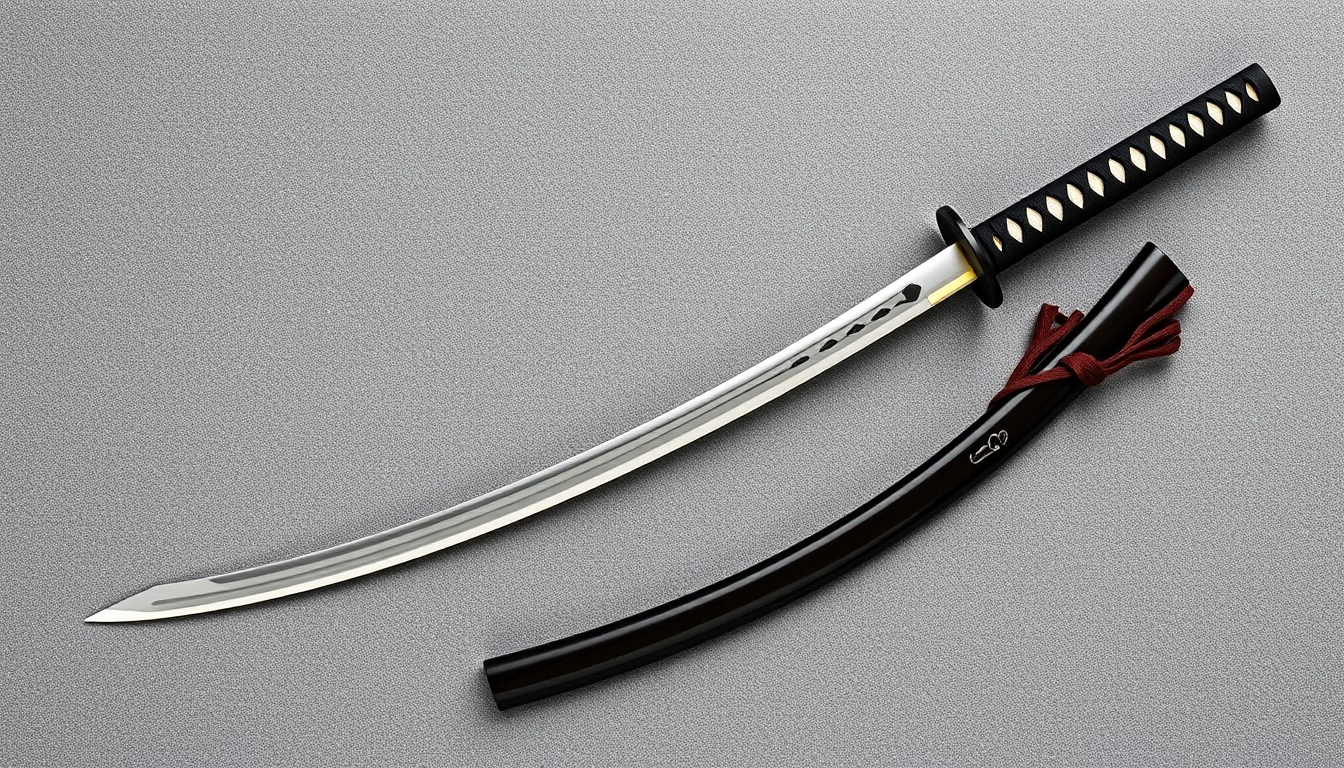
Unlike Eastern scimitars, which have more pronounced curves and are optimized for swift cavalry slashes, the European falchion featured a moderate curve and a wider profile, concentrating weight at the tip for powerful blows. It was primarily used by infantry soldiers and peasants, who wielded it as a secondary or primary weapon in close combat. The single blade came in various forms, from simple utilitarian models to ornate examples with inlays and ivory grips, such as the famous 'Conyers Falchion', a ceremonial weapon from the 14th century.
Despite its cutting effectiveness, the falchion never became as prevalent as traditional war swords in European culture. Relatively few original specimens survive, many housed in museums such as the British Museum and the Metropolitan Museum of Art. In medieval artistic representations, such as illuminated manuscripts and tapestries, the falchion sometimes appears associated with rustic figures or mythology, for instance in the scene of Ascalon, where Archangel Michael uses a falchion against the dragon.
The falchion's design influenced the development of other bladed weapons, such as the German combat knife 'Messer', and continues to inspire modern recreations in historical collections and fantasy games. Its distinctive shape and hybrid function make it a fascinating example of how everyday tools could be adapted for warfare in the Middle Ages.
Frequently Asked Questions
What is the difference between a falchion and a scimitar?
The European falchion has a broader and less curved blade than the Eastern scimitar, used mainly by infantry for heavy chopping blows, while the scimitar is lighter and more curved for quick slashes from horseback.
How was the falchion used in battle?
It was wielded by infantry soldiers as a cutting weapon, effective against light armor. Its weight at the tip enabled powerful strikes, but it was less versatile for thrusting compared to straight-bladed swords.
Where can I see original falchions?
Original specimens are displayed at the British Museum (London), the Metropolitan Museum of Art (New York), and smaller European collections. Many are rare and ornate pieces.
Direct URL
https://pub-c7d6a6ea828543ac903a74a341ccb2e1.r2.dev/imagens/falchion-medieval-curved-architectural-photography-fresh8.avifHow to credit
Include a visible link back to UtilizAí. Copy one of the snippets below:
<a href="https://xn--utiliza-eza.com/en/midia/imagens/falchion-medieval-curved-architectural-photography-fresh8">Falchion medieval curved</a> by <a href="https://xn--utiliza-eza.com">UtilizAí</a>, licensed under <a href="https://creativecommons.org/licenses/by/4.0/">CC BY 4.0</a>.
[Falchion medieval curved](https://xn--utiliza-eza.com/en/midia/imagens/falchion-medieval-curved-architectural-photography-fresh8) by [UtilizAí](https://xn--utiliza-eza.com), CC BY 4.0
License: CC-BY-4.0