Fairy chimneys cappadocia
1344×768 · AVIF · CC BY 4.0
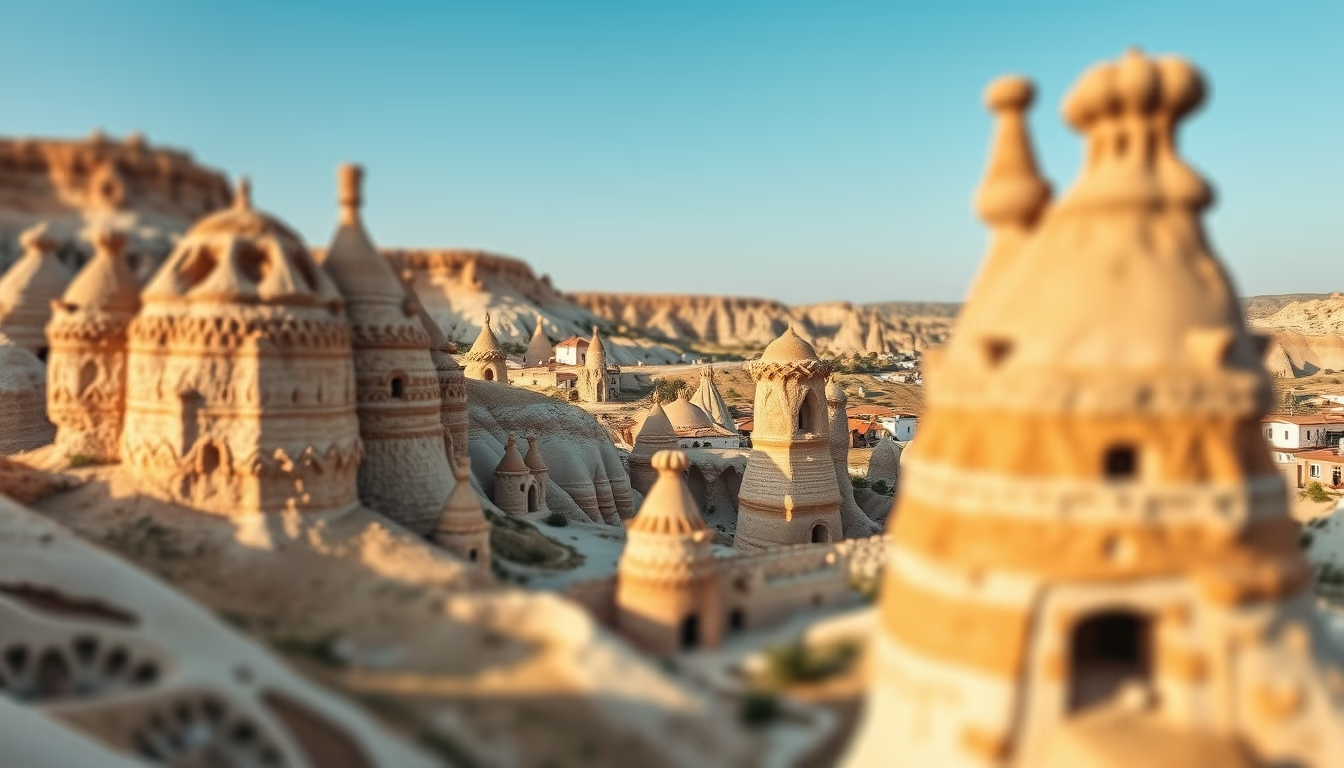
The fairy chimneys of Cappadocia are unique rock formations sculpted by volcanic erosion over millions of years in central Turkey.
About this subject
The fairy chimneys, known as 'peri bacaları' in Turkish, are iconic geological formations in Cappadocia, a historical region in central Anatolia, Turkey. They were formed from layers of volcanic tuff, ash, and basalt deposited by eruptions of Mount Erciyes, Mount Hasan, and Mount Melendiz about 60 million years ago. Over time, water and wind erosion sculpted these rocks into tall, thin cones, often capped with harder basalt or andesite rock that protects the softer base. This process created surreal landscapes that resemble fairy tales.
The area is not just a natural wonder; it holds rich human history. Since the Hittite era, people have carved homes, churches, and monasteries into these formations. From the 4th to 11th centuries, early Christians used Cappadocia as a refuge, building underground cities like Derinkuyu and Kaymaklı that could shelter thousands. Many fairy chimneys contain interiors with Byzantine frescoes, especially in Göreme, Love Valley, and Rose Valley. Cappadocia has been a UNESCO World Heritage Site since 1985.
Tourists visit the region for hot air balloon rides at dawn, flying over a sea of fairy chimneys. Balloon tours offer panoramic views of the formations, valleys, and villages. Additionally, hiking, ATV rides, and visits to underground cities are popular activities. Local cuisine includes dishes like testi kebab (stew cooked in a clay pot) and wine from local vineyards. The best time to visit is spring and autumn, when the weather is mild and the fields are in bloom.
Fairy chimneys vary in height, some reaching up to 40 meters. They are most concentrated in Göreme Valley, Pasabag (Monks Valley), and Zelve. The unique geology also allowed for troglodyte architecture, with hotels and houses carved into rock. Folklore tells of fairies living in these formations, hence the name 'fairy chimneys.' Despite their durability, ongoing erosion and human activity require conservation efforts.
Frequently Asked Questions
What are the fairy chimneys of Cappadocia?
They are conical rock formations with harder rock caps, created by volcanic erosion over millions of years. Many have been carved by humans to serve as homes, churches, and shelters.
How were the fairy chimneys formed?
They formed from volcanic deposits of tuff and basalt. Differential erosion wore away softer layers, leaving pillars with a cap of resistant rock on top.
What is the best time to visit Cappadocia?
Spring (April to June) and autumn (September to October) offer mild temperatures and fewer crowds. Summer can be hot, and winter brings snow that adds to the magical scenery.
Direct URL
https://pub-c7d6a6ea828543ac903a74a341ccb2e1.r2.dev/imagens/fairy-chimneys-cappadocia-tilt-shift-miniature-p11.avifHow to credit
Include a visible link back to UtilizAí. Copy one of the snippets below:
<a href="https://xn--utiliza-eza.com/en/midia/imagens/fairy-chimneys-cappadocia-tilt-shift-miniature-p11">Fairy chimneys cappadocia</a> by <a href="https://xn--utiliza-eza.com">UtilizAí</a>, licensed under <a href="https://creativecommons.org/licenses/by/4.0/">CC BY 4.0</a>.
[Fairy chimneys cappadocia](https://xn--utiliza-eza.com/en/midia/imagens/fairy-chimneys-cappadocia-tilt-shift-miniature-p11) by [UtilizAí](https://xn--utiliza-eza.com), CC BY 4.0
License: CC-BY-4.0