Factory robot arm assembly
1344×768 · AVIF · CC BY 4.0
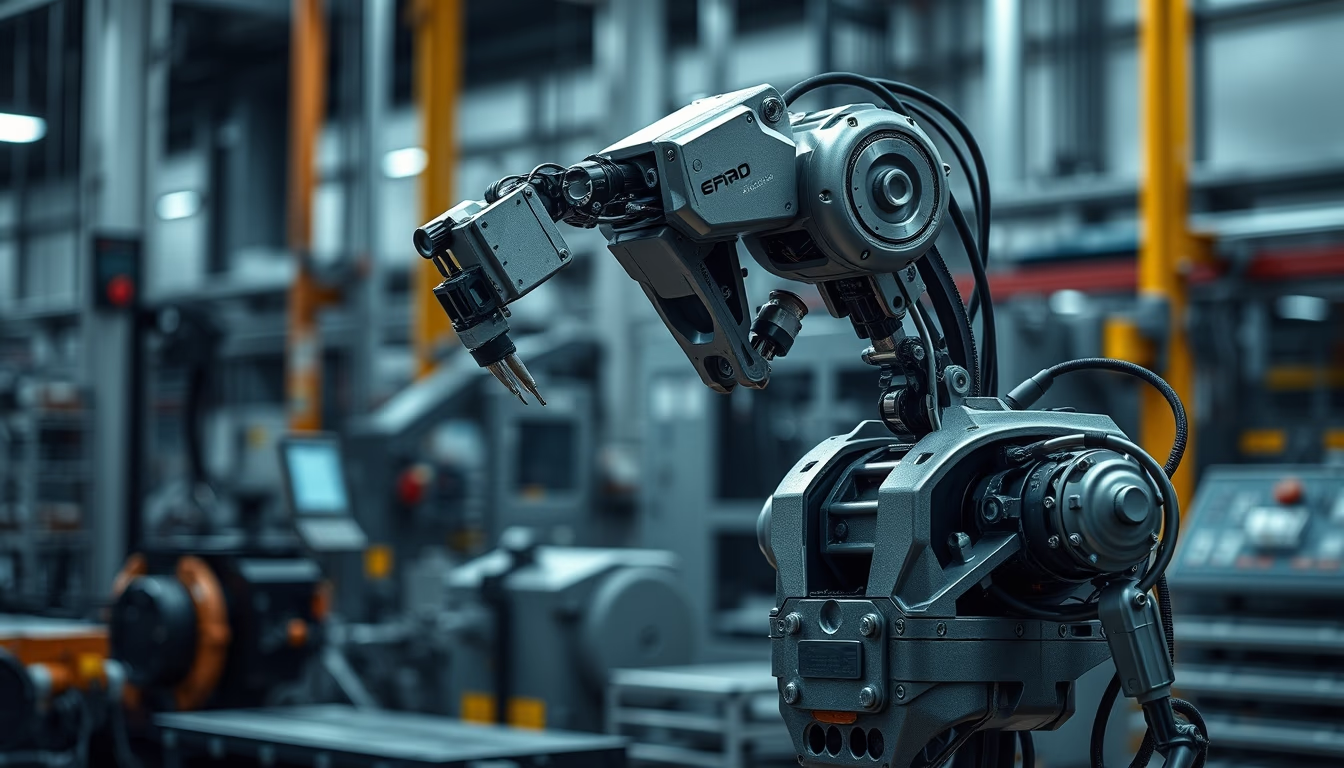
Industrial robotic arm on an automated assembly line, symbolizing Industry 4.0 and global production efficiency.
About this subject
Industrial robotic arms are fundamental equipment on modern assembly lines, especially in the context of Industry 4.0, which integrates automation, IoT, and artificial intelligence. These robots are designed to perform repetitive tasks with high precision and speed, such as welding, painting, assembly, and material handling. Manufacturers like ABB, FANUC, and KUKA dominate the market, offering models that can lift loads of up to hundreds of kilograms with millimeter accuracy.
The use of robotic arms reduces human error, increases productivity, and improves safety in manufacturing environments. In Brazil, sectors such as automotive, metallurgy, and electronics are the main users of this technology. The assembly of a robotic arm involves actuators, sensors, controllers, and end effectors like grippers or specialized tools. Programming is done through specific software, allowing quick adjustments for different tasks.
A notable example is the collaborative robot (cobot), which works alongside humans without safety barriers. Companies like Universal Robots have popularized this approach, making automation accessible to small and medium enterprises. The trend is for robotic arms to become increasingly autonomous, with machine learning capabilities.
The image depicts a robotic arm in full assembly operation, highlighting the mechanical complexity and precision of movements. The industrial lighting and blurred background emphasize the equipment as the protagonist of the scene, representing the forefront of modern manufacturing.
Frequently Asked Questions
What is the typical payload capacity of an industrial robotic arm?
Capacity ranges from a few kilograms for collaborative robots to over 1000 kg for heavy-duty models used in automotive manufacturing.
What are the main applications of robotic arms in industry?
Welding, painting, assembly of components, material handling, packaging, and quality inspection are the most common applications.
Do robotic arms completely replace human labor?
No. They automate repetitive and hazardous tasks but still require human supervision, programming, and maintenance. In many cases, they work collaboratively with operators.
Direct URL
https://pub-c7d6a6ea828543ac903a74a341ccb2e1.r2.dev/imagens/factory-robot-arm-assembly-fine-art-photography.avifHow to credit
Include a visible link back to UtilizAí. Copy one of the snippets below:
<a href="https://xn--utiliza-eza.com/en/midia/imagens/factory-robot-arm-assembly-fine-art-photography">Factory robot arm assembly</a> by <a href="https://xn--utiliza-eza.com">UtilizAí</a>, licensed under <a href="https://creativecommons.org/licenses/by/4.0/">CC BY 4.0</a>.
[Factory robot arm assembly](https://xn--utiliza-eza.com/en/midia/imagens/factory-robot-arm-assembly-fine-art-photography) by [UtilizAí](https://xn--utiliza-eza.com), CC BY 4.0
License: CC-BY-4.0