Erhu chinese fiddle
1344×768 · AVIF · CC BY 4.0
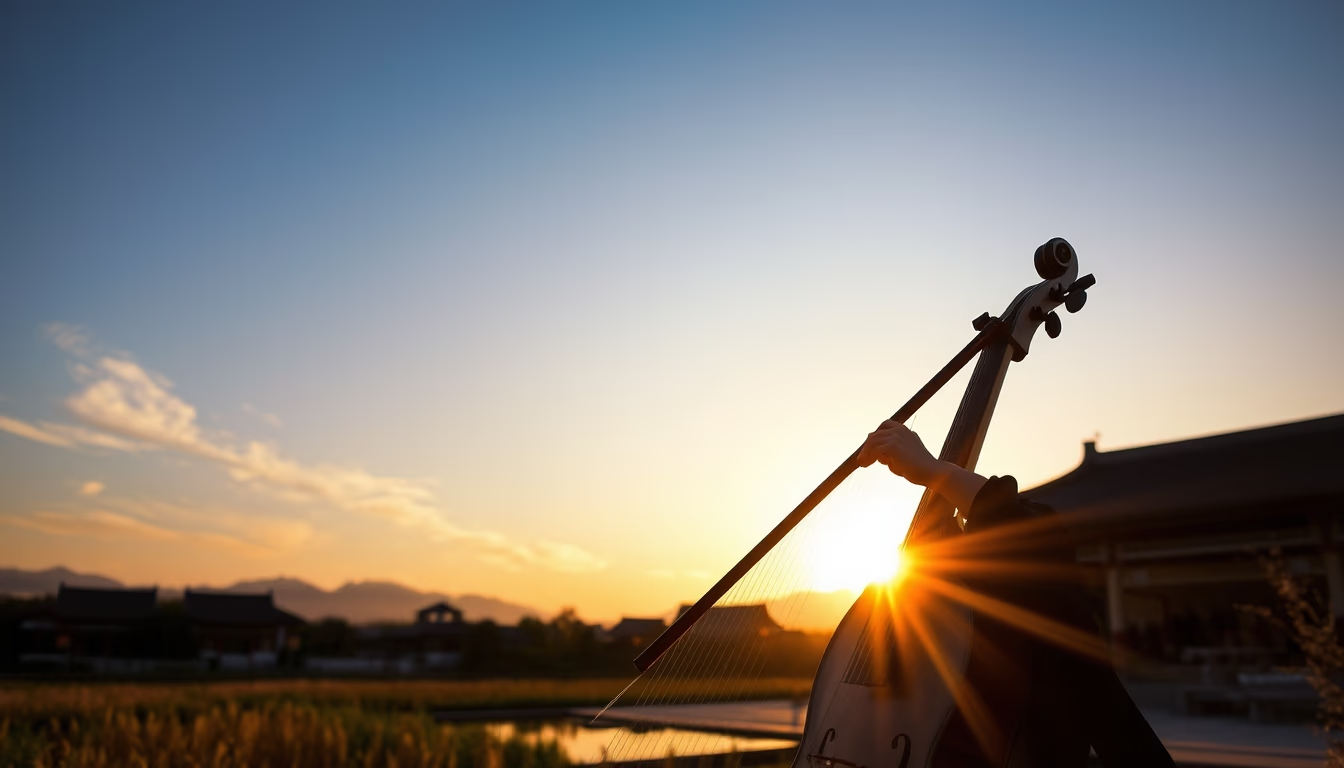
The erhu is a Chinese two-stringed bowed instrument, renowned for its melancholic tone and versatility in classical and folk music.
About this subject
The erhu, often called the Chinese violin, is a two-stringed bowed instrument with a history tracing back to the Tang dynasty (7th to 10th century), when similar instruments arrived via the Silk Road. Unlike Western violins, the erhu has a short neck and a resonator covered with python skin. The strings are tuned a fifth apart and are played with a horsehair bow that passes between them, enabling expressive techniques such as vibrato and glissando. The instrument is crafted from precious woods like rosewood or sandalwood, and its open bottom contributes to its distinctive penetrating timbre. In Chinese music, the erhu is central to traditional orchestras, opera, and folk ensembles. Iconic pieces like "Moon Reflected on Second Spring" and "Horse Racing" showcase its ability to mimic natural sounds and convey deep emotions. The erhu has also gained global recognition, appearing in fusion genres such as jazz, rock, and electronic music. Despite its simple appearance, mastering the erhu requires years of practice due to the lack of frets and the need for precise finger pressure. The instrument is typically played seated, resting on the left leg with the resonator facing the audience. Python skin, once essential, is increasingly replaced by synthetic materials for conservation reasons. The erhu is not merely an instrument but a symbol of Chinese cultural identity, used in celebrations, rituals, and music education.
Frequently Asked Questions
How many strings does the erhu have?
The erhu has only two strings, tuned a fifth apart.
What is the origin of the erhu?
Its origin dates back to the Tang dynasty, influenced by instruments brought via the Silk Road.
Why is snake skin used on the erhu?
Snake skin, traditionally python, provides the instrument's characteristic resonance and timbre, but it is now often replaced by synthetic materials.
Direct URL
https://pub-c7d6a6ea828543ac903a74a341ccb2e1.r2.dev/imagens/erhu-chinese-fiddle-travel-photography-p2.avifHow to credit
Include a visible link back to UtilizAí. Copy one of the snippets below:
<a href="https://xn--utiliza-eza.com/en/midia/imagens/erhu-chinese-fiddle-travel-photography-p2">Erhu chinese fiddle</a> by <a href="https://xn--utiliza-eza.com">UtilizAí</a>, licensed under <a href="https://creativecommons.org/licenses/by/4.0/">CC BY 4.0</a>.
[Erhu chinese fiddle](https://xn--utiliza-eza.com/en/midia/imagens/erhu-chinese-fiddle-travel-photography-p2) by [UtilizAí](https://xn--utiliza-eza.com), CC BY 4.0
License: CC-BY-4.0