Erhu chinese fiddle
1344×768 · AVIF · CC BY 4.0
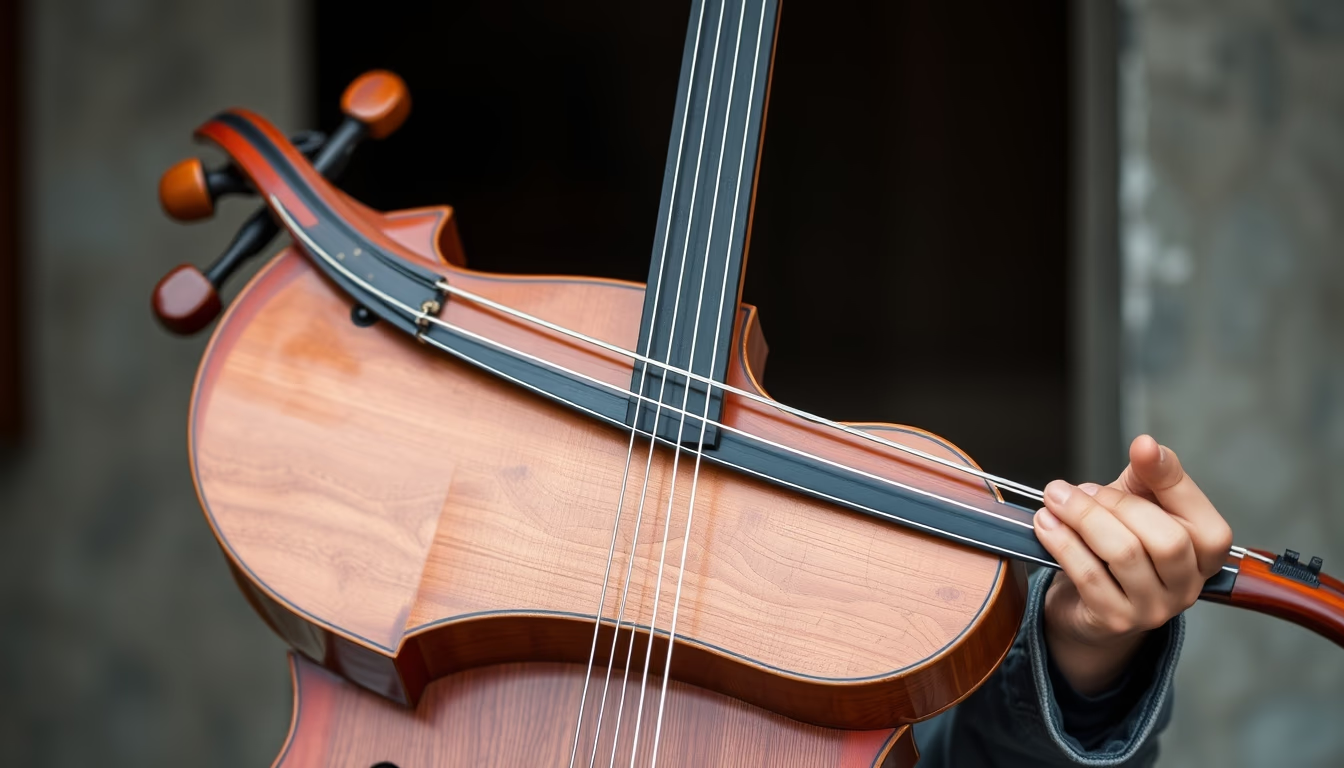
The erhu is a two-stringed Chinese bowed instrument, often called the "Chinese violin," known for its melancholic and expressive sound.
About this subject
The erhu is a Chinese bowed string instrument with a history dating back over a thousand years, likely originating from similar instruments brought from Central Asia during the Tang dynasty (618, 907 AD). Unlike the Western violin, the erhu has only two strings, usually tuned a fifth apart (D4 and A4) or a fourth apart (G3 and D3), and features no fingerboard or frets. The bow, made of horsehair, is permanently wedged between the two strings, passing under the thinner string and over the thicker one, allowing the player to bow both strings simultaneously or alternately.
The resonating body of the erhu is covered on its playing side with python skin, giving it a nasal, vibrant timbre that can mimic the human voice or weeping sounds. The instrument rests on the player's leg, and the left hand slides along the neck without markers, requiring precise intonation. The erhu is central to traditional Chinese music, particularly in Chinese opera and folk ensemble music like Jiangnan sizhu.
Famous pieces such as "Erquan Yingyue" (Moon Reflected on the Second Spring) by Hua Yanjun (Abing) have brought the erhu international recognition. In Western popular culture, the erhu appears in film scores like "Crouching Tiger, Hidden Dragon" and works by composers such as Tan Dun, who blend Eastern and Western elements. The craftsmanship of the instrument, involving careful selection of precious woods like rosewood or sandalwood and treatment of the snake skin, gives each erhu a unique sonic character.
Frequently Asked Questions
Is the erhu difficult to learn?
Yes, the erhu is considered challenging due to the lack of frets or fingerboard markers, requiring a well-trained ear for intonation. The bow technique is also complex, as the bow is non-detachable.
What is the difference between erhu and violin?
The erhu has two strings and no fingerboard or frets, while the violin has four strings, a fingerboard, and a detachable bow. The erhu's timbre is more nasal and melancholic due to its python-skin resonator.
What type of music is the erhu used in?
Traditionally, the erhu is used in Chinese opera, folk music, and chamber ensembles like Jiangnan sizhu. Today, it also appears in film scores, contemporary music, and fusions with jazz and pop.
Direct URL
https://pub-c7d6a6ea828543ac903a74a341ccb2e1.r2.dev/imagens/erhu-chinese-fiddle-national-geographic-style-p3.avifHow to credit
Include a visible link back to UtilizAí. Copy one of the snippets below:
<a href="https://xn--utiliza-eza.com/en/midia/imagens/erhu-chinese-fiddle-national-geographic-style-p3">Erhu chinese fiddle</a> by <a href="https://xn--utiliza-eza.com">UtilizAí</a>, licensed under <a href="https://creativecommons.org/licenses/by/4.0/">CC BY 4.0</a>.
[Erhu chinese fiddle](https://xn--utiliza-eza.com/en/midia/imagens/erhu-chinese-fiddle-national-geographic-style-p3) by [UtilizAí](https://xn--utiliza-eza.com), CC BY 4.0
License: CC-BY-4.0