Erhu chinese fiddle
1344×768 · AVIF · CC BY 4.0
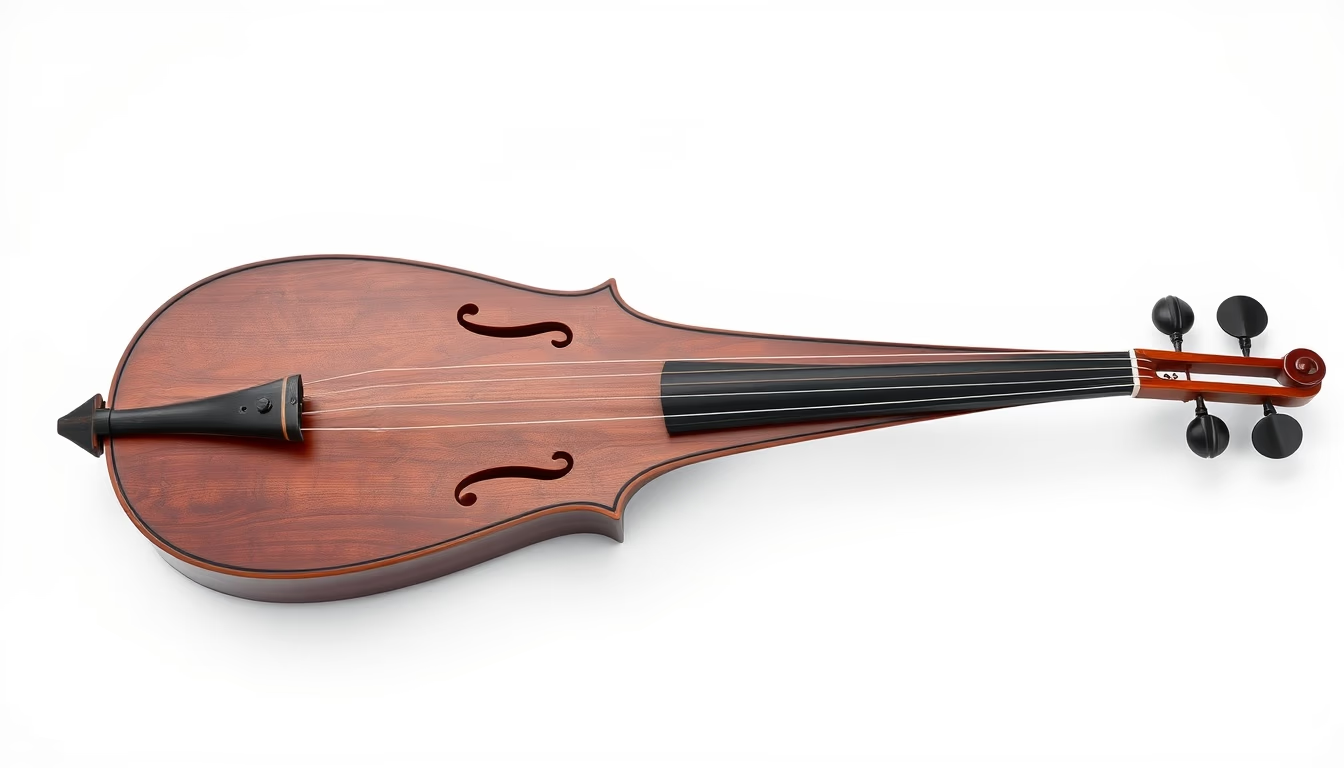
The erhu is a two-stringed Chinese bowed instrument, often called the Chinese violin, known for its melancholic and expressive sound.
About this subject
The erhu, also known as the Chinese violin, is a two-stringed bowed musical instrument originating from China. Its resonator is typically made of ebony or sandalwood, covered with python or water snake skin, producing a nasal and penetrating timbre. The bow is made of bamboo and horsehair, passing between the strings, allowing the player to sound both strings simultaneously or individually.
Historically, the erhu emerged during the Tang Dynasty (7th-9th century), evolving from foreign stringed instruments brought from Central Asia. It became popular in Chinese opera and folk music, especially in northern and southern regions. During the 20th century, composers like Liu Tianhua modernized its technique, elevating it to a solo concert instrument.
In Chinese culture, the erhu is associated with melancholy and nostalgia, often used in film scores for historical dramas and period pieces. Mastering the erhu requires years of practice to control vibrato and precise intonation, as it has no frets. Regional variations exist, such as the gaohu (higher pitched) and zhonghu (lower pitched).
Today, the erhu is played in traditional ensembles as well as collaborations with Western classical music, jazz, and electronic music. Musicians like Wu Man and the Silk Road Ensemble have explored its versatility. The instrument has also gained popularity in the West through performances in films such as 'Crouching Tiger, Hidden Dragon' and 'Spirited Away'.
Frequently Asked Questions
What is the origin of the erhu?
The erhu originated during the Tang Dynasty (7th-9th century) from stringed instruments brought from Central Asia, such as the huqin.
How is the erhu tuned?
The erhu is typically tuned in fifths, with the inner string at D4 and the outer string at A4, but it can vary depending on the musical piece or region.
Is the erhu only used in traditional Chinese music?
No. The erhu is used in Chinese opera, folk music, and also in contemporary music, including collaborations with jazz, Western classical music, and film scores.
Direct URL
https://pub-c7d6a6ea828543ac903a74a341ccb2e1.r2.dev/imagens/erhu-chinese-fiddle-commercial-product-photography-p1.avifHow to credit
Include a visible link back to UtilizAí. Copy one of the snippets below:
<a href="https://xn--utiliza-eza.com/en/midia/imagens/erhu-chinese-fiddle-commercial-product-photography-p1">Erhu chinese fiddle</a> by <a href="https://xn--utiliza-eza.com">UtilizAí</a>, licensed under <a href="https://creativecommons.org/licenses/by/4.0/">CC BY 4.0</a>.
[Erhu chinese fiddle](https://xn--utiliza-eza.com/en/midia/imagens/erhu-chinese-fiddle-commercial-product-photography-p1) by [UtilizAí](https://xn--utiliza-eza.com), CC BY 4.0
License: CC-BY-4.0