Erhu chinese fiddle
1344×768 · AVIF · CC BY 4.0
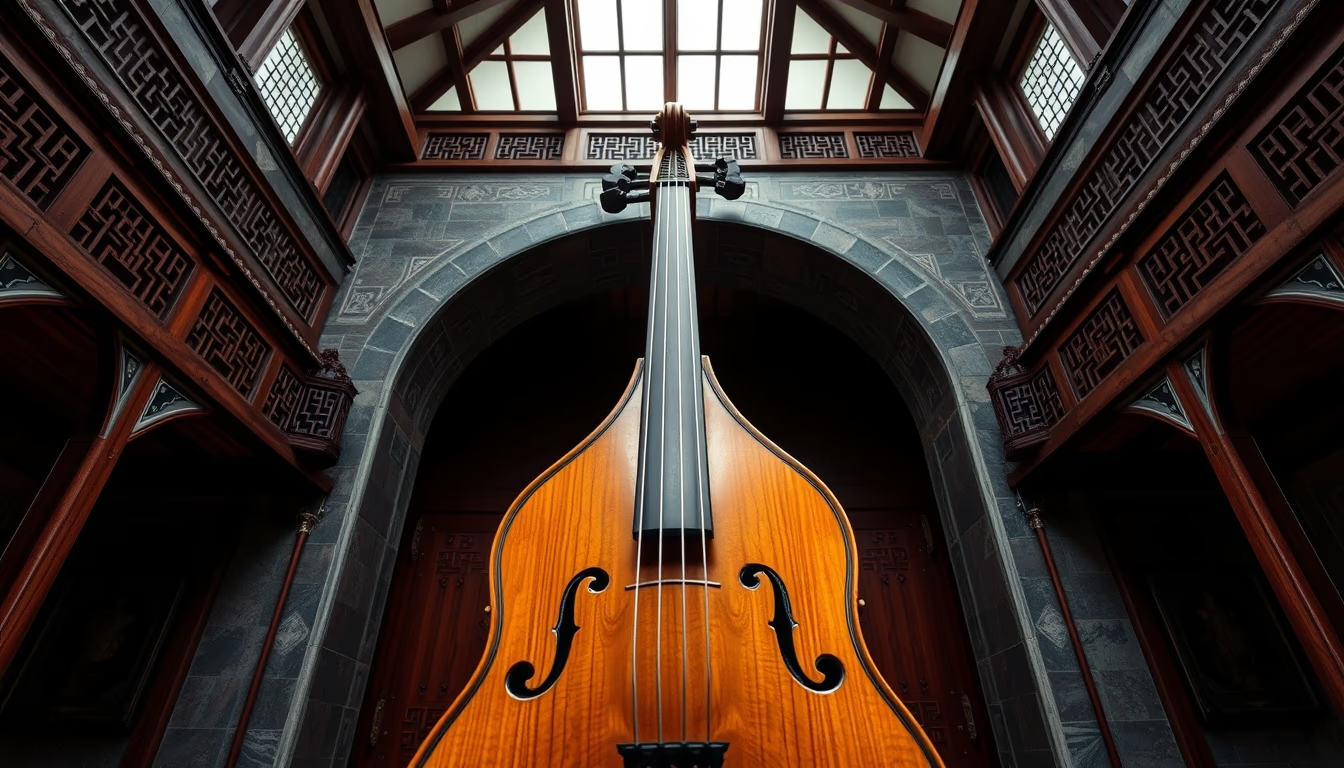
The erhu is a two-stringed Chinese bowed instrument, often called the Chinese violin for its melancholic and expressive sound.
About this subject
The erhu, often referred to as the Chinese violin, is a two-stringed bowed instrument that originated in China during the Tang dynasty (7th century AD). Unlike Western violins, its small resonator is covered with python skin on the front, giving it a distinctive nasal and penetrating timbre. The two strings were traditionally made of silk, but today steel or nylon is more common. The bow is inserted between the strings, a rare feature among bowed instruments.
Construction of the erhu reflects Chinese philosophical principles: the long neck symbolizes the connection between heaven and earth, while the hexagonal or octagonal resonator represents balance. The instrument is used in both folk music and Chinese opera, especially Peking and Cantonese opera. In the modern Chinese orchestra, the erhu takes the leading melodic role, similar to the violin in a Western symphony.
Contemporary musicians like Wu Man and the 12 Girls Band have expanded the erhu's reach into jazz, pop, and experimental music. The instrument requires precise vibrato and glissando techniques, producing notes that mimic the human voice or bird songs. A notable fact: the erhu has no fixed fingerboard, allowing microtones and inflections that make it particularly challenging to master.
Culturally, the erhu represents Chinese musical tradition and is present in rituals, festivals, and ceremonies. Despite its simple appearance, mastering it takes decades, and great masters are revered as guardians of intangible heritage. With growing global interest in Chinese music, the erhu is increasingly featured in concert halls and cross-cultural collaborations.
Frequently Asked Questions
What is the difference between the erhu and the violin?
The erhu has two strings (violin has four) and the bow passes between them, not over them. Its body is covered with python skin instead of wood, giving a more nasal and melancholic tone. Unlike the violin, the erhu has no fingerboard, allowing microtones.
Is the erhu difficult to learn?
Yes, the erhu is considered one of the most challenging Chinese instruments. The lack of frets or markers requires precise finger placement and bow control to produce correct notes and the characteristic vibrato.
Is the erhu only used in traditional Chinese music?
No, the erhu has been adopted into modern genres like jazz, pop, and experimental music. Contemporary artists frequently collaborate with Western musicians, expanding its use beyond traditional settings.
Direct URL
https://pub-c7d6a6ea828543ac903a74a341ccb2e1.r2.dev/imagens/erhu-chinese-fiddle-architectural-photography-p5.avifHow to credit
Include a visible link back to UtilizAí. Copy one of the snippets below:
<a href="https://xn--utiliza-eza.com/en/midia/imagens/erhu-chinese-fiddle-architectural-photography-p5">Erhu chinese fiddle</a> by <a href="https://xn--utiliza-eza.com">UtilizAí</a>, licensed under <a href="https://creativecommons.org/licenses/by/4.0/">CC BY 4.0</a>.
[Erhu chinese fiddle](https://xn--utiliza-eza.com/en/midia/imagens/erhu-chinese-fiddle-architectural-photography-p5) by [UtilizAí](https://xn--utiliza-eza.com), CC BY 4.0
License: CC-BY-4.0