Enzyme catalysis 3d
1344×768 · AVIF · CC BY 4.0
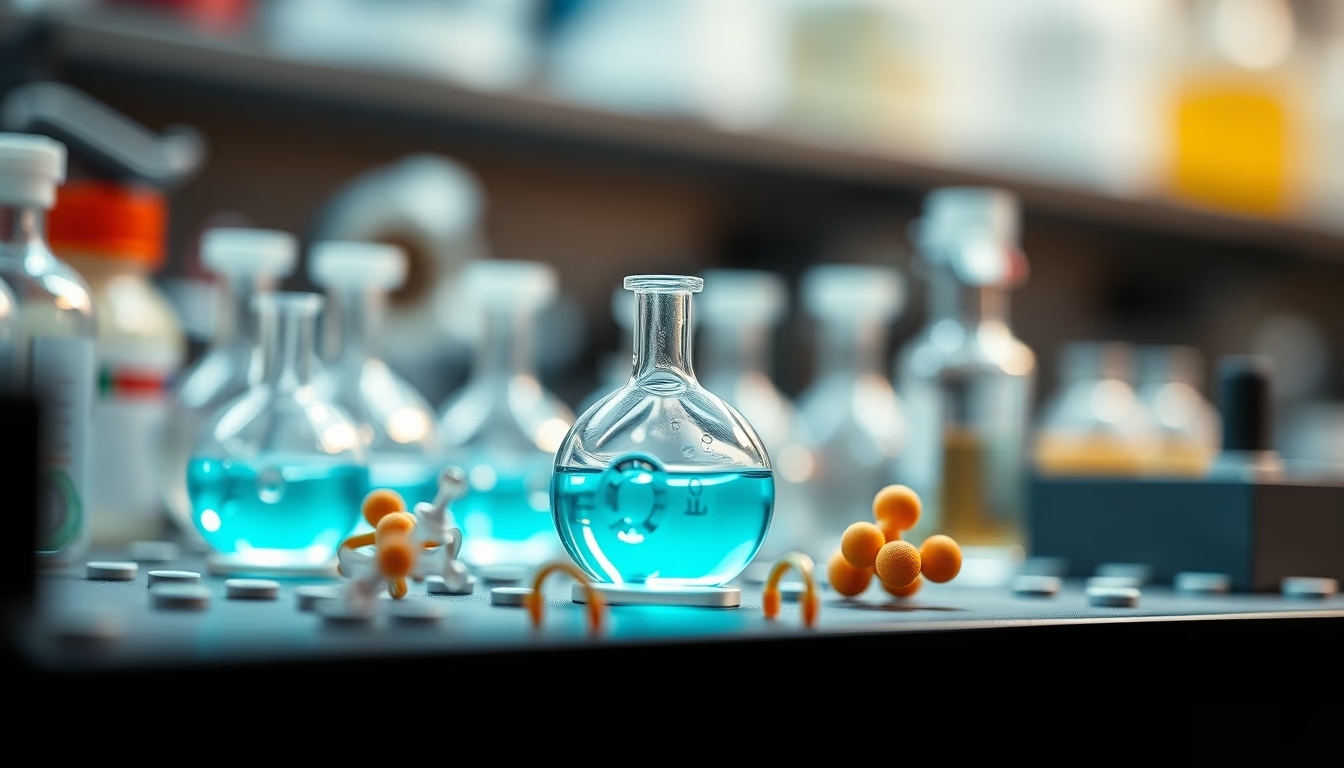
Enzyme catalysis is essential for biochemical reactions, accelerating processes in living organisms with high specificity and efficiency.
About this subject
Enzymes are proteins that act as biological catalysts, lowering the activation energy required for chemical reactions to occur in living organisms. Each enzyme is highly specific, recognizing a particular substrate at its active site, where the reaction takes place. For example, salivary amylase breaks down starch molecules into smaller sugars during digestion. The efficiency of enzymes is remarkable: some can accelerate reactions by factors of millions compared to uncatalyzed reactions.
The mechanism of enzyme action is explained by two main models: the lock-and-key model, where the active site has a complementary shape to the substrate, and the induced fit model, where substrate binding induces conformational changes in the enzyme. Factors such as temperature, pH, and substrate or inhibitor concentration directly influence enzymatic activity. For instance, most human enzymes have optimal activity at near-neutral pH and a temperature of 37°C.
The importance of enzymes transcends biology: in the food industry, lactase is used to produce lactose-free milk; in pharmaceuticals, enzyme inhibitors are targets for drugs (e.g., HIV protease inhibitors). In biotechnology, immobilized enzymes are used in bioreactors for compound synthesis. Interestingly, some enzymes, like DNA polymerase, are essential for DNA replication and are fundamental tools in techniques such as PCR.
Iconic examples include catalase, which breaks down hydrogen peroxide into water and oxygen, and trypsin, involved in protein digestion. The study of enzyme kinetics, described by the Michaelis-Menten equation, allows quantification of reaction rates and enzyme-substrate affinity. Understanding these processes is vital for advances in medicine, agriculture, and environmental sustainability.
Frequently Asked Questions
How do enzymes speed up chemical reactions?
Enzymes lower the activation energy required for a reaction by stabilizing the transition state, thereby increasing the reaction rate without being consumed in the process.
What factors can affect enzyme activity?
Enzyme activity is influenced by temperature, pH, substrate concentration, and the presence of inhibitors or activators. Each enzyme has specific optimal conditions for function.
What are the industrial applications of enzymes?
Enzymes are used in food production (e.g., corn syrup and lactose-free milk), detergent manufacturing, waste treatment, and drug synthesis, among other applications.
Direct URL
https://pub-c7d6a6ea828543ac903a74a341ccb2e1.r2.dev/imagens/enzyme-catalysis-3d-tilt-shift-miniature-p10.avifHow to credit
Include a visible link back to UtilizAí. Copy one of the snippets below:
<a href="https://xn--utiliza-eza.com/en/midia/imagens/enzyme-catalysis-3d-tilt-shift-miniature-p10">Enzyme catalysis 3d</a> by <a href="https://xn--utiliza-eza.com">UtilizAí</a>, licensed under <a href="https://creativecommons.org/licenses/by/4.0/">CC BY 4.0</a>.
[Enzyme catalysis 3d](https://xn--utiliza-eza.com/en/midia/imagens/enzyme-catalysis-3d-tilt-shift-miniature-p10) by [UtilizAí](https://xn--utiliza-eza.com), CC BY 4.0
License: CC-BY-4.0