English horn rare
1344×768 · AVIF · CC BY 4.0
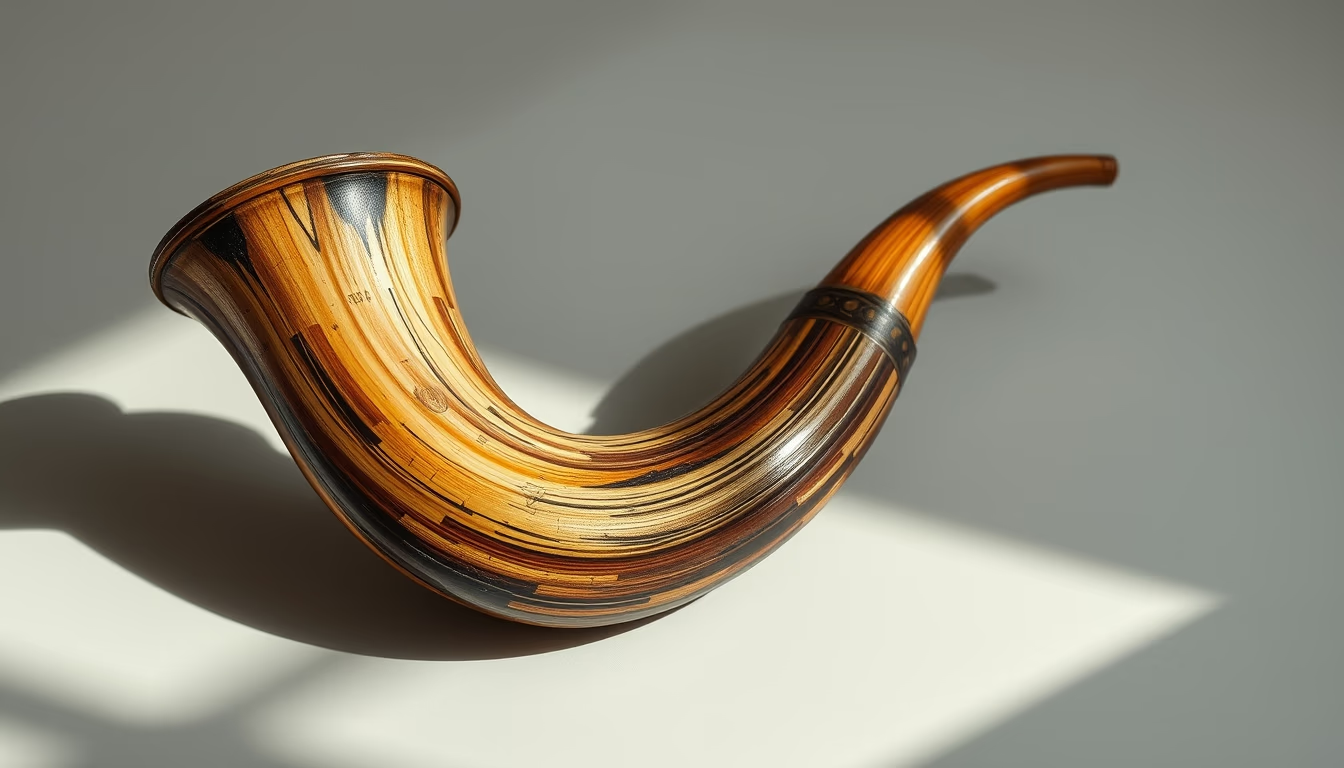
The English horn, a double-reed woodwind instrument, is known for its melancholy and rich timbre, being less common than the oboe.
About this subject
The English horn, also known as cor anglais, is a double-reed woodwind instrument tuned in F, a fifth below the oboe. Its origins date back to the 18th century, possibly in France or Germany, though the name suggests an English connection that has never been proven. Unlike the oboe, the English horn has a bulb-shaped lower end (the "foot"), giving it a softer, more veiled timbre often associated with pastoral or nostalgic passages in orchestral music.
In symphony orchestras, the English horn is usually played by the third oboist, who alternates between the two instruments. It is notably featured in the "Largo" of Dvořák's New World Symphony, where the main theme is performed by the instrument, and in Sibelius's tone poem "The Swan of Tuonela", which explores its lugubrious character. Additionally, it is used in film scores, such as in "The Lord of the Rings", to evoke melancholic atmospheres.
Although less common than the oboe, the English horn has an expressive solo repertoire, including sonatas by composers like Charles Koechlin and Vincent d'Indy. Its construction requires noble woods such as grenadilla or rosewood, and the double reed is handmade, contributing to its high cost and relative rarity in the musical instrument market. In professional orchestras, the English horn position is highly specialized and competitive.
Frequently Asked Questions
What is the difference between the English horn and the oboe?
The English horn is tuned in F, a fifth below the oboe, and has a bulb at its lower end, resulting in a softer, more melancholy timbre. The oboe has a more piercing sound and is more common in orchestras.
Why is the English horn considered rare?
It is less common than the oboe due to its specialized use in orchestras and high manufacturing cost. Few solo pieces have been written for it, and not every orchestra maintains a dedicated player.
In which famous works does the English horn appear?
It appears in the Largo of Dvořák's New World Symphony, in Sibelius's The Swan of Tuonela, and in film scores such as The Lord of the Rings, always evoking nostalgic or pastoral atmospheres.
Direct URL
https://pub-c7d6a6ea828543ac903a74a341ccb2e1.r2.dev/imagens/english-horn-rare-magazine-editorial-p11.avifHow to credit
Include a visible link back to UtilizAí. Copy one of the snippets below:
<a href="https://xn--utiliza-eza.com/en/midia/imagens/english-horn-rare-magazine-editorial-p11">English horn rare</a> by <a href="https://xn--utiliza-eza.com">UtilizAí</a>, licensed under <a href="https://creativecommons.org/licenses/by/4.0/">CC BY 4.0</a>.
[English horn rare](https://xn--utiliza-eza.com/en/midia/imagens/english-horn-rare-magazine-editorial-p11) by [UtilizAí](https://xn--utiliza-eza.com), CC BY 4.0
License: CC-BY-4.0