English horn rare
1344×768 · AVIF · CC BY 4.0
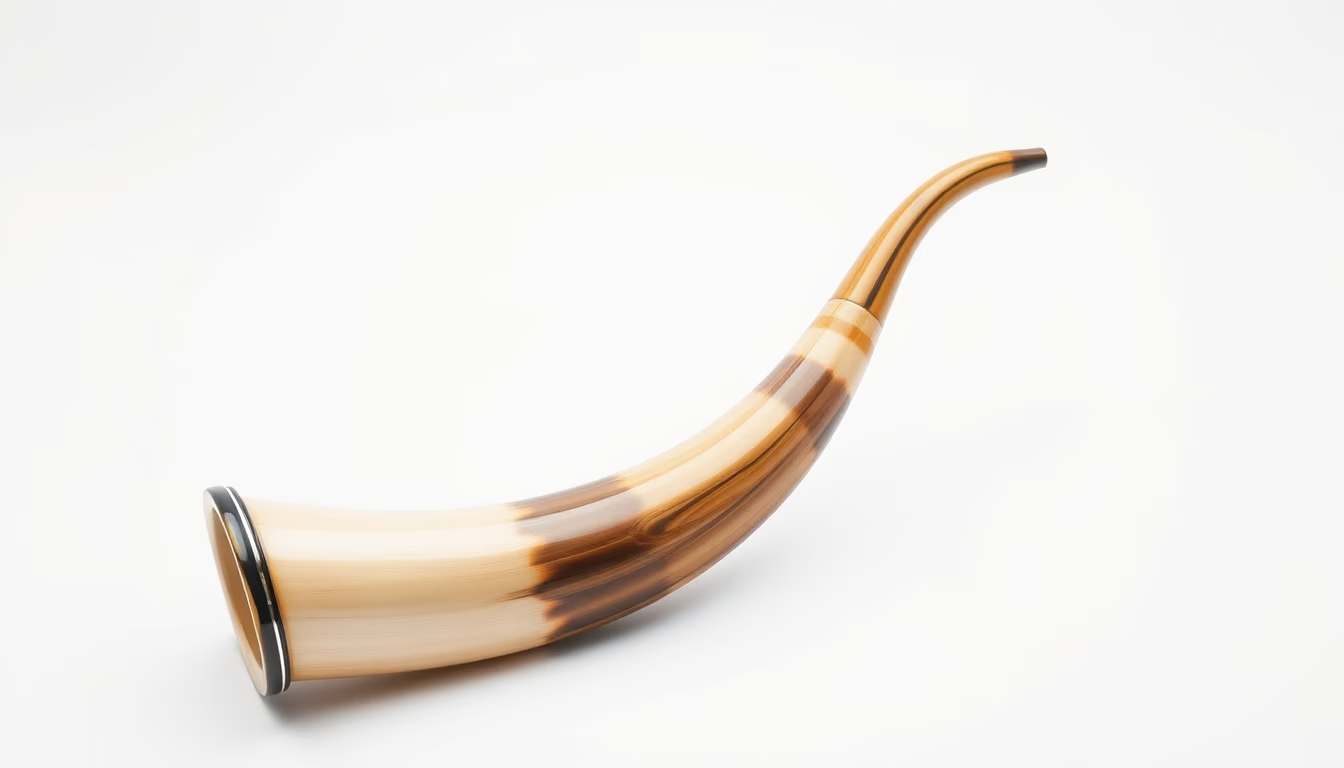
The English horn, a rare woodwind instrument less known than the oboe, has a deep, melancholic tone often used in symphony orchestras.
About this subject
The English horn, also known as the cor anglais or tenor oboe, is a woodwind instrument of the oboe family, pitched in F, a fifth below the oboe. Its sound is deeper and fuller, often described as nostalgic and pastoral. It is made of wood, typically grenadilla or rosewood, with a slightly curved tube and a pear-shaped bell, a visual hallmark that sets it apart from the oboe.
Its origins date back to the 18th century, with early examples appearing in France and Germany. The name "English horn" is controversial; one theory suggests it derives from the French "cor anglé" (angled horn), referring to its curved shape. Another hypothesis points to the phrase "cor de chasse" (hunting horn) adapted. Regardless, the instrument became established in the Romantic orchestra, used by composers such as Hector Berlioz, Richard Wagner, and Pyotr Ilyich Tchaikovsky.
In orchestral literature, the English horn has iconic moments, like the solo in the second movement of Dvořák's New World Symphony or the swan song in Tchaikovsky's Swan Lake. Its rarity stems from handcrafted production, high cost, and the small number of specialized players. Compared to the oboe, it is less common in orchestras, often requiring doubling by musicians.
Beyond the orchestra, the English horn appears in chamber music and occasionally in film scores, such as The Godfather, where it evokes a melancholic atmosphere. Its versatility is often underestimated, but the few dedicated repertoires, like Wolfgang Rihm's Concerto for English Horn, showcase its expressive potential.
Frequently Asked Questions
What is the difference between the English horn and the oboe?
The English horn is pitched in F, a fifth lower than the oboe (which is in C). Its tube is longer and has a pear-shaped bell, resulting in a deeper, fuller sound. The oboe is higher-pitched with a more piercing tone.
Why is the English horn called 'English' if it's not from England?
There is no consensus. One theory says 'cor anglais' (French) is a corruption of 'cor anglé' (angled horn), referring to its curved shape. Another suggests it derives from 'cor de chasse' (hunting horn) adapted over time.
Is the English horn a rare instrument?
Yes, it is considered rare compared to the oboe. Handcrafted production, high cost, and a small number of specialized players contribute to its lesser presence in orchestras and ensembles.
Direct URL
https://pub-c7d6a6ea828543ac903a74a341ccb2e1.r2.dev/imagens/english-horn-rare-commercial-product-photography-p12.avifHow to credit
Include a visible link back to UtilizAí. Copy one of the snippets below:
<a href="https://xn--utiliza-eza.com/en/midia/imagens/english-horn-rare-commercial-product-photography-p12">English horn rare</a> by <a href="https://xn--utiliza-eza.com">UtilizAí</a>, licensed under <a href="https://creativecommons.org/licenses/by/4.0/">CC BY 4.0</a>.
[English horn rare](https://xn--utiliza-eza.com/en/midia/imagens/english-horn-rare-commercial-product-photography-p12) by [UtilizAí](https://xn--utiliza-eza.com), CC BY 4.0
License: CC-BY-4.0