English horn rare
1344×768 · AVIF · CC BY 4.0
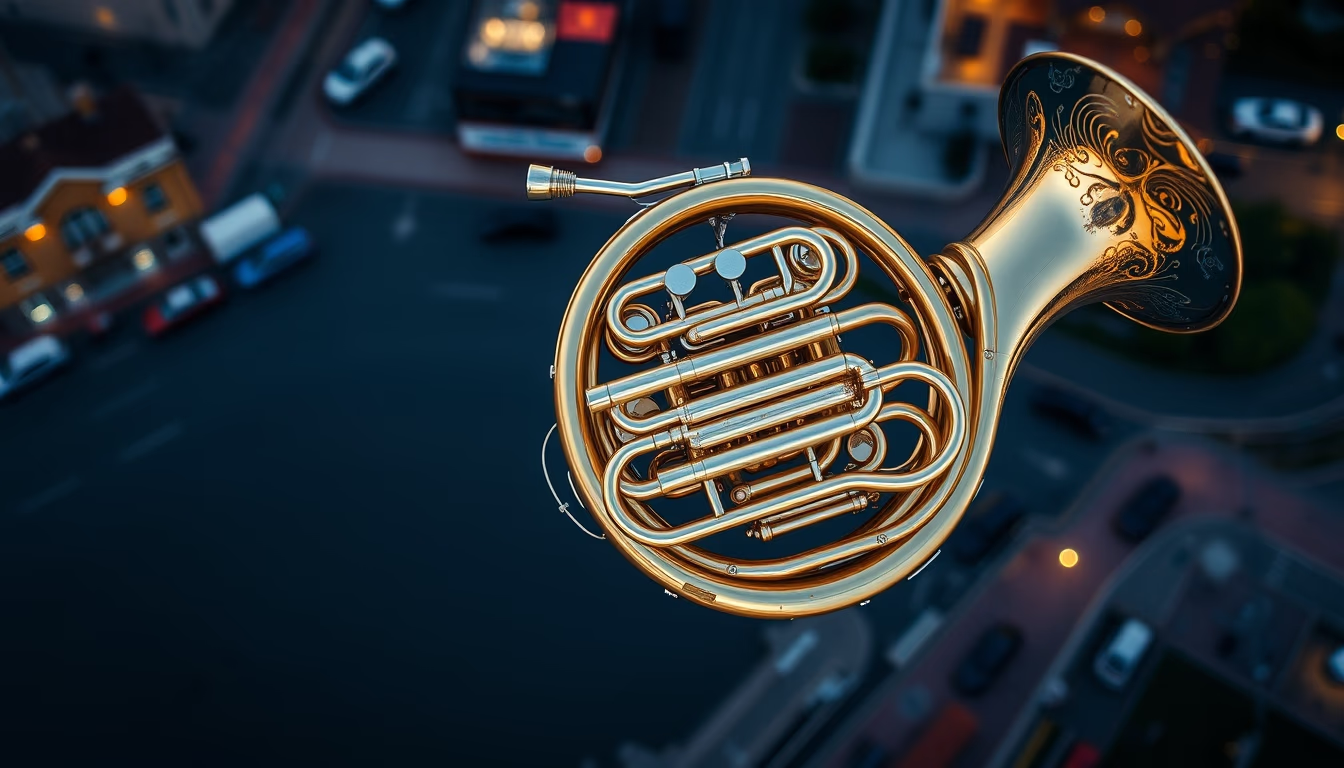
The English horn, also known as the cor anglais, is a double-reed woodwind instrument noted for its melancholic timbre and relative rarity in symphony orchestras.
About this subject
The English horn, or cor anglais, is a double-reed woodwind instrument pitched in F, a fifth below the oboe. Its history dates back to the 18th century, when it evolved from variations of the oboe da caccia. Despite its name, it is neither English nor a horn: the term 'cor anglais' likely derives from the French 'cor anglé' (angled horn), referring to its original curved shape. The modern instrument is straight, with a pear-shaped bell.
In the orchestra, the English horn is often used for solos of a nostalgic or pastoral nature. One of the most famous examples occurs in the second movement of Dvořák's Symphony No. 9 ('From the New World'). Its production is more artisanal than that of the oboe, with only a few specialized manufacturers, such as the French brand Lorée, contributing to its lesser prevalence.
Rare instruments, such as 19th-century English horns by makers like Triébert or Buffet Crampon, are valued by collectors and musicians. These antique specimens can cost tens of thousands of dollars and exhibit subtle differences in sound and construction, such as the use of fine woods like grenadilla or boxwood. The double reed, made from Arundo donax cane, also requires refined technique to produce the characteristic rich timbre.
Frequently Asked Questions
What is the difference between the English horn and the oboe?
The English horn is pitched in F, a fifth lower than the oboe (which is in C). It has a slightly longer body, a pear-shaped bell, and a deeper, more veiled timbre. The oboe is brighter and more piercing, while the English horn has a softer, more melancholic sound.
Why is it called 'English horn' if it is not English nor a horn?
The name 'cor anglais' (English horn in French) is believed to be a corruption of 'cor anglé' meaning 'angled horn,' referring to the curved shape of early models. This term was mistranslated into English as 'English horn,' and the name stuck.
What are some famous works that feature the English horn?
Besides the solo in Dvořák's 'New World Symphony,' the English horn appears in works such as Sibelius's 'The Swan of Tuonela,' Debussy's 'La Mer,' and film scores like 'The Godfather' (love theme).
Direct URL
https://pub-c7d6a6ea828543ac903a74a341ccb2e1.r2.dev/imagens/english-horn-rare-aerial-drone-shot-p7.avifHow to credit
Include a visible link back to UtilizAí. Copy one of the snippets below:
<a href="https://xn--utiliza-eza.com/en/midia/imagens/english-horn-rare-aerial-drone-shot-p7">English horn rare</a> by <a href="https://xn--utiliza-eza.com">UtilizAí</a>, licensed under <a href="https://creativecommons.org/licenses/by/4.0/">CC BY 4.0</a>.
[English horn rare](https://xn--utiliza-eza.com/en/midia/imagens/english-horn-rare-aerial-drone-shot-p7) by [UtilizAí](https://xn--utiliza-eza.com), CC BY 4.0
License: CC-BY-4.0