Elephant herd at watering hole
1344×768 · AVIF · CC BY 4.0
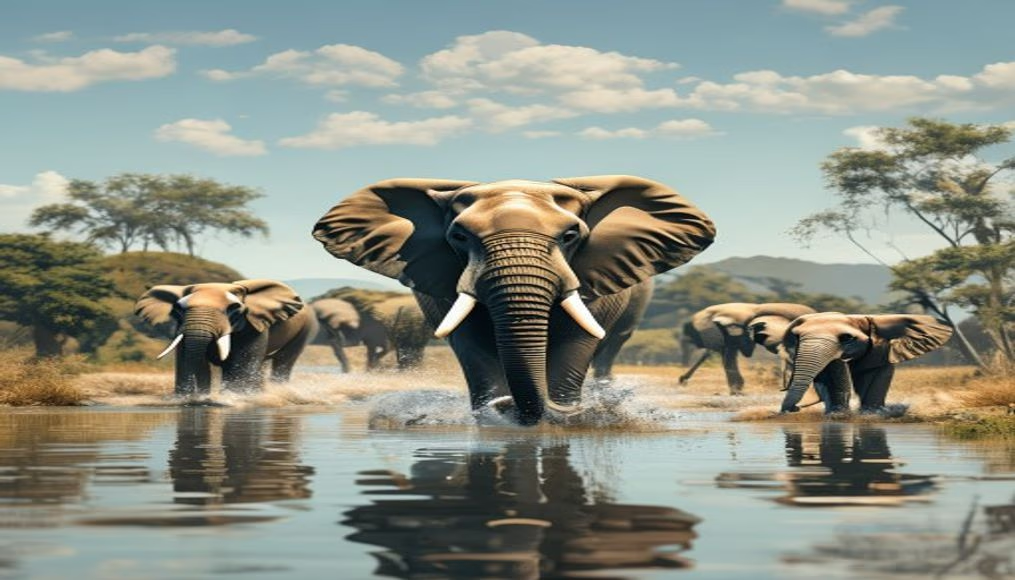
A herd of elephants gathers at a watering hole in the African savanna, a crucial behavior for survival in arid climates.
About this subject
Watering holes are vital for African elephants, especially during the dry season when water sources become scarce. At these sites, herds led by an experienced matriarch gather to drink, bathe, and socialize. An adult elephant can consume up to 200 liters of water per day, and the lack of permanent water sources can force them to travel dozens of kilometers. Beyond hydration, mud baths help regulate body temperature and protect the skin from insects and sun.
These gatherings also have strong social components. Herds consist of related females and their calves, while adult males usually live alone or in temporary groups. Around the water, greeting rituals, playful interactions among juveniles, and even confrontations between dominant males occur. The watering hole acts as a meeting point that reinforces family bonds and the group hierarchy.
Elephants are considered ecosystem engineers: by digging the ground with their tusks and feet, they create and maintain water holes that benefit other species. These excavations can expose shallow groundwater, providing access for smaller animals. Studies show that up to 70% of vertebrate species in some savannas indirectly depend on elephant activities for water access.
Historically, elephant migration routes follow water availability, making the preservation of ecological corridors and natural water holes a conservation priority. Habitat fragmentation from fences and roads impedes this access, contributing to human-elephant conflicts. Understanding their behavior around water is crucial for management strategies.
Frequently Asked Questions
Why do elephants need watering holes?
Elephants require large amounts of water daily for hydration, thermoregulation, and mud baths that protect their skin. Watering holes are essential sources, especially in arid regions.
How do elephant herds organize around water?
Usually led by a matriarch, herds establish a hierarchy upon arrival. Adults drink first while calves play at the edges. Lone males may approach cautiously to avoid confrontations.
What impact do elephants have on watering holes?
By digging and removing sediment, elephants create and deepen water holes, benefiting other species. This behavior increases water availability in savanna ecosystems and is key to local biodiversity.
Direct URL
https://pub-c7d6a6ea828543ac903a74a341ccb2e1.r2.dev/imagens/elephant-herd-at-watering-hole-commercial-product-photography-v9.avifHow to credit
Include a visible link back to UtilizAí. Copy one of the snippets below:
<a href="https://xn--utiliza-eza.com/en/midia/imagens/elephant-herd-at-watering-hole-commercial-product-photography-v9">Elephant herd at watering hole</a> by <a href="https://xn--utiliza-eza.com">UtilizAí</a>, licensed under <a href="https://creativecommons.org/licenses/by/4.0/">CC BY 4.0</a>.
[Elephant herd at watering hole](https://xn--utiliza-eza.com/en/midia/imagens/elephant-herd-at-watering-hole-commercial-product-photography-v9) by [UtilizAí](https://xn--utiliza-eza.com), CC BY 4.0
License: CC-BY-4.0