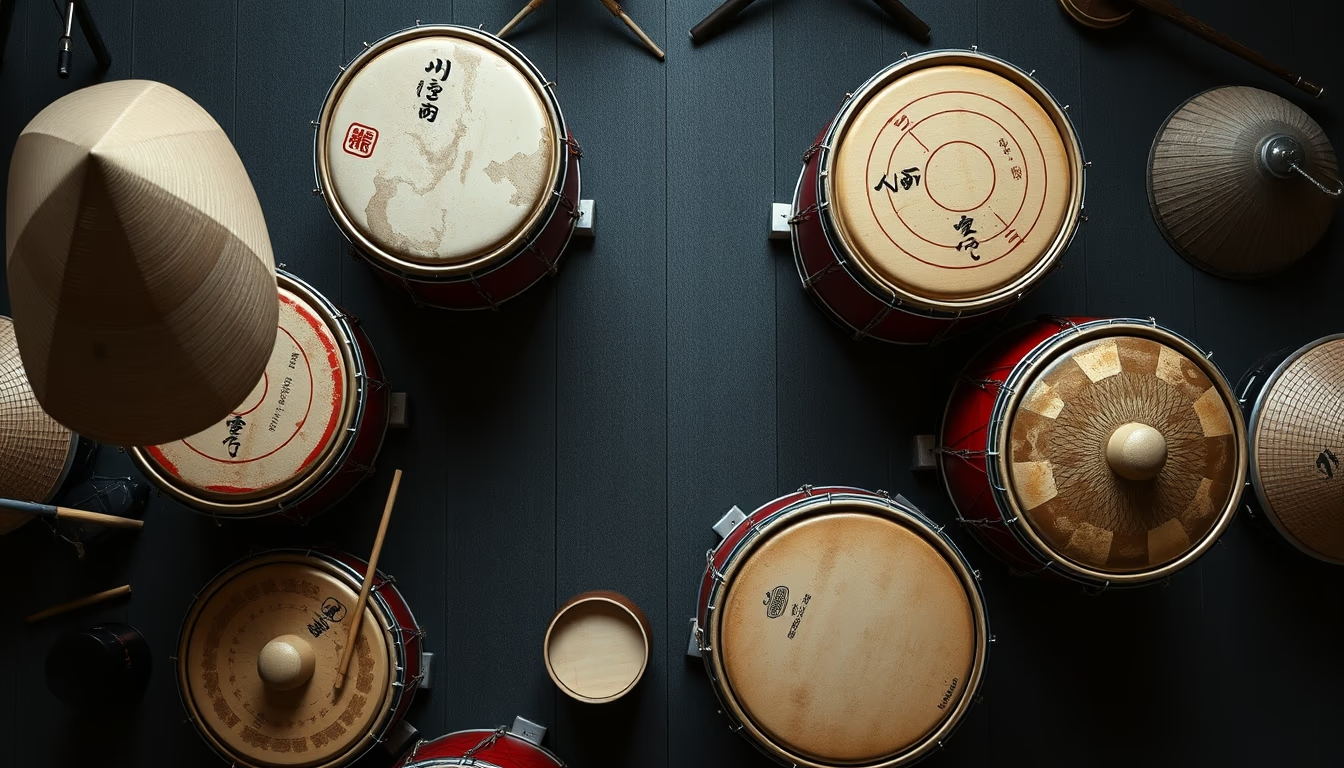
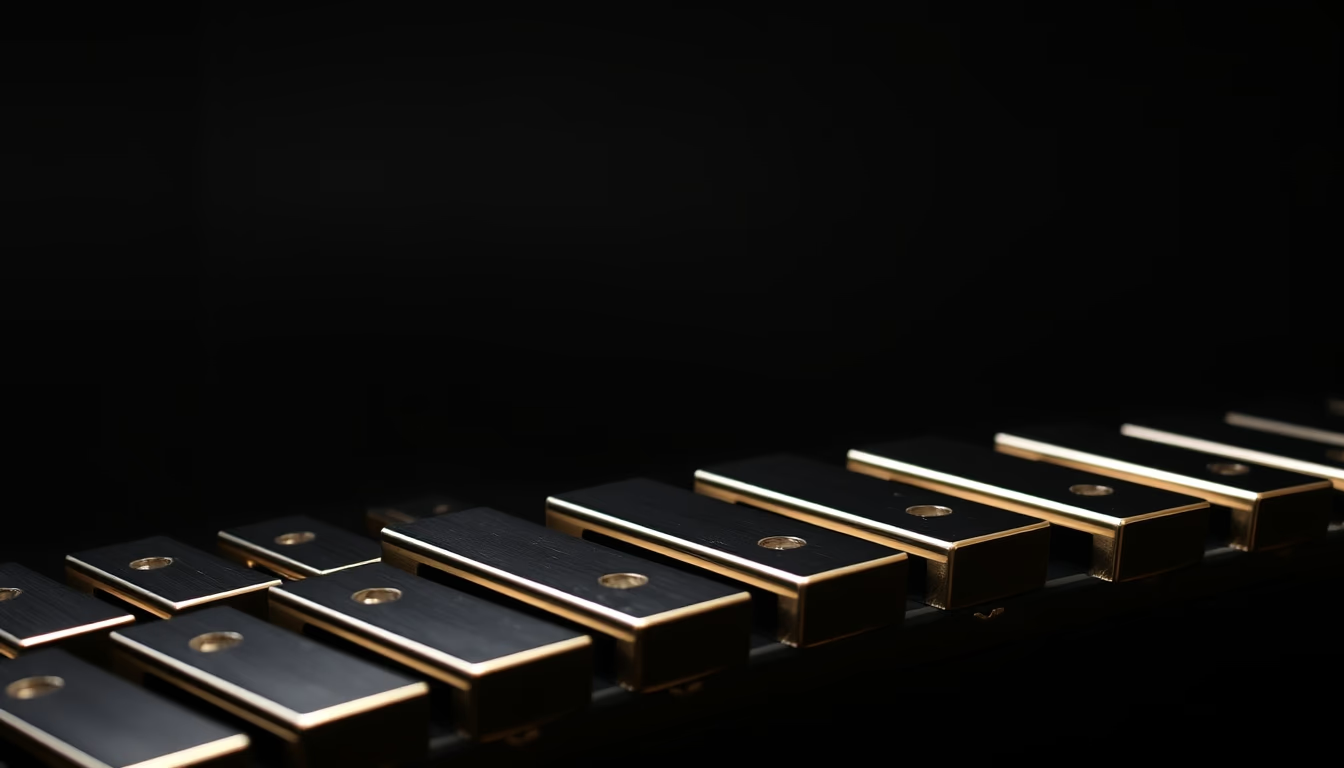
Electronic music waveform
1344×768 · AVIF · CC BY 4.0

Sound waves in electronic music: understand the basic waveforms that shape synthesizers and beats.
About this subject
In electronic music, a waveform is the graphical representation of a sound signal's amplitude over time. Synthesizers use fundamental waveforms, sine, square, sawtooth, and triangle, each with distinct harmonic content. The sine wave, pure and without harmonics, is the basis for smooth sounds and sub-bass. The square wave, rich in odd harmonics, produces a hollow, metallic timbre, common in bass lines and chiptune leads. The sawtooth wave, containing all harmonics, generates a bright, aggressive sound ideal for pads and solos. The triangle wave, with odd harmonics that decay quickly, sounds softer than a square wave.
Historically, early analog synthesizers like the Moog Modular from the 1960s generated these waveforms via voltage-controlled oscillators (VCOs). With the rise of digital synthesizers and software, waveforms can be precisely crafted, enabling complex timbres and FM synthesis. The lo-fi aesthetic, popularized by tape recorders and disposable cameras, often employs simple waveforms, filtered and with added noise, to evoke nostalgia and imperfection.
Interestingly, waveform shape directly influences timbre. Producers in genres like techno, house, and ambient manipulate these forms using filters, envelopes, and LFOs to create evolving textures. Understanding waveforms is crucial for sound designers aiming to sculpt unique sounds and grasp the physics of audio synthesis.
Frequently Asked Questions
What is a waveform in electronic music?
It is the visual representation of a sound's amplitude variation over time. Synthesizers use basic forms like sine, square, sawtooth, and triangle to generate distinct timbres.
Why are waveforms important in music production?
They define harmonic content and timbral character. By combining waveforms with filters and modulation, producers create everything from deep basses to aggressive leads.
How does the lo-fi aesthetic relate to waveforms?
Lo-fi embraces imperfections and vintage sounds. Simple waveforms, paired with noise and filtering, help evoke a nostalgic feel reminiscent of analog gear and tape recordings.
Direct URL
https://pub-c7d6a6ea828543ac903a74a341ccb2e1.r2.dev/imagens/electronic-music-waveform-lo-fi-disposable-camera-p6.avifHow to credit
Include a visible link back to UtilizAí. Copy one of the snippets below:
<a href="https://xn--utiliza-eza.com/en/midia/imagens/electronic-music-waveform-lo-fi-disposable-camera-p6">Electronic music waveform</a> by <a href="https://xn--utiliza-eza.com">UtilizAí</a>, licensed under <a href="https://creativecommons.org/licenses/by/4.0/">CC BY 4.0</a>.
[Electronic music waveform](https://xn--utiliza-eza.com/en/midia/imagens/electronic-music-waveform-lo-fi-disposable-camera-p6) by [UtilizAí](https://xn--utiliza-eza.com), CC BY 4.0
License: CC-BY-4.0