Electric scooter dock
1344×768 · AVIF · CC BY 4.0
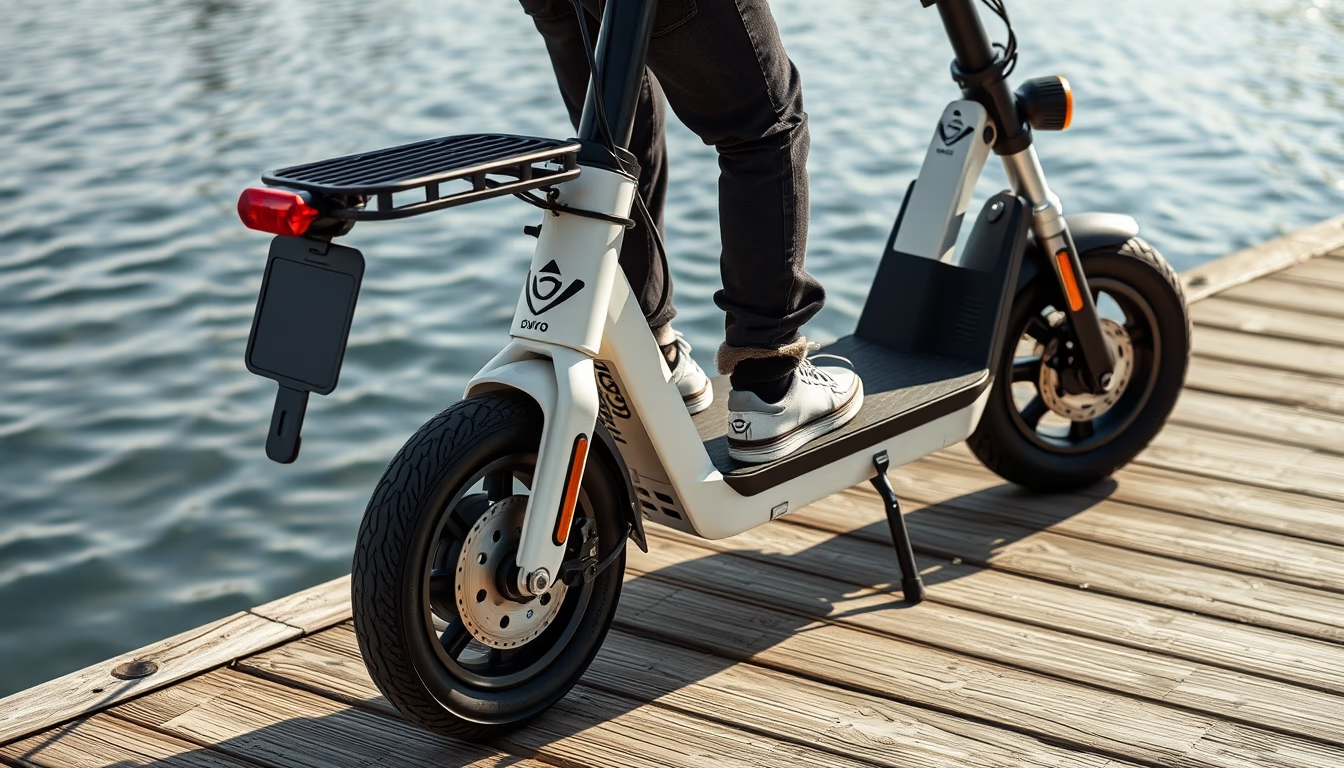
Electric scooter docks organize parking and charging in urban areas, facilitating shared micromobility.
About this subject
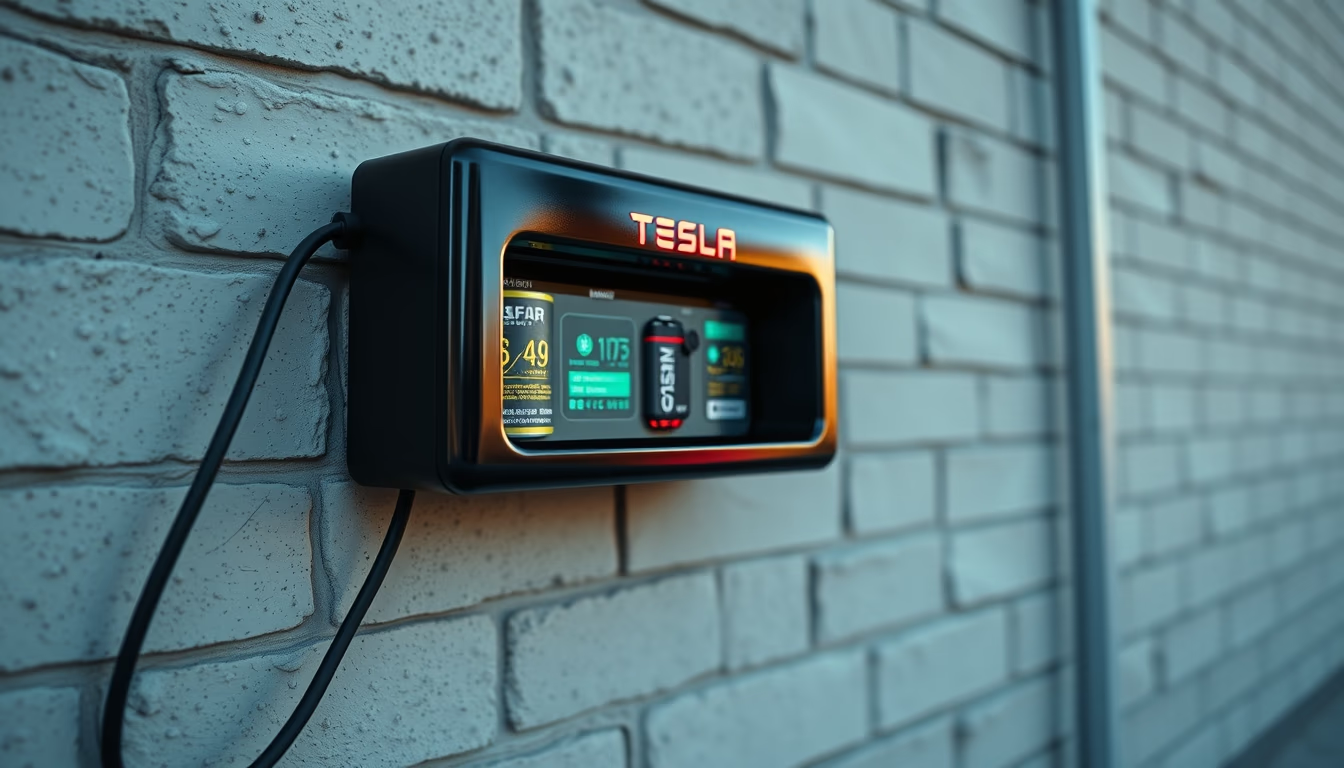
An electric scooter dock is a physical station that combines locking and charging, designed to organize shared scooter usage. It typically consists of a base with multiple slots where scooters are secured by an electromechanical lock. When renting, the user unlocks the scooter via app, and when returning, docks it into a slot where the battery is automatically recharged. Advanced models use inductive or contact charging without cables. This infrastructure prevents scooters from being left abandoned on sidewalks, streets, or plazas, reducing conflicts with pedestrians and vehicles.
Cities like São Paulo, Rio de Janeiro, Paris, and Austin have adopted docks as part of micromobility programs. In São Paulo, the municipality requires operators such as Lime and Yellow to install docks at strategic points, especially near metro stations and bus terminals. In Rio, local regulation defines mandatory parking zones with docks funded by companies. Data from the Brazilian Association of Urban Mobility indicates that the number of shared scooters in Brazil exceeded 50,000 units in 2023, with over 3,000 docks installed.
For 2026, trends point to smart docks with IoT sensors that monitor occupancy and battery health in real time. Integration with public transit apps, such as unified ticketing, allows users to plan multimodal trips. Solar charging and swappable batteries are also gaining ground, reducing reliance on electrical outlets. In cities like Barcelona and Seoul, pilot projects test docks with solar panels and wireless charging towers. The goal is to make micromobility more sustainable and efficient, though challenges like vandalism, maintenance costs, and battery theft remain.
Interestingly, the first dedicated scooter docks appeared in 2017 in California when Bird installed experimental stations in Santa Monica. Since then, the technology has evolved: today there are retractable docks that fit into tight spaces, floating docks for port areas, and even underground models in subway stations. Geofencing complements docks by delimiting virtual zones where parking is allowed or prohibited, but the combination with physical infrastructure remains the most reliable solution for organizing public space.
Frequently Asked Questions
How does an electric scooter dock work?
A dock is a station where scooters are locked and automatically recharged. The user unlocks the scooter when renting and returns it by slotting it into a dock, initiating charging.
Are scooter docks mandatory in Brazilian cities?
In several cities like São Paulo and Rio de Janeiro, shared scooter operators must install docks to prevent obstruction and ensure charging. Regulations vary, but the trend is toward making them mandatory.
What is the 2026 trend for scooter docks?
Expect greater integration with mobility apps, solar charging, and swappable batteries, plus IoT sensors for predictive maintenance and real-time monitoring.
Direct URL
https://pub-c7d6a6ea828543ac903a74a341ccb2e1.r2.dev/imagens/electric-scooter-dock-minimalist-composition-p0.avifHow to credit
Include a visible link back to UtilizAí. Copy one of the snippets below:
<a href="https://xn--utiliza-eza.com/en/midia/imagens/electric-scooter-dock-minimalist-composition-p0">Electric scooter dock</a> by <a href="https://xn--utiliza-eza.com">UtilizAí</a>, licensed under <a href="https://creativecommons.org/licenses/by/4.0/">CC BY 4.0</a>.
[Electric scooter dock](https://xn--utiliza-eza.com/en/midia/imagens/electric-scooter-dock-minimalist-composition-p0) by [UtilizAí](https://xn--utiliza-eza.com), CC BY 4.0
License: CC-BY-4.0