Electric scooter dock
1344×768 · AVIF · CC BY 4.0
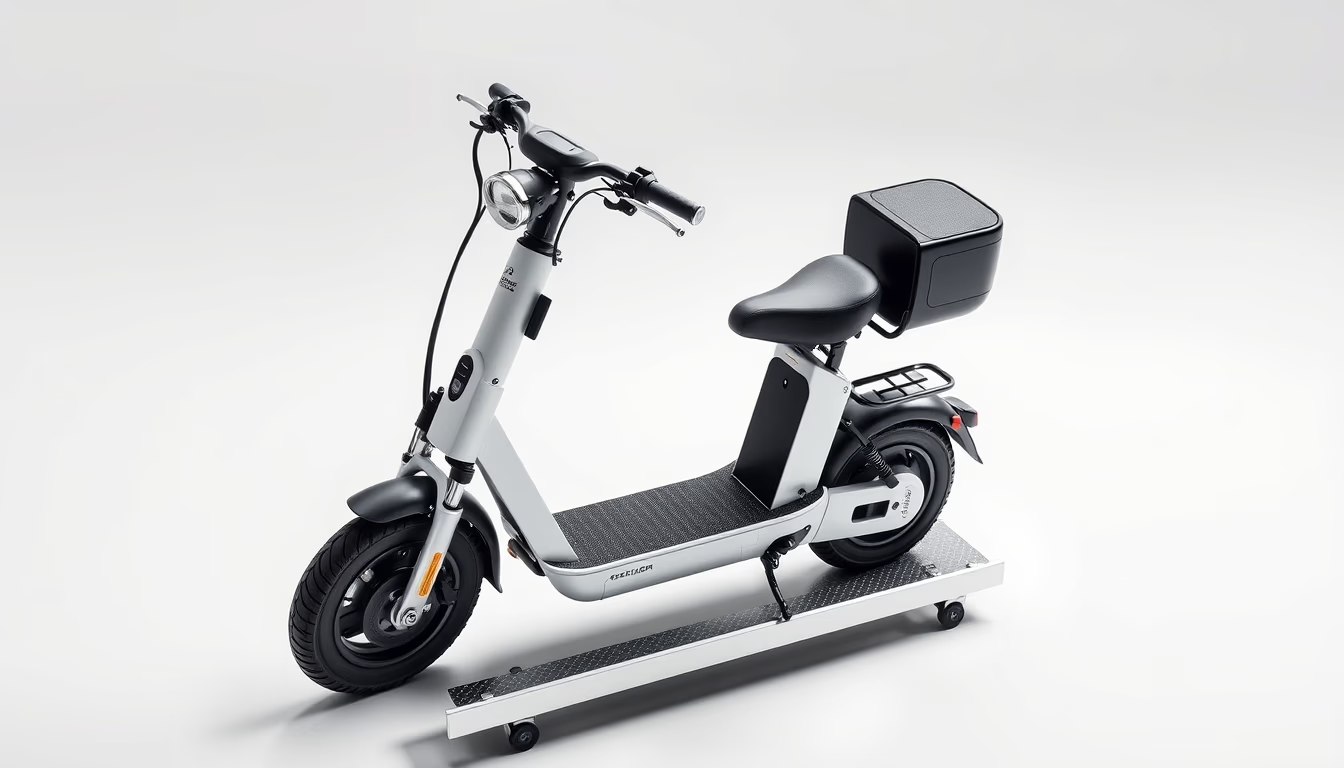
Docking station for shared electric scooters, featuring integrated locking and charging systems.
About this subject
Electric scooter docks emerged as a solution to the urban chaos caused by disorderly parking of shared vehicles. Unlike dockless systems, where users abandon scooters anywhere, docks provide fixed stations with supports that lock the front wheel and, in advanced models, connect the scooter to a power source for automatic recharging. This infrastructure is common in European cities like Paris and Barcelona, where operators such as Lime and Bird have installed thousands of stations to organize mobility.
In Brazil, the docked model gained traction after the regulation of shared scooters in São Paulo in 2019. The city hall requires companies to use demarcated areas, often with physical docks, to prevent sidewalk obstruction. Compared to dockless systems, docks reduce operational costs for collection and redistribution of scooters, as well as facilitate centralized charging, which can be solar-powered in more sustainable models.
Dock technology has evolved to include presence sensors, IoT connectivity, and solar panels on top of the structure. Some models integrate with mobility apps, allowing users to check real-time availability. Despite the benefits, large-scale deployment faces challenges such as installation costs and the need for dedicated public space, sparking debates in cities with narrow sidewalks.
Interestingly, docks also serve as data collection points for travel flow patterns. Each time a scooter is docked, the system records time and location, feeding urban planning models. This information helps identify high-demand areas, guiding the expansion of bike lanes and shared roadways.
Frequently Asked Questions
How does an electric scooter dock work?
The dock has a support that locks the front wheel of the scooter, preventing unauthorized use. Premium models include electrical contacts for automatic charging. The user releases the scooter via app when ending the trip.
Are there docked scooter systems in Brazil?
Yes, in São Paulo Lime has operated physical docks since 2019, and Yellow (now defunct) also used stations. Other cities like Rio de Janeiro and Belo Horizonte have tested pilot projects with solar-powered docks.
What are the advantages of docks over dockless systems?
They reduce sidewalk clutter, lower collection and maintenance costs, allow centralized charging, and provide better location predictability for users.
Direct URL
https://pub-c7d6a6ea828543ac903a74a341ccb2e1.r2.dev/imagens/electric-scooter-dock-commercial-product-photography-p3.avifHow to credit
Include a visible link back to UtilizAí. Copy one of the snippets below:
<a href="https://xn--utiliza-eza.com/en/midia/imagens/electric-scooter-dock-commercial-product-photography-p3">Electric scooter dock</a> by <a href="https://xn--utiliza-eza.com">UtilizAí</a>, licensed under <a href="https://creativecommons.org/licenses/by/4.0/">CC BY 4.0</a>.
[Electric scooter dock](https://xn--utiliza-eza.com/en/midia/imagens/electric-scooter-dock-commercial-product-photography-p3) by [UtilizAí](https://xn--utiliza-eza.com), CC BY 4.0
License: CC-BY-4.0