Electric scooter city street
1344×768 · AVIF · CC BY 4.0
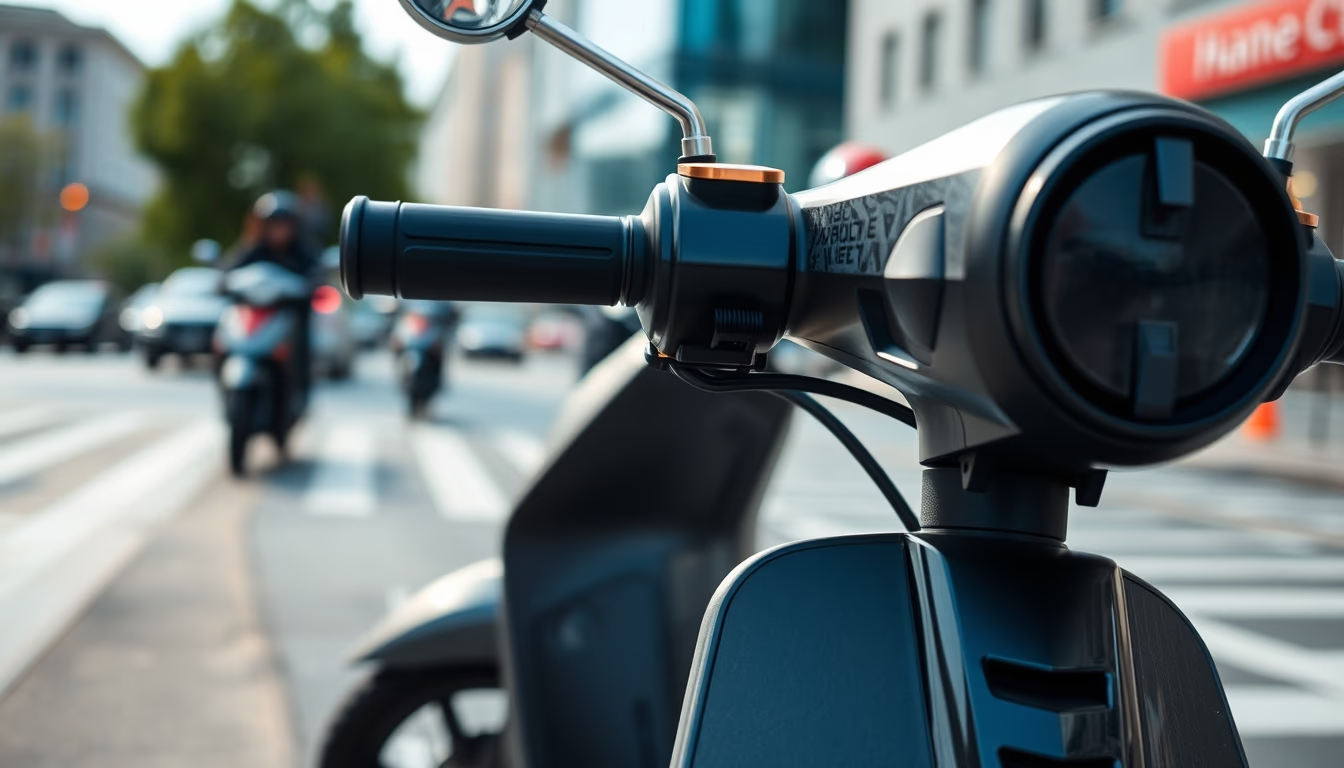
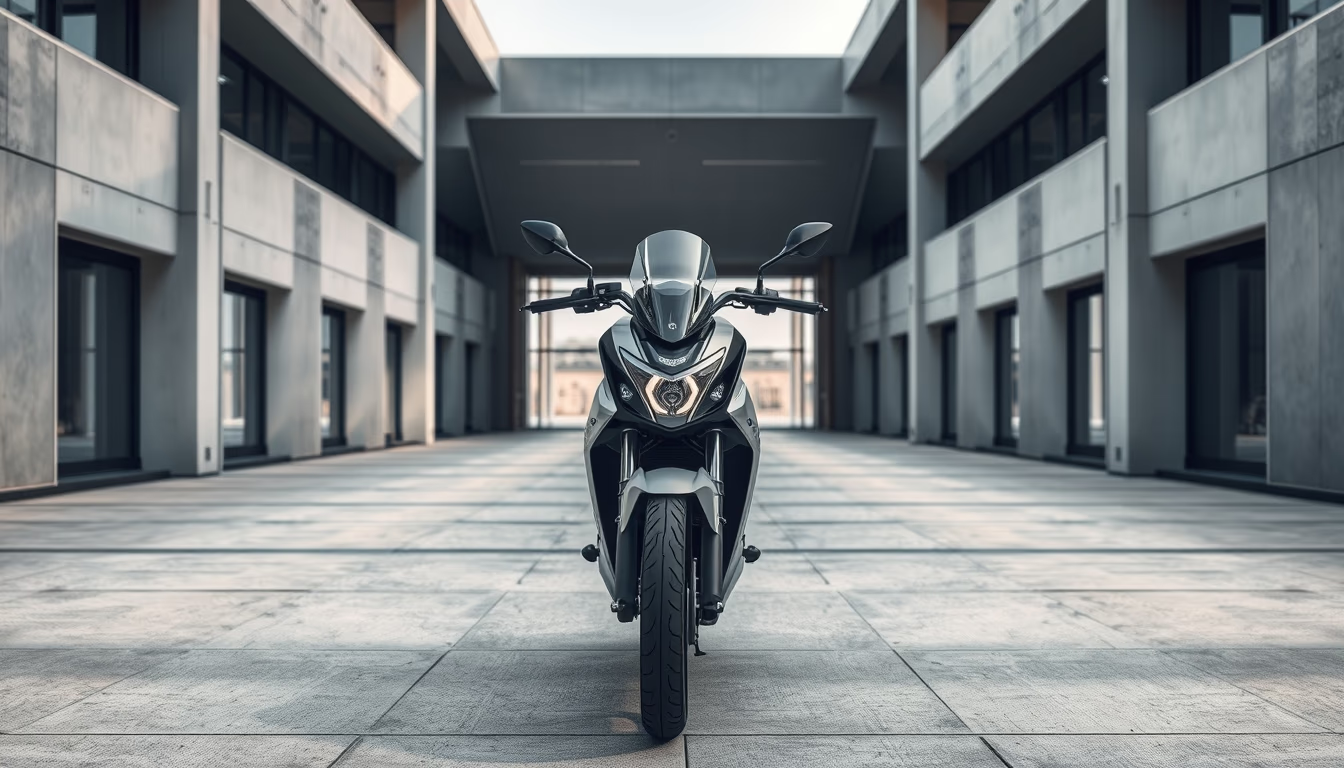
Electric scooters are transforming urban mobility, offering a sustainable and agile alternative for short trips in major Brazilian cities.
About this subject
Electric scooters, or e-scooters, have become a global micromobility phenomenon, particularly in dense urban centers. In Brazil, companies like Lime and Yellow (now integrated into 99Pop) launched sharing systems in cities such as São Paulo, Rio de Janeiro, and Brasília starting in 2019. The shared e-scooter fleet in the country reached over 15,000 units before the pandemic, according to data from the Brazilian Association of Mobility and Technology (ABMT).
These lightweight vehicles, with a maximum speed of 20 km/h regulated by Brazil's National Traffic Council (Contran), serve trips up to 5 km, bridging the gap between walking and public transit. Studies indicate that each scooter can replace about 30% of car trips in central areas, reducing CO2 emissions and congestion. In São Paulo, e-scooter usage prevented approximately 270 metric tons of CO2 emissions between 2019 and 2020, as reported by 99.
Despite environmental benefits, challenges remain. The lack of adequate bike lanes in many Brazilian cities forces users to compete with pedestrians and vehicles, leading to conflicts. Disorderly parking on sidewalks has prompted awareness campaigns and fines in cities like São Paulo, which designated exclusive parking zones. Safety is another critical issue: accidents involving scooters increased by 40% in 2022, according to CET-SP, fueling debate over helmet use and age limits.
In 2024, new traffic council rules mandated compulsory registration for scooters with motors exceeding 5 km/h, similar to mopeds. Meanwhile, Brazilian startups are developing models adapted to hilly terrain, with longer-range batteries (up to 40 km) and rugged tires. The future of electric micromobility in Brazil hinges on integration with public transit apps and investment in cycling infrastructure.
Frequently Asked Questions
Are electric scooters allowed on public roads in Brazil?
Yes, provided they follow Contran rules: maximum speed of 20 km/h, use on bike lanes or roads with a 40 km/h limit, and mandatory registration for motors above 5 km/h. Helmets are recommended but not required for models under 20 km/h.
What is the average range of an electric scooter?
Shared models have a range of 30 to 40 km, while private scooters can reach 50 km. A full charge takes 4 to 6 hours.
Do electric scooters pollute less than cars?
Yes. Indirect emissions (electricity generation) are about 60% lower than those of a gasoline car per kilometer traveled. They also reduce congestion and require less urban space.
Direct URL
https://pub-c7d6a6ea828543ac903a74a341ccb2e1.r2.dev/imagens/electric-scooter-city-street-macro-closeup-p2.avifHow to credit
Include a visible link back to UtilizAí. Copy one of the snippets below:
<a href="https://xn--utiliza-eza.com/en/midia/imagens/electric-scooter-city-street-macro-closeup-p2">Electric scooter city street</a> by <a href="https://xn--utiliza-eza.com">UtilizAí</a>, licensed under <a href="https://creativecommons.org/licenses/by/4.0/">CC BY 4.0</a>.
[Electric scooter city street](https://xn--utiliza-eza.com/en/midia/imagens/electric-scooter-city-street-macro-closeup-p2) by [UtilizAí](https://xn--utiliza-eza.com), CC BY 4.0
License: CC-BY-4.0