Electric scooter city street
1344×768 · AVIF · CC BY 4.0
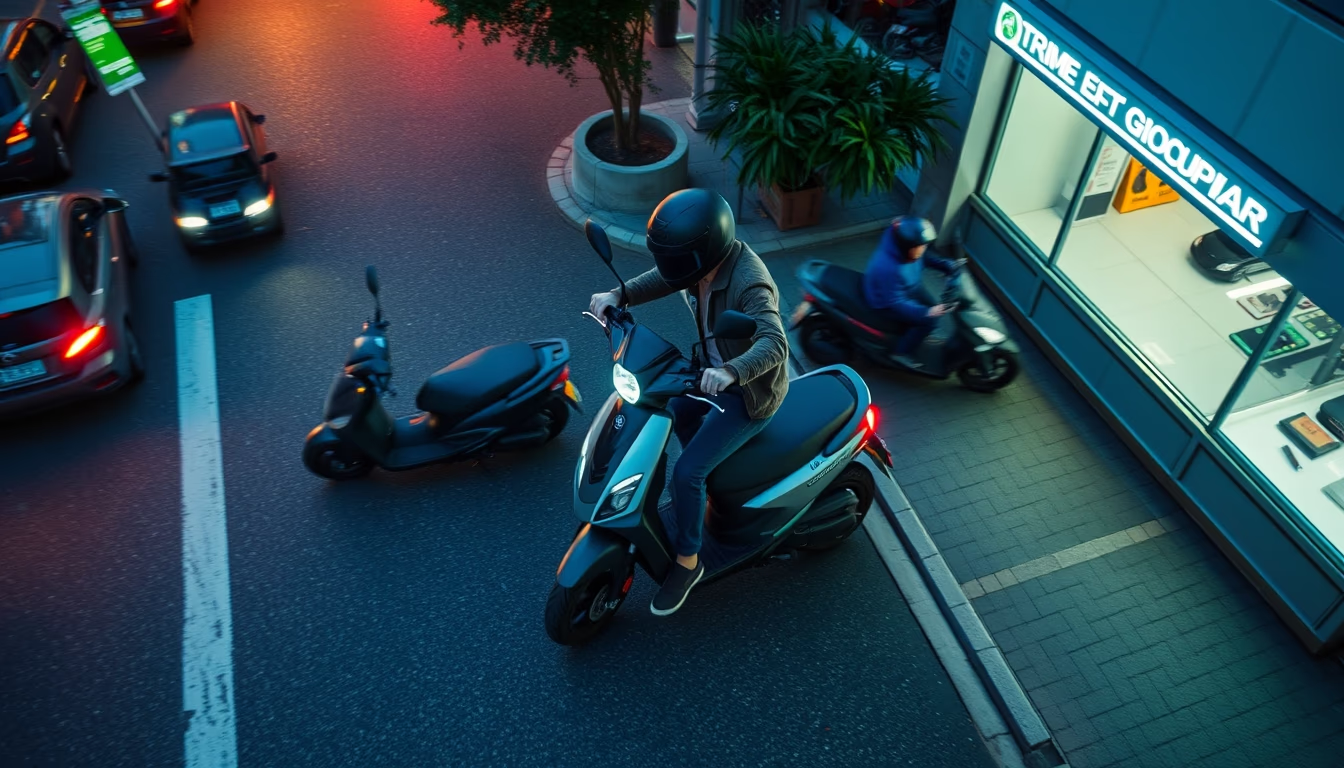
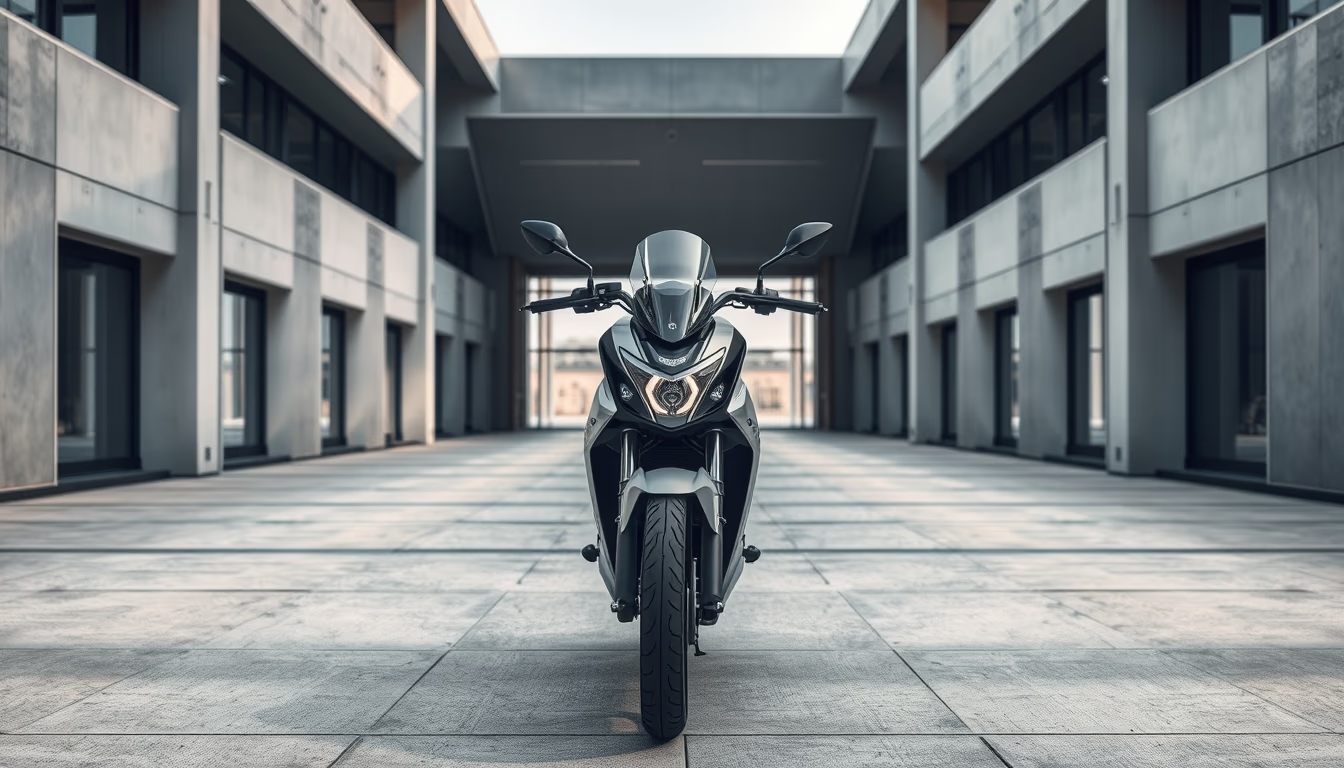
Shared electric scooters are transforming urban mobility, offering a quick and sustainable alternative for short trips in cities worldwide.
About this subject
Electric scooters have become a practical micro-mobility option in urban centers, especially after the explosion of shared services starting in 2018. In cities like São Paulo, Rio de Janeiro, and Brasília, companies such as Lime, Yellow, and Grin (now merged) deploy thousands of app-rental vehicles, enabling quick trips without private motorized transport.
Their popularity stems from carbon emission reductions: an e-scooter emits about 30 grams of CO2 per kilometer, compared to 120 grams for a car. They also help ease traffic congestion and reduce parking demand. However, challenges persist regarding road safety and regulation. Accidents involving scooters are common in high-traffic areas, and many cities still lack specific laws on speed limits, helmet use, and sidewalk riding.
Brazil's National Traffic Council (Contran) Resolution 882/2021 set rules: a maximum speed of 6 km/h on sidewalks and 20 km/h on bike lanes, plus a ban on riding where vehicle speeds exceed 40 km/h. Helmets are not mandatory but recommended. Enforcement, however, remains weak. Meanwhile, technology progresses: newer models feature lithium batteries with up to 40 km range, regenerative braking, and geofencing to limit speed in crowded zones.
Compared to shared bikes, scooters require less physical effort and offer better portability, but have shorter lifespans and require frequent recharging. Brazil's bike lane infrastructure is still limited, forcing many users to share space with cars and pedestrians. Despite these issues, the global e-scooter market is projected to exceed US$ 40 billion by 2030, driven by sustainable mobility policies and growing urbanization.
Frequently Asked Questions
How do electric scooter rental services work?
Users locate a scooter via app, scan a QR code, and pay per minute. After riding, parking must be in designated areas, and the rental ends via the app.
Are electric scooters safe?
Safety improves with helmet use, obeying speed limits, and avoiding heavy traffic. Accidents often occur due to uneven sidewalks or collisions with pedestrians.
What are the regulations for e-scooters in Brazil?
Contran Resolution 882/2021 sets max speeds of 6 km/h on sidewalks and 20 km/h on bike lanes. Plates or licenses are not required, but helmets are strongly advised. Riding is banned on roads with speed limits above 40 km/h.
Direct URL
https://pub-c7d6a6ea828543ac903a74a341ccb2e1.r2.dev/imagens/electric-scooter-city-street-aerial-drone-shot-p1.avifHow to credit
Include a visible link back to UtilizAí. Copy one of the snippets below:
<a href="https://xn--utiliza-eza.com/en/midia/imagens/electric-scooter-city-street-aerial-drone-shot-p1">Electric scooter city street</a> by <a href="https://xn--utiliza-eza.com">UtilizAí</a>, licensed under <a href="https://creativecommons.org/licenses/by/4.0/">CC BY 4.0</a>.
[Electric scooter city street](https://xn--utiliza-eza.com/en/midia/imagens/electric-scooter-city-street-aerial-drone-shot-p1) by [UtilizAí](https://xn--utiliza-eza.com), CC BY 4.0
License: CC-BY-4.0