Electric organ hammond
1344×768 · AVIF · CC BY 4.0
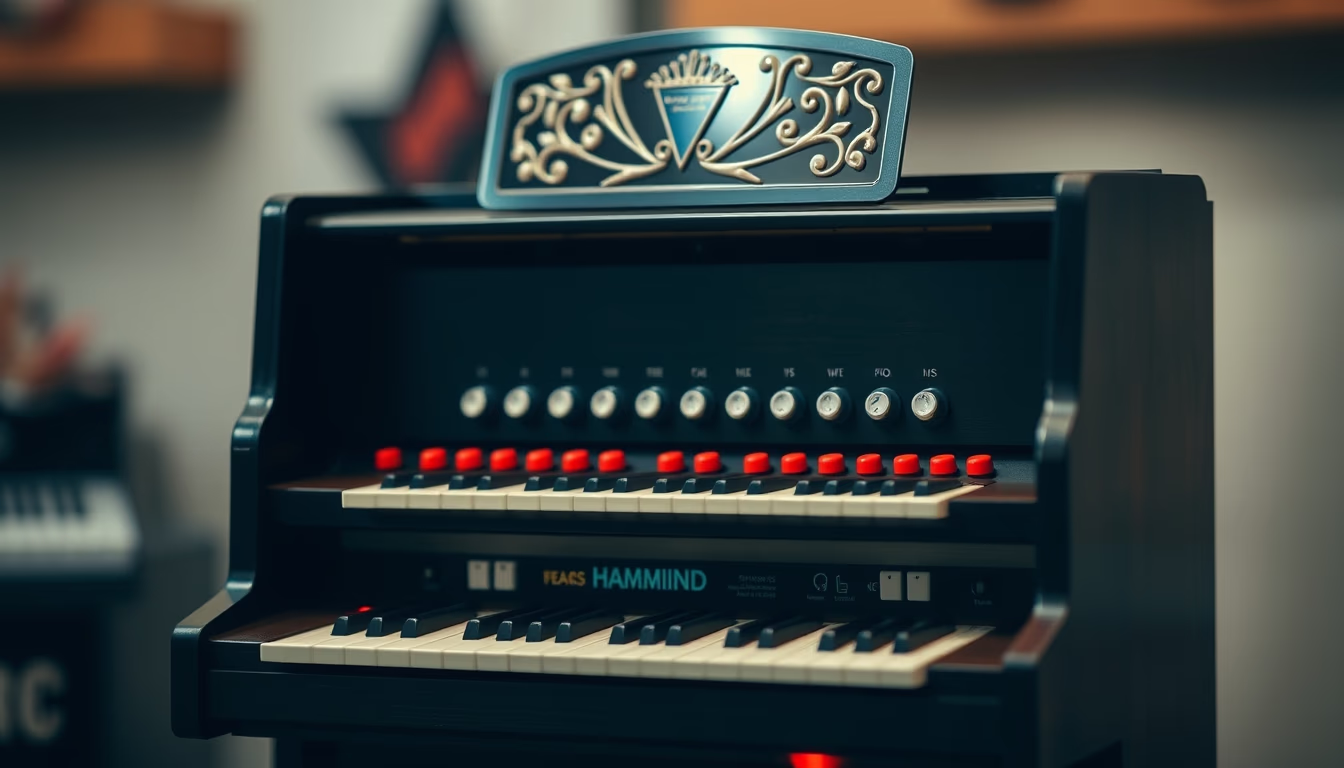
The Hammond organ, invented by Laurens Hammond in 1935, revolutionized music with its unique tonewheel-generated sound.
About this subject
The Hammond organ is an iconic electromechanical instrument invented by American engineer Laurens Hammond in 1935. Unlike pipe organs, it uses tonewheels that spin within magnetic fields to generate sound. This mechanism produced a versatile and penetrating timbre, quickly adopted in jazz, gospel, blues, and rock. Models such as the B3 and C3 became legendary, especially when paired with the rotating Leslie speaker, which adds a characteristic Doppler effect.
The instrument gained massive popularity in the 1960s and 1970s. Artists like Jimmy Smith, Jimmy McGriff, and Booker T. Jones defined the Hammond sound in jazz and soul. In gospel music, it is central to African American churches, providing a powerful harmonic foundation. In rock, bands like The Doors, Deep Purple, and The Allman Brothers Band featured the Hammond, notably Jon Lord's solo in "Child in Time". The organ was also essential in reggae and Jamaican music, especially through Jackie Mittoo.
Production of classic models ceased in 1974, but the sound remains so desirable that Suzuki Musical Instrument Corporation rereleased the B3 in 2002 under license. Digital versions and emulators are common today, but musicians and collectors still value originals for their authentic tone and unique tactile response. The Hammond is more than an instrument: it is a symbol of innovation and musical expression spanning genres and generations.
Frequently Asked Questions
Who invented the Hammond organ and when?
It was invented by American engineer Laurens Hammond in 1935. He also patented the tonewheel system that generates the sound.
What is the difference between a Hammond organ and a pipe organ?
The Hammond is electromechanical, using rotating tonewheels, while the pipe organ uses air passing through metal or wooden pipes. The Hammond is more compact and portable, with a distinct timbre.
Why is the B3 model so famous?
The B3, produced from 1955 to 1974, features two 61-key manuals, pedals, and a rich range of drawbars. Its versatile sound and tactile response made it a favorite in jazz, rock, and gospel.
Direct URL
https://pub-c7d6a6ea828543ac903a74a341ccb2e1.r2.dev/imagens/electric-organ-hammond-tilt-shift-miniature-p3.avifHow to credit
Include a visible link back to UtilizAí. Copy one of the snippets below:
<a href="https://xn--utiliza-eza.com/en/midia/imagens/electric-organ-hammond-tilt-shift-miniature-p3">Electric organ hammond</a> by <a href="https://xn--utiliza-eza.com">UtilizAí</a>, licensed under <a href="https://creativecommons.org/licenses/by/4.0/">CC BY 4.0</a>.
[Electric organ hammond](https://xn--utiliza-eza.com/en/midia/imagens/electric-organ-hammond-tilt-shift-miniature-p3) by [UtilizAí](https://xn--utiliza-eza.com), CC BY 4.0
License: CC-BY-4.0