Electric organ hammond
1344×768 · AVIF · CC BY 4.0
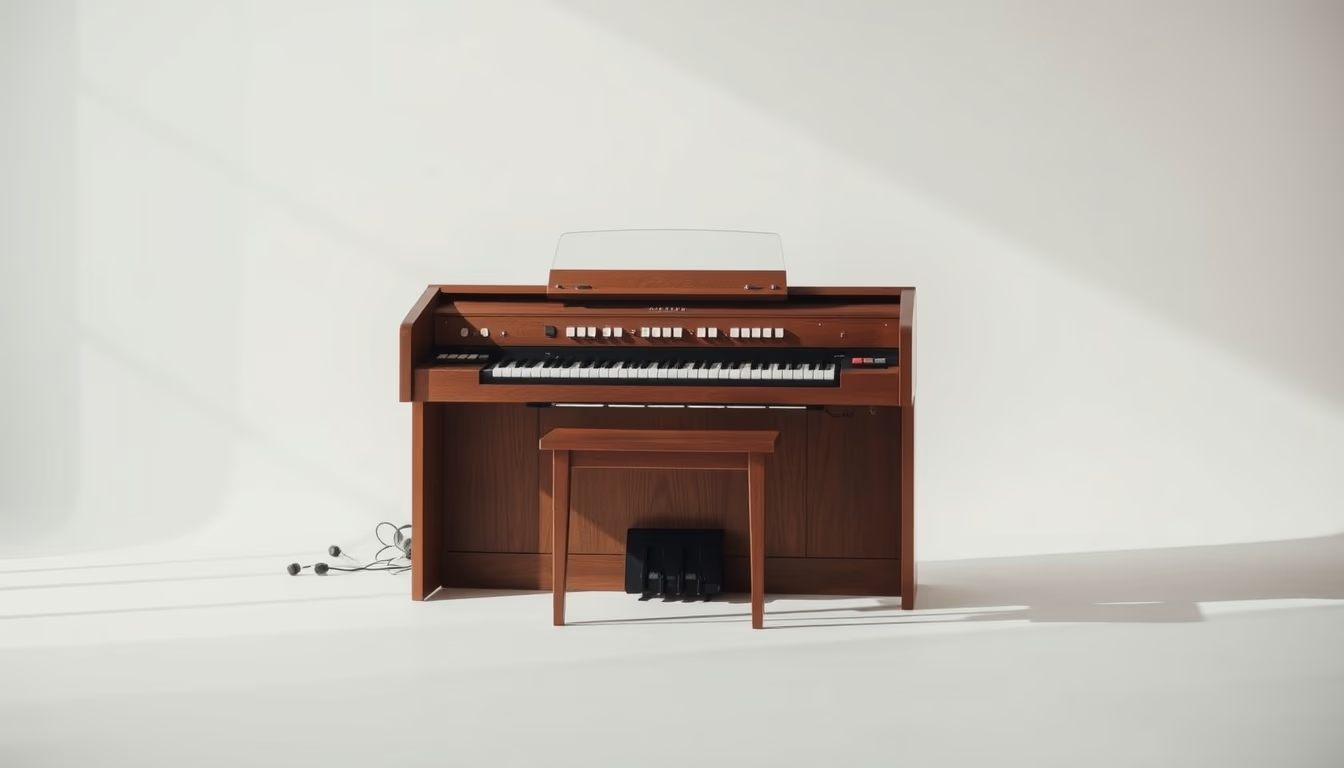
Discover the Hammond electric organ, a landmark in popular music that revolutionized sound with its tonewheels and unmistakable timbres.
About this subject
The Hammond electric organ was invented by Laurens Hammond in 1935, in Chicago, aiming to offer a cheaper alternative to pipe organs used in churches. Unlike traditional organs, the Hammond does not use pipes or compressed air. Its sound is generated by a set of tonewheels rotating near electromagnetic pickups, a system known as the tonewheel generator. Each wheel produces a specific frequency, and their combination creates the characteristic timbres. The instrument quickly gained popularity for its portability, durability, and ability to produce expressive sounds with vibrato and percussion.
A typical Hammond organ features two manual keyboards (upper and lower) and a pedalboard for bass notes, along with presets and drawbars that allow the musician to blend different harmonics in real time. The most iconic model is the B3, released in 1954, which became the standard in studios and on stages. The Hammond sound is often paired with a rotating speaker cabinet called a Leslie, which adds a tremolo and rotating effect. This combination produces a unique and unmistakable timbre.
In popular music, the Hammond was adopted by jazz legends like Jimmy Smith, who expanded its harmonic and rhythmic possibilities. In rock, names such as Jon Lord of Deep Purple and Gregg Allman of the Allman Brothers Band used it prominently. The instrument also plays a key role in soul, funk, reggae, and gospel music. A curiosity: most Hammond organs lack internal amplification and rely on external speakers or a Leslie cabinet to produce sound. Original tonewheel production ceased in the 1970s, but the legacy lives on through digital emulations and software, remaining a benchmark timbre in contemporary music.
Frequently Asked Questions
How does a Hammond organ work?
It uses tonewheels rotating near electromagnetic pickups to generate electrical signals. Timbres are formed by combining different harmonics, controlled by drawbars and presets.
What is the most famous Hammond model?
The Hammond B3, with two manuals and a pedalboard, is the most famous model. Released in 1954, it became a benchmark in jazz, rock, and soul.
In which music genres is the Hammond used?
It is widely used in jazz, blues, rock, soul, funk, reggae, and gospel music. Its versatile sound ranges from smooth accompaniment to aggressive solos.
Direct URL
https://pub-c7d6a6ea828543ac903a74a341ccb2e1.r2.dev/imagens/electric-organ-hammond-minimalist-composition-p9.avifHow to credit
Include a visible link back to UtilizAí. Copy one of the snippets below:
<a href="https://xn--utiliza-eza.com/en/midia/imagens/electric-organ-hammond-minimalist-composition-p9">Electric organ hammond</a> by <a href="https://xn--utiliza-eza.com">UtilizAí</a>, licensed under <a href="https://creativecommons.org/licenses/by/4.0/">CC BY 4.0</a>.
[Electric organ hammond](https://xn--utiliza-eza.com/en/midia/imagens/electric-organ-hammond-minimalist-composition-p9) by [UtilizAí](https://xn--utiliza-eza.com), CC BY 4.0
License: CC-BY-4.0