Electric organ hammond
1344×768 · AVIF · CC BY 4.0
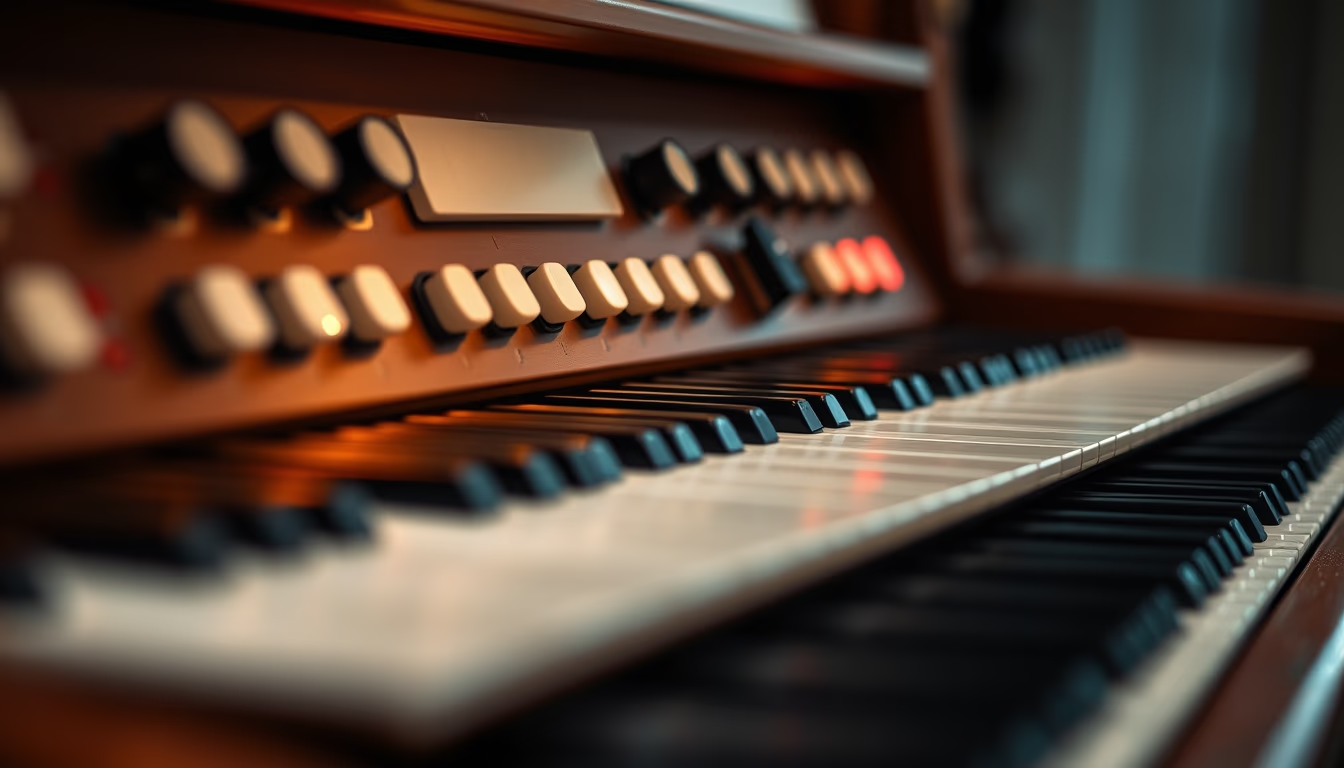
The Hammond organ, invented by Laurens Hammond in the 1930s, revolutionized music with its unique sound and tonewheel system.
About this subject
The Hammond organ is an electromechanical musical instrument that became iconic in jazz, blues, rock, and gospel music. It was invented by Laurens Hammond in 1934, with the B-3 model being the most famous. Its characteristic sound is generated by a tonewheel system: rotating steel discs with wavy edges placed near magnetic pickups, producing pure tones mixed by drawbars and a unique vibrato. Unlike pipe organs, the Hammond uses electronic amplification, making it portable and widespread in churches, theaters, and studios.
The instrument was initially designed as a cheaper alternative to pipe organs for churches but quickly found a place in secular music. Artists like Jimmy Smith, Booker T. Jones, and Jon Lord incorporated the Hammond into soul jazz, R&B, and progressive rock. The B-3 model, introduced in 1955, is especially prized for its rich sound and compatibility with Leslie speakers, which add a rotating effect.
Interestingly, each tonewheel generates a fixed pitch, and the B-3 uses 96 wheels to emulate pipe organ registers. The Hammond is not a synthesizer; it is an analog instrument relying on precise mechanical parts, which explains its organic sound and the challenge of digital replication. The instrument's action, a key click and the feel of the console, also contributes to its playing experience.
Today, Hammond organs are still produced, but many musicians prefer vintage models for their sound quality. The Hammond legacy persists in soul, funk, and psychedelic rock, making it one of the most iconic instruments of the 20th century.
Frequently Asked Questions
How does the tonewheel system of the Hammond organ work?
The system uses steel discs with wavy edges (tonewheels) rotating near magnetic pickups. Each wheel generates a fixed pitch, and the combination of various wheels controlled by drawbars produces different timbres.
What is the difference between a Hammond organ and a pipe organ?
The Hammond is electromechanical, generating sound via tonewheels and amplification, while a pipe organ uses air blown through metal or wood pipes. The Hammond is more portable, cheaper, and has a characteristic electric sustain and tone.
Why is the B-3 model so famous?
The B-3, introduced in 1955, is the most iconic model due to its rich sound, two manuals (keyboards), and pedalboard. It was favored by artists like Jimmy Smith and became synonymous with the Hammond sound, especially when paired with Leslie speakers.
Direct URL
https://pub-c7d6a6ea828543ac903a74a341ccb2e1.r2.dev/imagens/electric-organ-hammond-macro-closeup-p8.avifHow to credit
Include a visible link back to UtilizAí. Copy one of the snippets below:
<a href="https://xn--utiliza-eza.com/en/midia/imagens/electric-organ-hammond-macro-closeup-p8">Electric organ hammond</a> by <a href="https://xn--utiliza-eza.com">UtilizAí</a>, licensed under <a href="https://creativecommons.org/licenses/by/4.0/">CC BY 4.0</a>.
[Electric organ hammond](https://xn--utiliza-eza.com/en/midia/imagens/electric-organ-hammond-macro-closeup-p8) by [UtilizAí](https://xn--utiliza-eza.com), CC BY 4.0
License: CC-BY-4.0