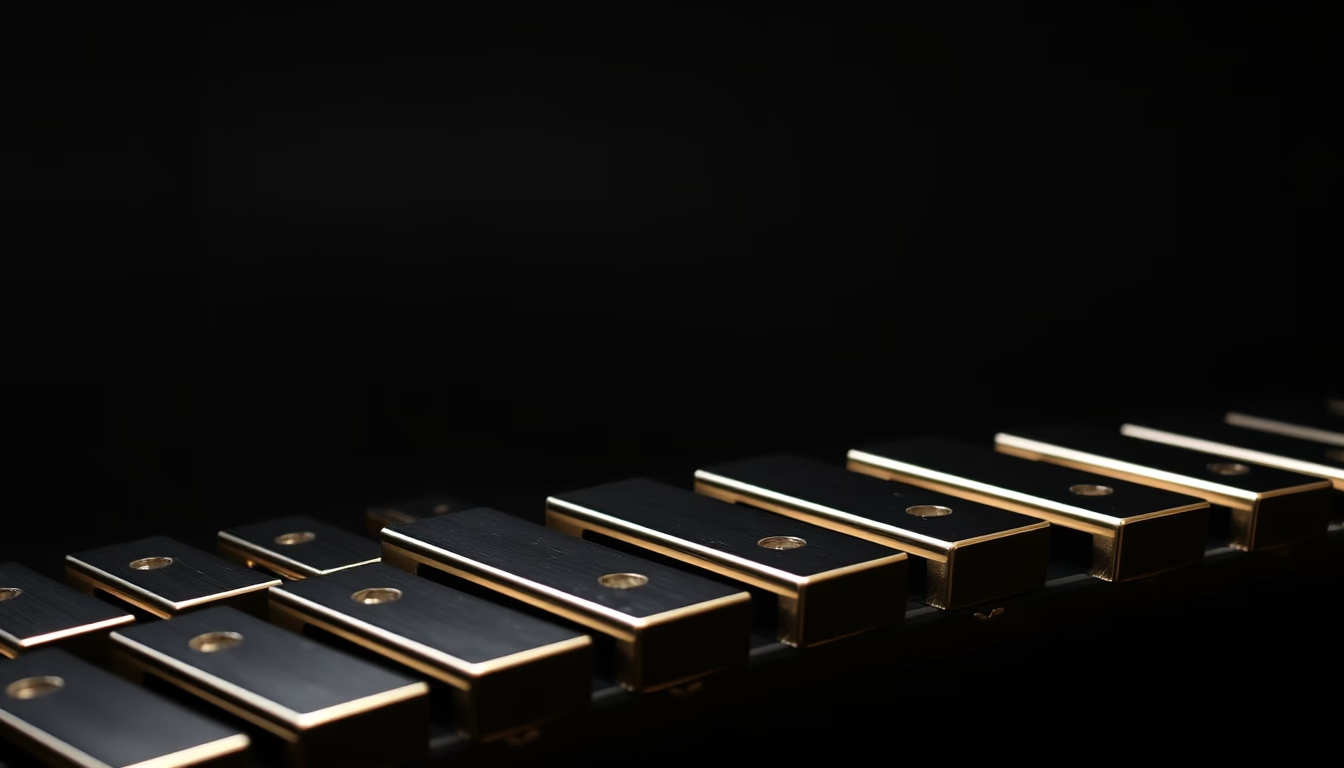
Electric organ hammond
1344×768 · AVIF · CC BY 4.0

The Hammond electric organ, invented in 1934 by Laurens Hammond, revolutionized popular music with its unique sound and tonewheel technology.
About this subject
The Hammond electric organ is a musical instrument invented by American engineer Laurens Hammond in 1934. Unlike traditional pipe organs, the Hammond uses a tonewheel system that generates electrical signals, later amplified and processed. This mechanism allowed for a rich and versatile sound that became a hallmark in various music genres, especially jazz, blues, soul, and rock of the 1960s and 1970s.
The most iconic model is the Hammond B3, launched in 1955, which became the industry standard. It was often paired with a Leslie speaker cabinet that created a rotating sound effect. Musicians such as Jimmy Smith, Booker T. Jones, Keith Emerson, and Jon Lord popularized the instrument, exploring its harmonic and rhythmic possibilities. The Hammond was also widely used in North American churches, particularly in gospel music.
Beyond musical use, the Hammond holds historical importance as one of the first commercially successful electromechanical instruments. Production continued until the 1970s, when digital electronic versions began to replace the original. However, the authentic Hammond sound is still highly valued, and vintage models are sought after by collectors and musicians. In 2002, the Suzuki company acquired the rights to the brand and continues to manufacture modern versions of the organ.
Interestingly, Laurens Hammond also invented a radio transmission system and a chess-playing machine. His organ, however, is his most enduring legacy. The instrument was inducted into the Rock and Roll Hall of Fame in 2012, recognizing its influence on popular music.
Frequently Asked Questions
What is the difference between a Hammond organ and a pipe organ?
The Hammond uses tonewheels to generate sound electrically, while a pipe organ produces sound by forcing air through pipes. The Hammond is more compact, portable, and offers characteristic tones iconic in jazz and rock.
Why is the B3 model so famous?
The Hammond B3, launched in 1955, became the standard due to its rich sound and robust build. Paired with a Leslie speaker, it created a unique vibrato effect, adopted by greats like Jimmy Smith and Keith Emerson.
Is the Hammond still manufactured today?
Yes, Suzuki, which has owned the brand rights since 2002, produces modern versions like the XK-5, which digitally recreates the classic sound of vintage models.
Direct URL
https://pub-c7d6a6ea828543ac903a74a341ccb2e1.r2.dev/imagens/electric-organ-hammond-documentary-photography-p4.avifHow to credit
Include a visible link back to UtilizAí. Copy one of the snippets below:
<a href="https://xn--utiliza-eza.com/en/midia/imagens/electric-organ-hammond-documentary-photography-p4">Electric organ hammond</a> by <a href="https://xn--utiliza-eza.com">UtilizAí</a>, licensed under <a href="https://creativecommons.org/licenses/by/4.0/">CC BY 4.0</a>.
[Electric organ hammond](https://xn--utiliza-eza.com/en/midia/imagens/electric-organ-hammond-documentary-photography-p4) by [UtilizAí](https://xn--utiliza-eza.com), CC BY 4.0
License: CC-BY-4.0