Electric motorcycle modern
1344×768 · AVIF · CC BY 4.0
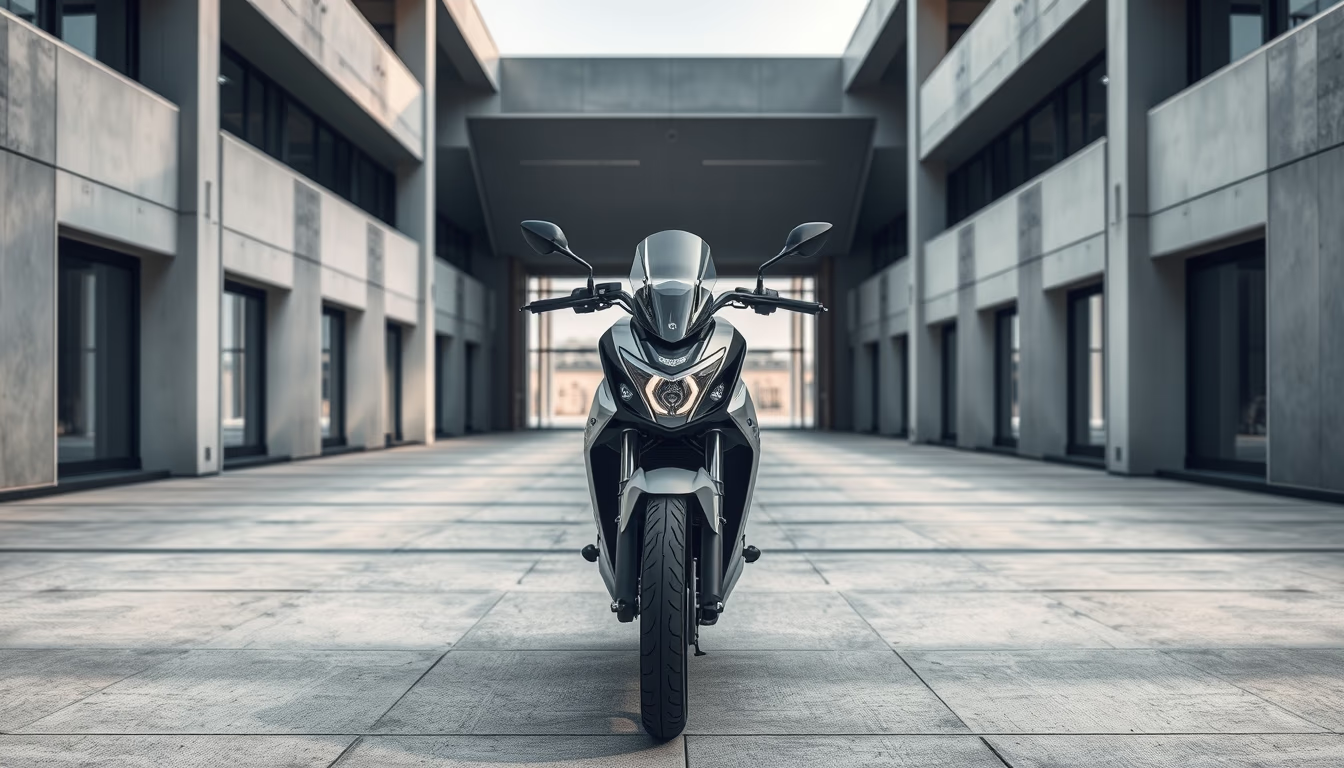
Modern electric motorcycles combine bold design, high technology and zero emissions, redefining urban mobility with efficiency and silence.
About this subject
Modern electric motorcycles represent a revolution in personal mobility, combining energy efficiency, performance and sustainability. Unlike combustion models, they use permanent magnet electric motors powered by lithium batteries, offering ranges between 100 and 400 km depending on the model and battery capacity (typically 7 to 20 kWh). Manufacturers like Zero Motorcycles, Harley-Davidson (LiveWire line), Energica and Brazil's Voltz lead this market, with top speeds exceeding 160 km/h and acceleration comparable to mid-displacement sport bikes.
The design of modern electric motorcycles often features futuristic lines, aerodynamic fairings and LED lighting, reflecting integration with contemporary architecture and smart city concepts. Many come with app connectivity, adjustable riding modes and regenerative braking systems that increase range by up to 10%. The silent motor eliminates noise pollution, but requires care with pedestrians, leading to artificial sounds at low speeds as mandated by regulations in several countries.
In Brazil, electric motorcycle adoption is still nascent but growing, boosted by tax incentives in states like São Paulo and Paraná, and the Rota 2030 program. Models like Voltz EVS 170 and Shineray Electric offer affordable options for delivery riders and urban commutes. Charging infrastructure is the main challenge: while household outlets (110/220V) take 4 to 8 hours for a full charge, DC fast stations can recharge 80% in 30 to 60 minutes.
By 2026, trends point to solid-state batteries, longer range (500+ km), wireless charging and integration with autonomous vehicles. Italian brand Energica is already testing motorcycles with semi-autonomous driving capabilities, merging riding freedom with advanced driver assistance systems. The architectural aesthetic of these vehicles, with sculptural forms and sustainable materials, reinforces electric motorcycles as icons of a clean, technological future.
Frequently Asked Questions
What is the average range of a modern electric motorcycle?
Range varies from 100 to 400 km, depending on battery capacity (7 to 20 kWh), riding style and terrain. Urban models like the Voltz EVS 170 achieve about 100 km, while touring bikes like the Zero SR/F reach 260 km.
How long does it take to charge an electric motorcycle?
On a household outlet (110/220V), a full charge takes 4 to 8 hours. At DC fast stations, you can reach 80% in 30 to 60 minutes. Some models support Level 2 charging (240V) in 2 to 4 hours.
Are electric motorcycles more expensive than gas ones?
Yes, the upfront cost is higher due to batteries, but the cost per km is much lower (about $0.03 electricity vs $0.12 gasoline). With reduced maintenance (no oil, belts or spark plugs), total ownership cost can break even in 3 to 5 years.
Direct URL
https://pub-c7d6a6ea828543ac903a74a341ccb2e1.r2.dev/imagens/electric-motorcycle-modern-architectural-photography-p6.avifHow to credit
Include a visible link back to UtilizAí. Copy one of the snippets below:
<a href="https://xn--utiliza-eza.com/en/midia/imagens/electric-motorcycle-modern-architectural-photography-p6">Electric motorcycle modern</a> by <a href="https://xn--utiliza-eza.com">UtilizAí</a>, licensed under <a href="https://creativecommons.org/licenses/by/4.0/">CC BY 4.0</a>.
[Electric motorcycle modern](https://xn--utiliza-eza.com/en/midia/imagens/electric-motorcycle-modern-architectural-photography-p6) by [UtilizAí](https://xn--utiliza-eza.com), CC BY 4.0
License: CC-BY-4.0