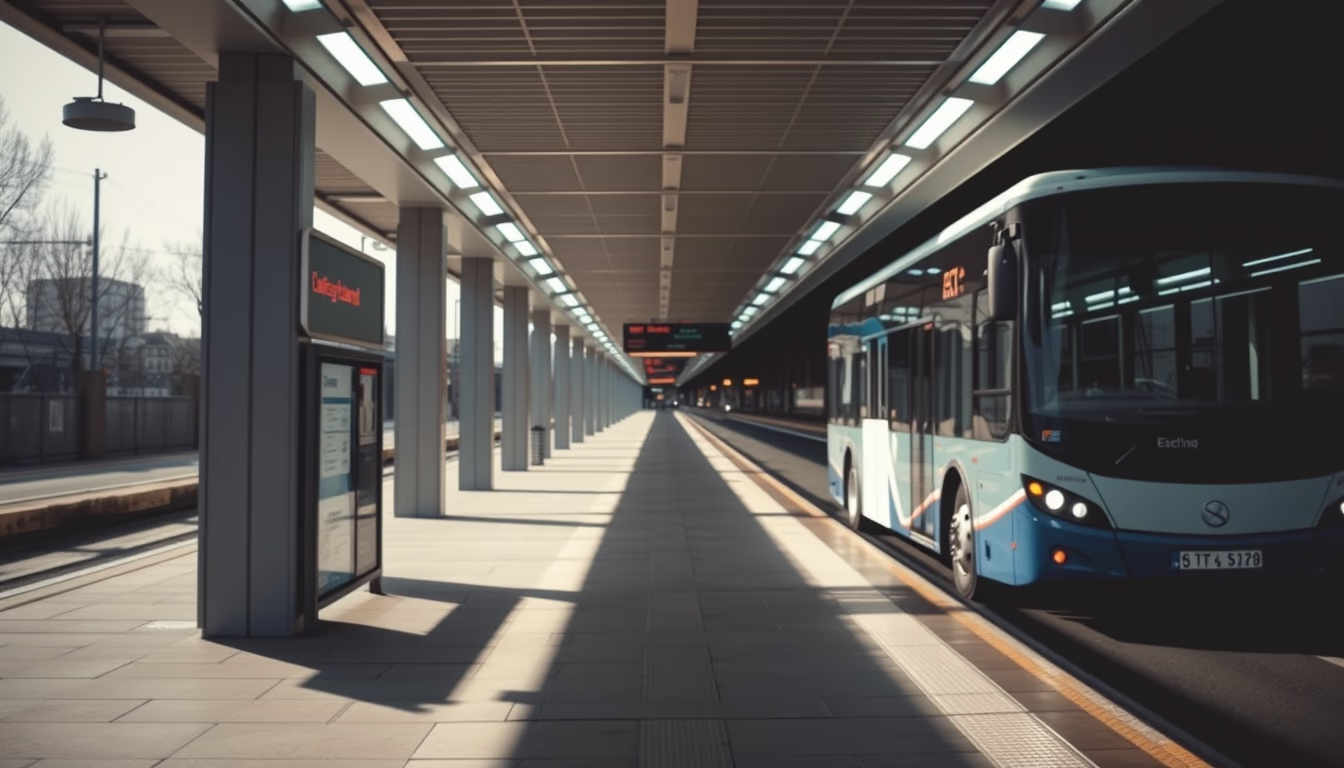
Electric bus station
1344×768 · AVIF · CC BY 4.0
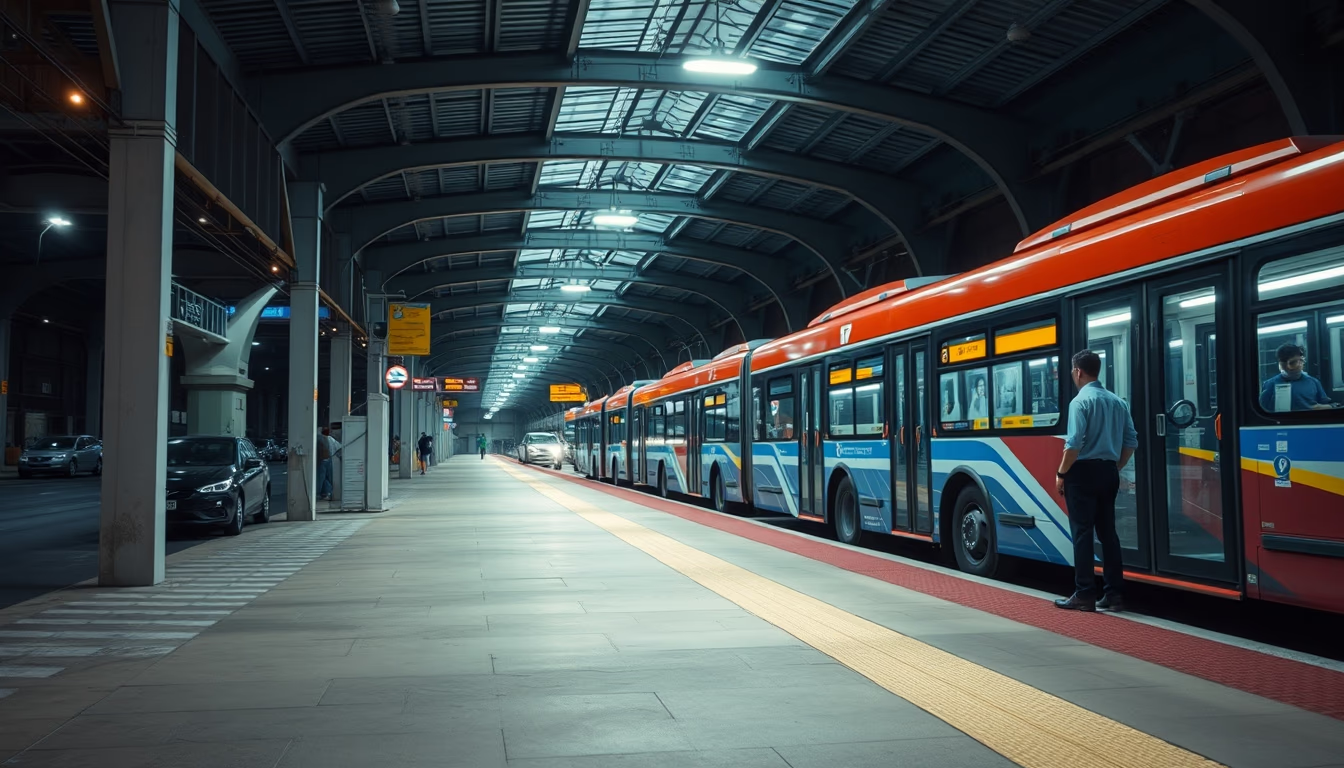
Electric bus stations are key infrastructure for sustainable urban mobility, integrating charging technology and fleet management.
About this subject
Electric bus stations represent a significant advancement in public transport infrastructure focused on sustainability. Unlike conventional terminals, these locations are equipped with charging systems that can be overnight depot charging or opportunity charging along routes using overhead pantographs or roof connectors. The electricity, often from renewable sources, drastically reduces pollutant emissions and noise, improving urban air quality.
Cities like Shenzhen, China, have converted their entire bus fleet to electric, operating thousands of vehicles from dedicated stations. In Brazil, examples such as São Paulo and Curitiba have tested electric corridors, with stations equipped with ultra-fast charging at terminals. These stations feature solar panels and energy storage systems to optimize grid usage and reduce operational costs.
Implementing electric bus stations requires integrated planning among energy companies, municipalities, and transport operators. Challenges include high upfront infrastructure costs, the need for robust electrical grids, and training professionals for maintenance. However, long-term benefits include fuel savings, lower noise pollution, and alignment with carbon neutrality goals.
For users, the experience is similar to traditional terminals, with schedule and route information, but with differentiators such as device charging ports and displays showing the charging status of buses. Integration with digital ticketing and mobility apps enhances efficiency. Electric stations are a core component of smart cities, where technology and sustainability transform urban mobility.
Frequently Asked Questions
How does bus charging work at electric stations?
Two main types: slow charging overnight at depots, and fast charging (opportunity) at terminals or along routes, often using automatic pantographs that connect the bus to the grid in a few minutes.
What are the main advantages of electric bus stations?
Reduction of CO2 and pollutant emissions, lower noise, savings on fossil fuels, possibility of integrating renewable energy and solar panels, and contribution to urban sustainability goals.
Where are electric bus stations already in operation?
Besides Shenzhen (China) with its fully electric fleet, cities like London, Santiago de Chile, and São Paulo have electric corridors or lines. In Brazil, Curitiba and Rio de Janeiro also have pilot projects.
Direct URL
https://pub-c7d6a6ea828543ac903a74a341ccb2e1.r2.dev/imagens/electric-bus-station-documentary-photography-p0.avifHow to credit
Include a visible link back to UtilizAí. Copy one of the snippets below:
<a href="https://xn--utiliza-eza.com/en/midia/imagens/electric-bus-station-documentary-photography-p0">Electric bus station</a> by <a href="https://xn--utiliza-eza.com">UtilizAí</a>, licensed under <a href="https://creativecommons.org/licenses/by/4.0/">CC BY 4.0</a>.
[Electric bus station](https://xn--utiliza-eza.com/en/midia/imagens/electric-bus-station-documentary-photography-p0) by [UtilizAí](https://xn--utiliza-eza.com), CC BY 4.0
License: CC-BY-4.0