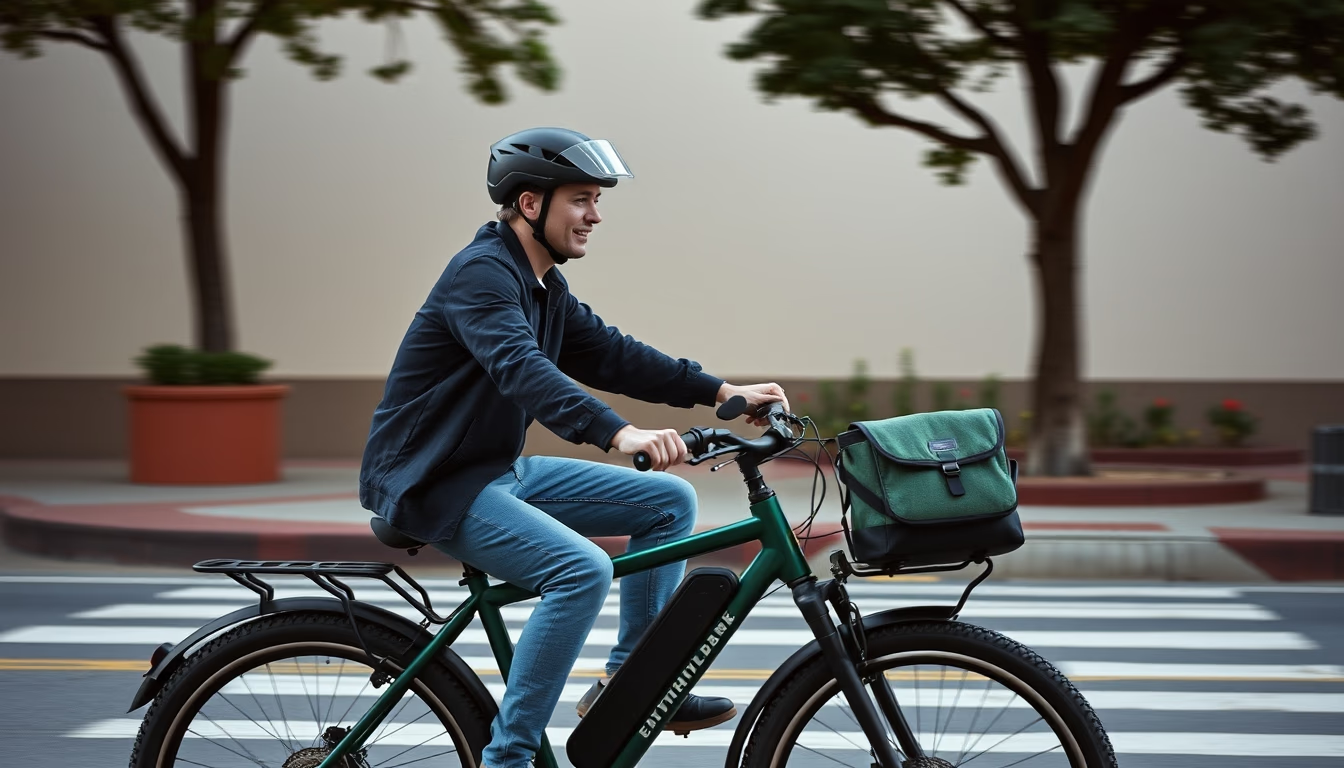
Electric bike commuter
1344×768 · AVIF · CC BY 4.0
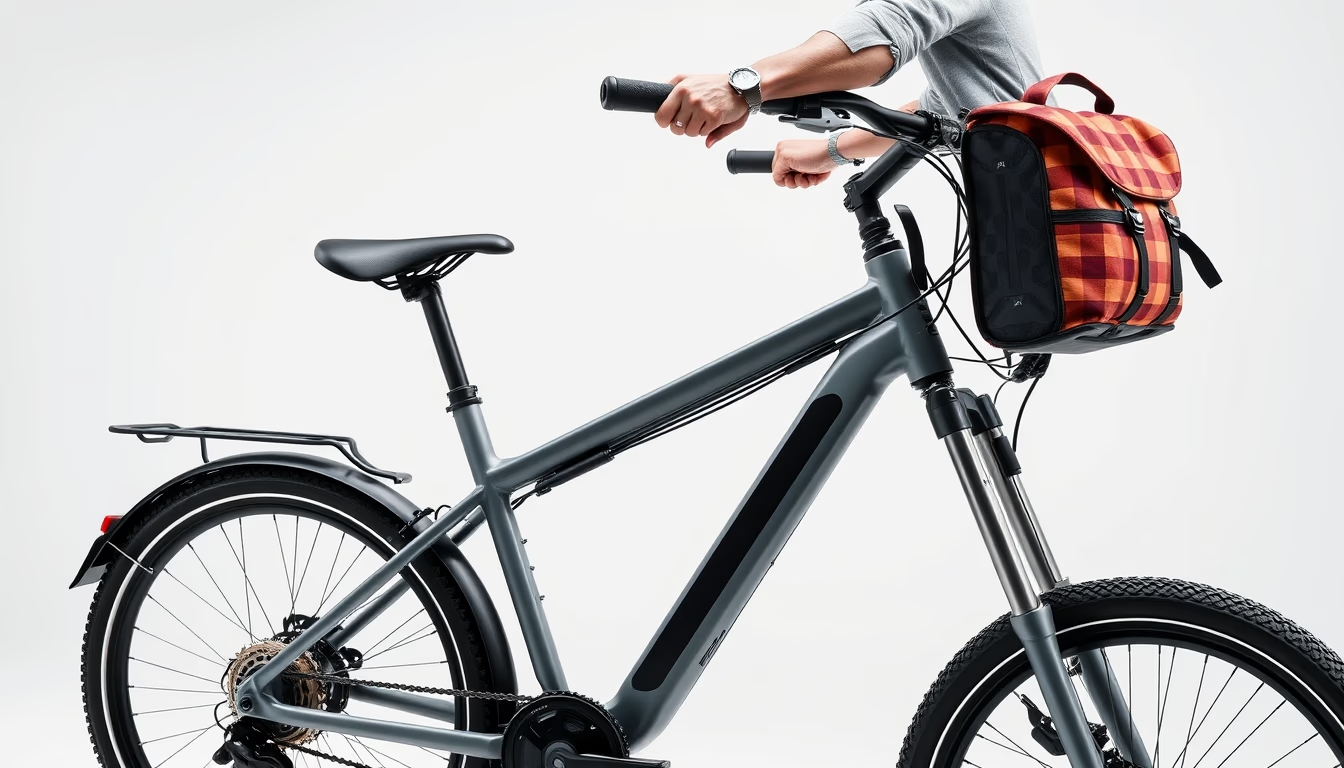
Discover how the electric bike is transforming urban commuting in Brazil and worldwide, offering savings and sustainability.
About this subject
The electric bike, or e-bike, has become a viable and growing alternative for daily commuting in cities worldwide. With increasing traffic congestion and environmental concerns, many workers choose e-bikes for their trips to the office. Global sales are projected to exceed 40 million units by 2025, with Europe and Asia leading adoption. Cities like Amsterdam, Copenhagen, and Shanghai have integrated e-bikes into their transport networks. The appeal lies in time savings, lower costs, and reduced carbon footprint. Commuters can cover distances of 10 to 20 kilometers without sweating, thanks to pedal assist.
Technically, most e-bike motors are rated at 250W to 350W with a pedal-assist limit of 25 km/h (32 km/h in some regions). Mid-drive motors offer better hill climbing, while hub motors are simpler. Batteries (lithium-ion) provide a range of 40 to 80 km per charge, costing only a few cents to recharge. Compared to cars, e-bikes incur negligible fuel and maintenance costs. The average speed in city traffic is often higher than a car's due to lane filtering and bike lanes.
Environmentally, e-bikes are a low-carbon option. Studies show they produce about 22 g CO2 per km (including electricity generation), versus 271 g for a car. They replace short car trips, which are disproportionately polluting. Many countries offer subsidies or tax breaks for e-bike purchases. In urban areas, bike-sharing systems now include electric models, and companies like Uber have integrated e-bikes into their mobility platforms.
Culturally, e-bikes democratize cycling for people of all fitness levels. They are used for commuting, delivery, and leisure. The aging population in many countries finds e-bikes easier to ride than traditional bikes. Safety remains a concern: helmets, lights, and proper road etiquette are essential. Future trends include longer-lasting solid-state batteries, integrated GPS and anti-theft features, and improved suspension. As cities expand cycling infrastructure, the e-bike commuter will become an increasingly common sight, representing a shift toward sustainable urban living.
Frequently Asked Questions
What is the average range of an electric bike for commuting?
Typically 40 to 80 km per charge, depending on rider weight, terrain, and assist level. High-capacity batteries can reach up to 120 km.
Do you need a license to ride an e-bike in most countries?
Usually not, if the motor is under 250W and speed limited to 25 km/h. Regulations vary by state and country; some require registration for faster models.
How much does it cost to charge an e-bike battery?
Around $0.10 to $0.30 per full charge in the US or Europe, making it extremely economical compared to a car or public transport.
Direct URL
https://pub-c7d6a6ea828543ac903a74a341ccb2e1.r2.dev/imagens/electric-bike-commuter-commercial-product-photography-p0.avifHow to credit
Include a visible link back to UtilizAí. Copy one of the snippets below:
<a href="https://xn--utiliza-eza.com/en/midia/imagens/electric-bike-commuter-commercial-product-photography-p0">Electric bike commuter</a> by <a href="https://xn--utiliza-eza.com">UtilizAí</a>, licensed under <a href="https://creativecommons.org/licenses/by/4.0/">CC BY 4.0</a>.
[Electric bike commuter](https://xn--utiliza-eza.com/en/midia/imagens/electric-bike-commuter-commercial-product-photography-p0) by [UtilizAí](https://xn--utiliza-eza.com), CC BY 4.0
License: CC-BY-4.0