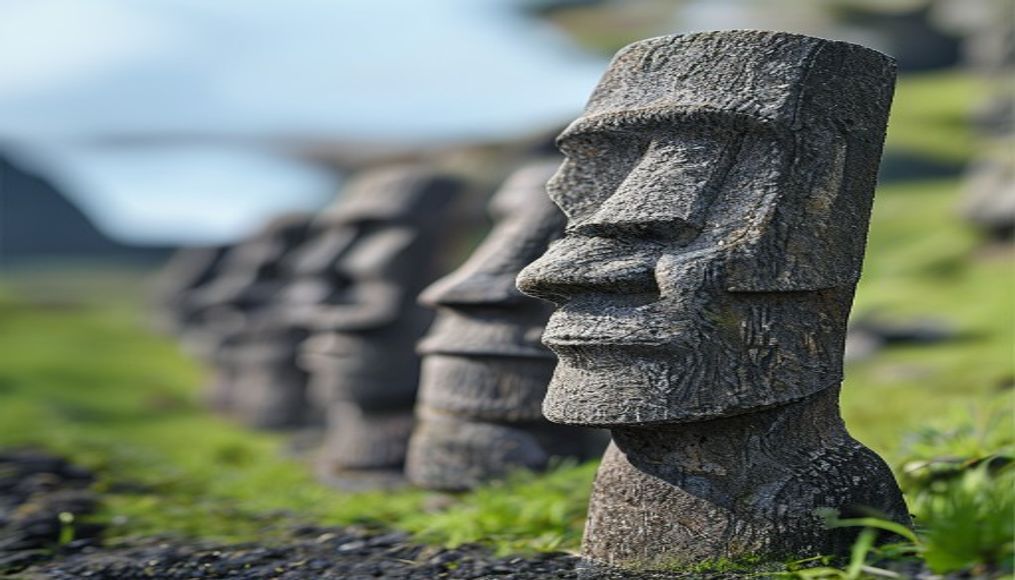
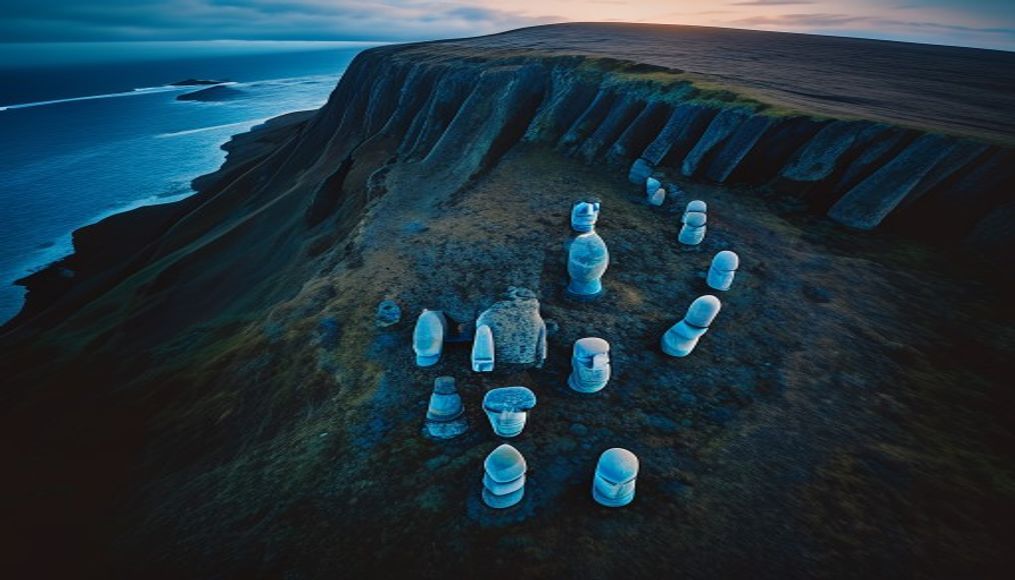
Easter island moai statues
1344×768 · AVIF · CC BY 4.0
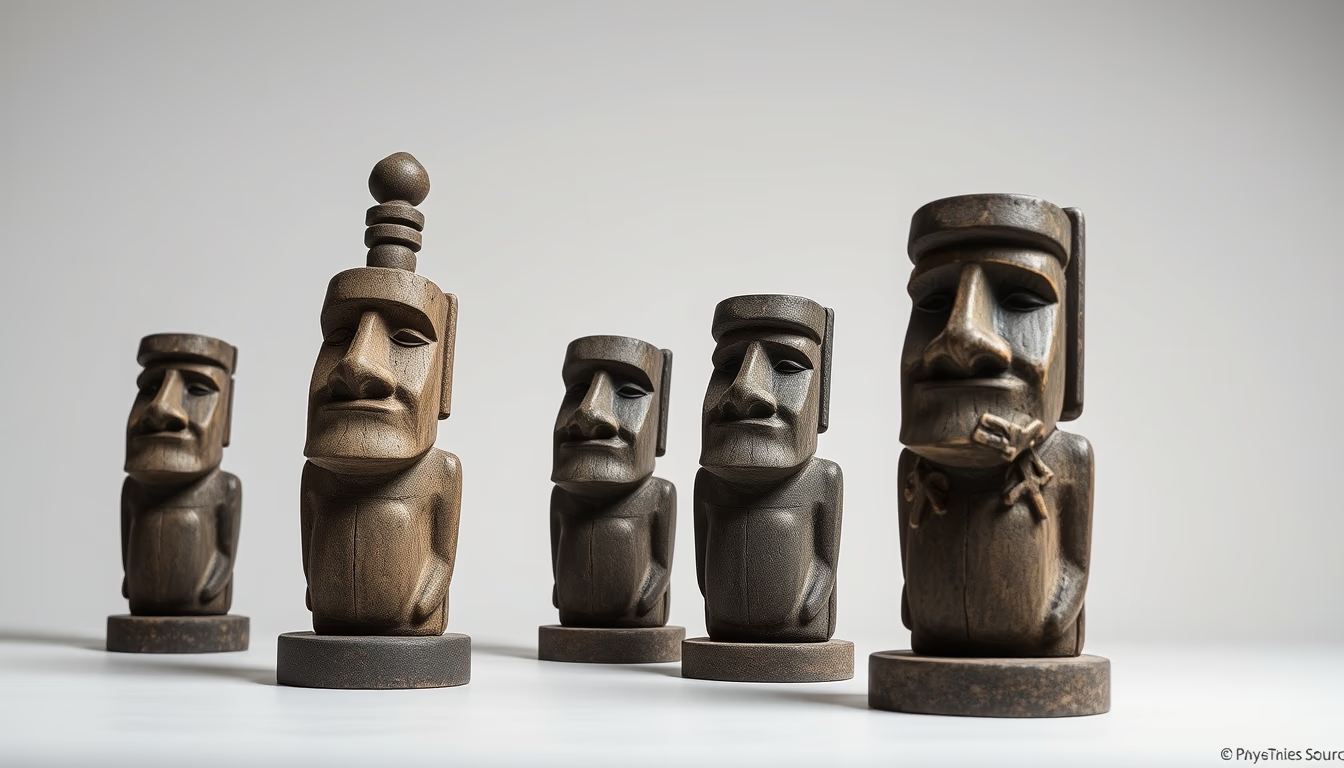
Moai are monolithic stone monuments carved by the Rapa Nui people on Easter Island, Chile, between the 13th and 16th centuries, representing deified ancestors.
About this subject
The moai are volcanic stone statues that have become the most recognizable symbol of Easter Island, a Chilean territory in the South Pacific. Carved between 1250 and 1500 AD by the native Rapa Nui people, these monolithic figures can reach up to 10 meters in height and weigh over 80 tons. Most of the 887 known moai were chiseled from volcanic tuff quarried from the Rano Raraku crater, which served as an open-air factory.
The exact purpose of the moai is still debated among archaeologists, but the most accepted theory is that they represented chiefs or important ancestors, who after death were believed to protect and bring prosperity to the community. Each moai was placed on a ceremonial altar called an ahu, typically facing inland, watching over the villages. Only a group of moai at Ahu Akivi is oriented toward the sea, aligned with the equinox.
The construction and transport of the moai are remarkable feats: the Rapa Nui used wooden rails and ropes to move the statues horizontally, rocking them forward. The population collapse on the island in the 17th century, attributed to internal conflicts and depletion of natural resources, led to the abandonment of the tradition. Many moai were intentionally toppled during tribal wars. Restorations beginning in the 1950s, such as those led by archaeologist William Mulloy, have re-erected several moai in their original positions.
Today, the moai are a UNESCO World Heritage site and attract thousands of tourists annually. The tallest statue, named Paro, measures 10 meters and weighs about 82 tons. There are also unfinished moai in the quarry, such as the giant El Gigante, which would have been 21 meters tall if completed. Pop culture and media have helped spread the image of the moai as icons of Polynesian mystery, though modern studies have uncovered much of their history.
Frequently Asked Questions
How many moai are there on Easter Island?
There are 887 known moai scattered across Easter Island, most carved from volcanic tuff at the Rano Raraku quarry.
What is the average height and weight of a moai?
The average height of a moai is about 4 meters, but the tallest erected, named Paro, is 10 meters tall and weighs 82 tons. The largest unfinished moai would have been 21 meters.
How were the moai transported?
It is believed that the Rapa Nui used a system of wooden rails and ropes to rock the moai forward horizontally, gradually moving them to their final locations.
Direct URL
https://pub-c7d6a6ea828543ac903a74a341ccb2e1.r2.dev/imagens/easter-island-moai-statues-studio-still-life-p3.avifHow to credit
Include a visible link back to UtilizAí. Copy one of the snippets below:
<a href="https://xn--utiliza-eza.com/en/midia/imagens/easter-island-moai-statues-studio-still-life-p3">Easter island moai statues</a> by <a href="https://xn--utiliza-eza.com">UtilizAí</a>, licensed under <a href="https://creativecommons.org/licenses/by/4.0/">CC BY 4.0</a>.
[Easter island moai statues](https://xn--utiliza-eza.com/en/midia/imagens/easter-island-moai-statues-studio-still-life-p3) by [UtilizAí](https://xn--utiliza-eza.com), CC BY 4.0
License: CC-BY-4.0